-
“Since 1993, farmers in Japan’s Aomori prefecture have been creating crop art by mixing coloured rice plants in with the regular stuff.”
-
via MAKE, lots of paper aeroplanes.
-
This is the Wiki Clock — a clock that runs on Wiki technology!
-
via enthusiasm: ‘It’s like proprioception, your body’s ability to know where your limbs are…
Twitter and other constant-contact media create social proprioception. They give a group of people a sense of itself’
Month: July 2007
Links
-
Some attractive early C17th fruit paintings.
-
‘From time to time, National Review – the bible of American conservatism – organises a cruise for its readers. I paid $1,200 to join them.’
-
Interesting article about a conference for the British government to try to liaise with muslims
-
spot the mysterious beastie. A very cool example of a camouflage.
David Beckham and the Deathly Hallows
With Beckham and Harry Potter both being in the news at the moment, I started seeing them as a parallel pair: you can identify lots of sound reasons why Becks is a big star and the Harry Potter books have sold so many copies, but in both cases you’re left with a sense that their actual level of success is out of proportion.

If anything it’s easier to see why David Beckham is a star: he was a key member of the most successful incarnation of the most popular team in world sport; he started going out with, and duly married, a member of one of the most successful British pop groups of all time when they were at their peak; he’s incredibly good-looking, and not just by footballer standards; he played a key role in some of the most memorable moments for the England football team; and his whole metrosexual, homoerotic image seemed genuinely radical in the blokey, working-class context of British football. And he seems like a nice man.
And yet… how did all that amount to him becoming a global superstar, without him, for example, winning the World Cup? Having lived through the whole period of his rise to prominence, I know that, in a British context, it all seemed to make sense at the time. But did the sarong really make a big impact in Tehran? Were the Spice Girls such a big deal in Shanghai? I remember reading about a journalist who went to do a story about would-be suicide bombers in Palestine. While he was interviewing them, someone came in with the football results. “Manchester United won!” (much cheering) “and Beckham scored!” (even more cheering, and cries of Allahu Akbar! Allahu Akbar!). Why him, and not Ryan Giggs, or Michael Owen, or any of his other talented contemporaries? Raul? Batistuta? Figo?
The same can be said about the Harry Potter books (and indeed the Spice Girls). You can easily find reasons why they’re popular: they combine a sense of teen alienation with an inventive magical world; boarding school stories are popular; the wordplay is entertaining. There are a lot of boxes being ticked. But why are they a complete publishing phenomenon? Presumably J.K. Rowling has no more idea than the rest of us. After two or three books, did she ever lie awake at night wondering whether she was going to suddenly lose her touch, and her fans would pick up the next volume, read a hundred pages and never quite feel the need to finish it?
It’s easy to dismiss it as being driven solely by ‘hype’. And there is clearly a snowball effect where the marketing people seize on a success and drive it forward by spending money on it. But if it was as easy as that, there would never be a blockbuster movie that flopped or an unsuccessful second album. LA Galaxy may well be about to discover that no amount of hype can magically persuade people to spend money on something that doesn’t interest them.
And I’m not saying that they are overrated, exactly. Beckham at his best is a very very good footballer; the books are an enjoyable read. But Beckham would have to be Pele, Puskas and Cruyff rolled into one to justify his profile, and the Harry Potter books have been so freakishly successful that it would be disproportionate for anything short of the second coming of Shakespeare. That’s not their fault. I just wonder how it happens. Some magic combination of ingredients? Mob hysteria? Blind luck?
Links
-
via things magazine, a Google map of where all the Anthony Gormley statues are.
-
‘A study of humans and chimpanzees has provided new evidence to support the theory that our ancestors evolved to walk upright for the simple reason that doing so saves energy’
-
Parts of speech.
Links
-
Gutenberg CSI: trying to deduce the details of early printing techniques from errors in surviving manuscripts.
-
These illustrations were selected from the second half of the ‘Eastern Books and Manuscripts’ from the Image Collection of Old Medical Books at Kyushu University Medical Library (click on ‘list of titles’).
-
via Coudal: ‘2008:Man With a Movie Camera is a participatory video — initiated by Perry Bard — shot by people around the world who are invited to record video according to the original script of Vertov’s Man With A Movie Camera ‘
-
‘We turned over this wolf spider’s concrete lair yesterday, and noticed something a little different about her.’
Atheist, not agnostic. Honestly.
Scavella has a post about her religious belief, the general drift of which is entirely reasonable. Obviously I don’t actually agree with it all—no surprise there—but I don’t feel the need to argue with it. I do have a problem with this, though:
I tend to regard agnosticism as more honest, and more politically palatable. The fundamental truth is that we do not know what lies beyond our experience (which for some people is a religious experience and for others is a material one, and both experiences are similarly bounded by our physical and physiological limitations), and to assert that we do know is fallacious.
I accept that I can’t prove the non-existence of gods. I think there are good reasons to believe that there are no gods, but in the end it has to be an assumption. Nonetheless I describe myself as an atheist rather than an agnostic. I believe there is no god, although I can’t prove it. The Archbishop of Canterbury believes there is a God, although he can’t prove it. Why should I be described as an agnostic if he isn’t?
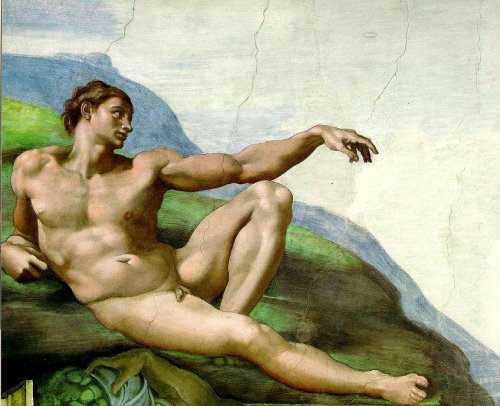
The other reason I feel there’s a difference between an agnostic and an atheist is that I’ve been both. I come from a non-religious family—I think my father identifies himself as Church of England on the census, but as far as I can tell he’s nothing of the kind—but I got the usual English kind of low-key religious education at school. I’m sure there was a point when I sort of believed that it was sort of true, in the non-critical way that children believe things that adults tell them. I’m not saying that I ever had any kind of religious period, or strong sense of identity as a Christian, but Christian ideas were floating around in my head along with a jumble of other stuff like Father Christmas, astrology, the wolf in the attic, and that eating carrots help you see in the dark.
As I got older and more sceptical these beliefs got winnowed out. Naturally you start by losing things like Santa and vampires, which are universally understood to be fictional. But there are a range of more-or-less supernatural beliefs which are widely endorsed by adults and so are much harder for a child to confidently dismiss: UFOs, astrology, homeopathy, dowsing, ESP and of course religion, which has the whole weight of centuries of European culture giving it authority. So there was a period when although I was sceptical by inclination and certainly not a believer, I described myself as an agnostic, and actually meant ‘I don’t know what I believe’.
But after spending years thinking about these issues, arguing them with people, learning more about both religion and science, and encountering the usual arguments for and against, my position became clearer (or firmer, or more rigid; pick your own adjective) and I reached a strictly materialistic view of the world. For me, as I never had much emotional investment in Christianity and I never lived in a very devout community, it genuinely was as much a rejection of dowsing, ESP and crystal healing as a rejection of God or religion. The point is that it wasn’t a quick or impulsive decision.
To call myself an agnostic now would feel like a denial of a process, which was, for me, real and important. I can see the temptation; ‘agnostic’ is a label I can live with, and it’s softer and less confrontational than ‘atheist’. But in the end, for me, it’s calling myself agnostic which feels like the less honest option.