Categories
Culture

‘Moctezuma — Aztec Ruler’ at the British Museum

So, I went to see Moctezuma at the BM this week. And yes, if you’re wondering, Moctezuma II (or even more correctly, according to Wikipedia, Motecuhzoma Xocoyotzin) is the man I always thought was called Montezuma: the ruler of the Aztec empire when Hernán Cortés and his conquistadors conquered Mexico. Except that apparently they weren’t ‘Aztec’ either; they referred to themselves as ‘Mexica’.
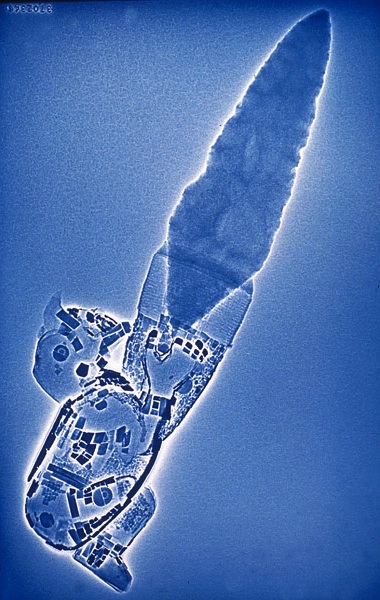
knife_xray

It’s hard to believe it has been seven years since the Royal Academy’s mega-exhibition about the Aztecs; this show is nowhere near as large or spectacular as that one. And it’s more narrowly focussed on a particular geographical and historical moment; the city of Tenochtitlan and the fall of the Aztec empire. Which does at least mean that it’s easier to take in the information, even if most of the exhibits are a bit less jaw-dropping. And it means that they can supplement the Aztec material with stuff from the Spanish perspective: colonial paintings and so on.

It’s certainly worth going to, although I wouldn’t say it was the most exciting exhibition I’ve been to recently. One thing I found interesting was what you might call the ‘deathcult problem’. The Mexica civilisation was kind of revolting. The sacred courtyard at the centre of Tenochtitlan was built around a temple where they ritually sacrificed their captured enemies. It also featured a skull rack where they could display the skulls afterwards. That’s the kind of design feature that would seem a bit OTT in a Hollywood representation of Mordor. And so it’s a curatorial problem: do you emphasise the gore? downplay it? make any kind of ethical comment?

Generally this exhibition chose to downplay it — not to disguise it, but not to place too much specific emphasis on it either. I guess I think that’s fair enough; better that than salaciously revelling in it, or stigmatising a whole civilisation as somehow subhuman. And presumably they can rely on their visitors to realise for themselves that ripping the hearts out of the living chests of their enemies is a Bad Thing. And yet somehow the studiedly non-judgmental tone of the blurbs and the audioguide, which seemed to treat ritual human sacrifice as just another intriguing cultural quirk like using thorny oyster shell for decoration, left me a little queasy.

Not that the Spanish were exactly saintly themselves; they killed a large chunk of the population of Tenochtitlan in a moment of panic, just for starters. But at least the killing was a by-product of a ruthless lust for gold and power, rather than the central organising principle of their society. Going round all the skull-covered Aztec stuff feels a bit like being at an exhibition of Nazi regalia. Though having said that, an exhibition of religious art from C16th Spain would probably have a bit of a death cult quality to it, with all that graphic martyrdom all over the place. So to sum up: people are a bit creepy.

Also on at the BM at the moment is a very nice little free exhibition of dogū — that is, prehistoric clay figurines from Japan. I didn’t know anything about dogū, so I found it interesting. And they are striking objects.

» The image is an x-ray of a knife with a mosaic handle and a chalcedony blade. They reckon it’s a sacrificial knife but that it isn’t robust enough to have actually been used, so it’s probably ceremonial.

Categories
Culture

Rio 2016! (again)

On the subject of music from Rio, this is one of the fabbest and scariest things ever:

Categories
Culture

Rio 2016!

I think it’s brilliant that Rio is going to host the Olympics. I was going to post a suitably carnivalesque bit of video in celebration, but I found this more downbeat performance by the great Elza Soares; and it’s gorgeous.

I’ve got no idea what she’s singing about, though.

Categories
Culture

The Culture of Lies by Dubravka Ugrešić

The Culture of Lies by Dubravka Ugrešić is a book of essays written between 1991 and 1996 — that is, during and just after the wars that resulted from the collapse of Yugoslavia.* It is my book from Croatia for the Read The World challenge, although there is a slight awkwardness to that choice. This is from the ‘Glossary’ which Ugrešić includes at the back of the book:

Identity:

A few years ago my homeland was confiscated, and, along with it my passport. In exchange I was given a new homeland, far smaller and less comfortable. They handed me a passport, a ‘symbol’ of my new identity. Thousands of people paid for those new ‘identity symbols’ with their lives, thousands were driven out of their homes, scattered, humiliated, deprived of their rights, imprisoned and impoverished. I possess very expensive identity documents. the fact often fills me with horror. And shame.

croatpassport

My passport has not made me a Croat. On the contrary, I am far less that today than I was before.

I am no one. And everyone. In Croatia I shall be a Serb, in Serbia a Croat, in Bulgaria a Turk, in Turkey a Greek, in Greece a Macedonian, in Macedonia a Bulgarian… Being an ethnic ‘bastard’ or ‘schizophrenic’ is my natural choice, I even consider it a sign of mental and moral health. And I know that I am not alone. Violent, stubborn insitence on national identities has provoked a response: today many young citizens of former Yugoslavia, particularly those scattered throughout the world, stubbornly refuse any ethnic labels.

So, although Ugrešić was born in what is now Croatia, and so her book counts for my purposes as a book from Croatia, I should be careful not to label her as a ‘Croat writer’. But then it was never the intention for this challenge that the books and writers chosen should be taken as representative of those countries — or not in a straightforward way. In the context of this challenge, that dynamic between books and countries is quite interesting, but I think it needs a post of its own.

The essays are fascinating. They communicate a sense of an overwhelming cultural trauma, not just because of the war itself but because of the whiplash speed of the changes as all the ex-Yugoslavs created new identities for themselves. Streets were renamed, history rewritten, the literary canon divvied up.

And it wasn’t simply an assertion of a new positive identity for, for example, Croatia, it was necessarily a rejection not just of Serbia and Bosnia but of Yugoslavia. So the country where all of them had lived their whole lives, and which had been an imperfect but functional state for over 80 years, became a ‘prison of nations’, and anyone who questioned this was suffering from the dangerously subversive ‘Yugo-nostalgia’.

This is from the title essay:

I know of a writer colleague who claimed to a foreign journalist that he was ‘the victim of repression’ under Yugo-communism, that his books were banned, and that he had been in prison. That colleague was never in prison nor was he ‘the victim of repression’ and all his books were regularly published. I do not believe that he was lying. Exposed to media brainwashing, terror by forgetting and collective compulsion, my colleague had simply forgotten his personal history, he carried out an unconscious mental touching-up, and in the general context the spoken lie became an acceptable truth. And after all, the foreign journalist had come to hear just such a story, in his Westerner’s head he already carried such a stereotype: the story of a repressed writer in the former communist regime and a happy end in the new, democratic one.

I know of a Zagreb Japanologist who terrorised the whole Yugoslav cultural scene for years with — Japan! Throughout the whole of former Yugoslavia there sprang up haiku circles, haiku poets, ikebana courses, anthologies of Japanese poetry, twinnings between Osaka and Varaždin, festivals of Yugoslav haiku poets. Thanks to the activity of the aforementioned Japanologist, the inflation of haiku poetry during ‘totalitarianism’ had given us all a ‘pain in the neck’. Today the famous Japanologist claims that under the ‘Tito regime’ he was exposed to repression because of … haiku poetry!

We have always been at war with Eastasia.

The essays approach this central subject from various directions — the metaphor of cleanness and cleansing, the relationship between eastern and western Europe, the kitschiness of nationalist aesthetics, pop music — and they are all well-written, thought provoking and rather quotable. But instead of typing out long extracts I’ll just suggest you read it yourself.

Oddly enough, while reading it my mind kept wandering to the possibility of Scottish independence (which, for those who don’t know, is likely to be subject to a referendum sometime soon). In some ways it’s a ridiculous comparison; however the referendum turns out, I’m quite sure it won’t result in civil war and genocide. But there’s something depressing about the idea that after 300 years of the Scots and English managing to live together,† not always harmoniously but not disastrously either, we should have reached a point where we can’t bear to share a national border. And the shift from an intentionally inclusive (if ill-defined) identity like British to narrower, more exclusive, more ethnically specific identities like English or Scottish seems more likely to make us, if anything, more inward-looking and more parochial. But hopefully I’m wrong.

*or at least the first, main phase of those wars; there was the whole Kosovo thing after that.

†yes, I know, the Welsh and [northern] Irish live here too. But somehow I don’t think there are many Scots lobbying for independence because they want to get rid of the Welsh.

Categories
Culture

Beka Lamb by Zee Edgell

Beka Lamb tells the story of a few months in the life of a fourteen-year-old girl — Beka — and her slightly older friend Toycie, who both attend a convent school in Belize. It’s published as part of the Heinemann Caribbean Writers Series, and so it has one of those rather off-puttingly institutional covers that makes me feel like I’m back in school. And indeed I’m sure it works well as a GCSE set text: it’s short, it’s about a teenager, it has lots of themes that would provide material for classroom discussion (race, class, politics, colonialism, teenage pregnancy) and it has lots of local colour.

Saturday, pay day for many families, was the biggest marketing, house-cleaning, and cooking day of the week. women and girls, whether they lived in a ‘good house’ or a ‘dawg-siddown’ scrubbed, dusted, polished and cooked in order that they might do as they pleased Saturday night and Sunday afternoon, satisfied that their duty, as best as could be managed with what was available, had been done.

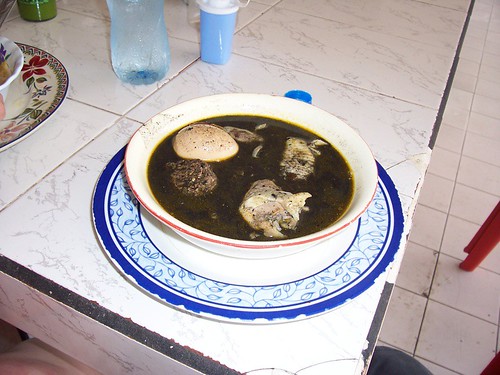
Lunch on a Saturday was mostly crushed avocado or potted meat sandwiches, with perhaps pounded calves’ liver fried with lots of onions and creole bread for six o’clock tea. But the intense activity, and the smells of what was to come on Sunday noon, assuaged the need for bigger meals. In the houses of even the poorest, at the very least red kidney beans and bits of salty pigtails stewed on outdoor fire hearths waiting for the addition of raw rice, assiduously picked over for stones, and washed several times until the water ran clear. And in the houses of those that could better afford it, chickens, pork, or beef roasted in ovens; great pots of grey-black relleno soup thickened on stoves with a dozen hard-boild eggs per pot bobbing up and down like dumplings, and the corn mills of the town ground busily in preparation for the mounds of tortillas that would be needed the following day. Seafood and groundfood were rarely cooked on Sundays: fish, crayfish, conch, yams, cocoa, sweet potatoes, breadfruit and the like were everyday fare.

In fact I think it’s a quirk of a certain kind of post-colonial novel to almost overdo the local colour. The book is absolutely full of references to foodstuffs, flowers and trees, bits of local tradition, references to history; it’s like one long assertion of Belizeyness. Which isn’t necessarily a bad thing; in fact I enjoy all that stuff (particularly the food!). It’s just an observation of a phase that, perhaps, national literatures tend to go through.

I did enjoy this book, btw, so I hope my comments don’t across as negative. I enjoyed all the descriptive stuff, found the story engaging, and learn at least slightly more about Belize than I knew before. So that’s all good.

Beka Lamb is my book from Belize for the Read The World challenge, and is also my fifth book for the Caribbean Reading Challenge.

» The picture, ‘Relleno Negro‘, is © moviesandcheese. I don’t think it was taken in Belize, but it’s clearly much the same dish.

Categories
Culture

Season of Migration to the North by Tayeb Salih

Season of Migration to the North is my book from Sudan for the Read The World challenge. Originally published in 1966, ‘in 2001 it was selected by a panel of Arab writers and critics as the most important Arab novel of the twentieth century’.

I didn’t really know anything about it before I started reading, and expecting it to be set entirely in Sudan, I was slightly startled by the amount of London in it. It is narrated by a man who is returning to Sudan after seven years studying in Europe; when he comes back to his home village, he meets a stranger called Mustafa who also, it turns out, spent many years in London.

It is very much a culture clash novel, exploring Mustafa’s experience, firstly in London as an outsider figure who plays up his exoticism to attract women, and then a different kind of outsider after he has returned to Sudan and is living as a farmer among people who know nothing about his background.

The London sections are not too different from what you might find in a mid-C20th English novel; I was more interested in the Sudan stuff. I do appreciate there’s an irony in reading a book about a man who trades on his exoticism and then complaining, effectively, that it’s not as exotic as I was expecting; but there it is. It is quite intriguing to read a novel about English society with the ‘exotic’ character at the centre, though — I’m sure I’ve read a few novels by British writers from early-mid C20th with Mustafa-type characters turning up on the periphery. Not that I can think of specific examples offhand.

Most important Arab novel of the century? I wouldn’t know, although as I say, it reads to me like a fairly conventional novel of the period. A good novel — extremely good in parts — but it didn’t blow me away. But then I don’t think the novel is exactly a traditional part of Arab culture, so it may have been more radical in its context.

» The two pictures — Kadugli – Dilling Provincie Kordofan and West Nuba Mountains — are both © Rita Willaert and used under a CC by-nc licence. They don’t have any very precise connection to the book but they were taken in Sudan and I liked them. There are lots more where those came from.