Watching someone put on a burst of pace at the end of a fast 10000m is one of the best sights in sport. Amazing stuff from Tirunesh Dibaba.
And so much more exciting to watch than the sprinters.
Watching someone put on a burst of pace at the end of a fast 10000m is one of the best sights in sport. Amazing stuff from Tirunesh Dibaba.
And so much more exciting to watch than the sprinters.
I was thinking about whether Michael Phelps is the ‘greatest Olympian of all time’, and the relative value of medals in different events. For example, the fact that it’s even possible to enter eight events at the same Games means that Phelps has a medal-collecting advantage over, say, a boxer. And the 52 gold medals available in rowing (fourteen events, but multiple people in each boat) seems a lot for a sport with such limited global participation: those events are surely less competitive than, say, the athletics.
So how to go about levelling the field? Well, you could start by cutting events; certainly from the rowing, and probably the fencing (currently 10 events), canoeing (16), judo (14), shooting (15) and wrestling (18). But you still might need to introduce new events to the more competitive sports. In athletics, there’s clearly room for a 50m race, a 300m, a 600m, maybe 2000m and 8000m; we could revive the standing long-jump and high-jump; and learning from the swimmers, there must be room for 4x200m and 4x800m relays. If we got really desperate, we could take an idea from the boxers and weightlifters: have weight classes for the throwing events. The featherweight javelin: it’s an idea whose time has come.
But the sport which is clearly most underrepresented in Olympic medals is the most popular sport of them all: soccer. At the moment there are only two events — men and women — so with 18 players in each squad, that’s a maximum of 36 gold medals, less than are currently awarded in the rowing. So we need some new events. Obviously you’d start with an indoor/five-a-side tournament: what FIFA calls futsal; beach soccer also seems like a plausible idea. Wikipedia reveals the existence of a baffling-sounding Norwegian variant called Synchronised Football. And a penalty shootout tournament might be interesting, too.
But the one which has got me most excited is: keepy-uppy. It is, after all, like a slightly blokier version of rhythmic gymnastics. And the possibilities are endless: there’s the classic version, with the player performing a routine and being marked for the difficulty and style of his tricks. You could have doubles keepy-uppy, with two players keeping the ball in the air between them. There’s endurance keepy-uppy, although as the world record is over 19 hours, that would be a hell of an event to stage. There’s the keepy-uppy 100m sprint. And of course the magic of synchronised keepy-uppy.
I am joking about most this, but actually I would love to see keepy-uppy (or, if you prefer, freestyle football) as an Olympic event. It would be fabulous. And it might actually be a good idea to introduce futsal, but as a replacement for normal soccer: that way football could still have a presence at the Olympics without just duplicating the World Cup.
There was the first of a three-part series on TV tonight called Make Me A Christian. A group of volunteers, including a lap-dancer and a Muslim convert, are given a three-week course in Christianity by four ministers of various denominations. I watched about 20 minutes of it before I lost patience; it’s an idea that could make an interesting piece of television but in practice it both bored and irritated me.
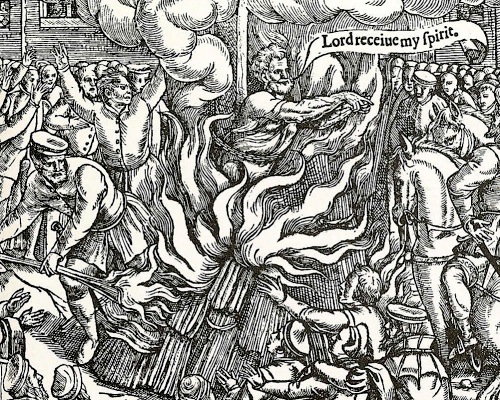
But one particular idea requires comment: that the UK is a ‘Christian nation’ built on ‘Christian principles’. I don’t think it’s true that any of the important principles that the country is built on are particularly Christian, as it happens, but that’s not the point I want to make.
It is true that, for over a thousand years, the vast majority of the inhabitants of these islands have been Christians. A comfortable majority of British people still are. So, historically and demographically, there is an obvious sense in which it is true to say that the UK is ‘a Christian country’.
But you could use exactly the same arguments to say this is a white country. And if someone was to start saying that the UK is a White nation, built on White principles, we would all immediately understand that their intention was to exclude and belittle.
I know the analogy is not perfect. And I’m not going to claim that, as an atheist, I feel like I’m the victim of any terrible prejudice (though if I was Hindu, Muslim or Jewish I might feel differently). But when an evangelical preacher like the presenter of Make Me A Christian describes the UK as a ‘Christian country’, I’m pretty sure he’s suggesting that his claim to Britishness is better than mine.
I do not accept that this is true.
» The picture is of a Christian being burnt by Christians because of his Christian beliefs; an example of the Christian principles so important to British history.
I wasn’t particularly excited about the Olympics, this year, but I just caught the last 15 or 20 minutes of the women’s road cycling race to see Nicole Cooke narrowly win our first gold medal in the middle of a downpour, and got completely caught up in it.
It’s magic. Never fails.
Watching Wimbledon, I was thinking about how much the appeal of tennis depends on the scoring system. You have to win games by a two-point margin and sets by a two-game margin, so at the key moments in the match, when it’s tightest, the drama is artificially enhanced: the balance can swing back and forth between the players. But on the other hand, a 40-0 game is worth exactly as much one that goes to deuce and a 6-0 set is worth the same as one that goes to a tie-break. And that means that there is always the chance for the losing player to pull back.
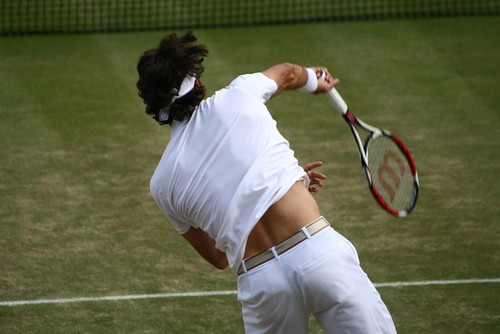
As a thought experiment: the minimum number of point you have to win in a five set match is, if I’ve got my maths right, 72. So what would tennis be like if you scrapped the games and sets, and the winner was the first to 120 points? I assume it would be much less entertaining, as one player would tend to gradually pull out ahead and the match would just peter out.
But what would happen if you altered other sports? Some have made the experiment for us. There are various forms of cricket that use basically the same rules but take different amounts of time to play; the extremes are test cricket (five days) and 20-over cricket (about four hours). The five day game is gradual, attritional; it rewards virtues like concentration, will-power and consistency. The short version is explosive and fast-scoring; it rewards power, flair and risk-taking.* Both versions can produce great drama, but they are quite different to watch.
It gives me the urge to tweak other sports. For example, I don’t know much about ice hockey, but when I have watched it, as a soccer fan, it seems like the ice is just too crowded; there’s not enough time and space for anything to happen. So how would the game change if the rink was four times the size? Hell, let’s do the same with basketball — a much bigger court, perhaps a couple more players on each team.
I’m not suggesting that these innovations would definitely make for a better sport: it’s just a curious thought experiment. Maybe there’s a something waiting to be invented, some simple change to an existing sport that would magically make it much much better: American football with smaller teams, ping-pong with bigger tables, soccer without goalkeepers, indoor polo. Perhaps (probably) these ideas are stupid, but who knows?
If any of these ideas are, unexpectedly, brilliant — well, we’ll never know. There’s the weight of tradition that makes sports fans scream bloody murder at the idea of tinkering with their favourite sport; but also it would often take years to find out if a radical rule-change was, on balance, better or worse. It’s not enough to take existing players, ask them to play to new rules, and see what happens: you need time to see how it develops, for thoughtful people to come up with ideas and try them, for a new style of play to develop. Time for the law of unintended consequences to kick in, but also for people to adapt to to it.
But it’s fun to consider the possibilities, so any suggestions about how to improve your own favourite (or least favourite) sport should be posted in the comments.
* I won’t try to explain why this is true, since I know most of my readers come from non-cricketing nations, and those who know about cricket will understand already. And for those who do know about cricket: yes, this is probably an over-simplification, but hey-ho, it’ll do.
» The photo is Men’s Wimbledon Final 2008- Federer Vs Nadal, posted to Flickr by and © channy937.
Canada Day and the Fourth of July have made me jealous.
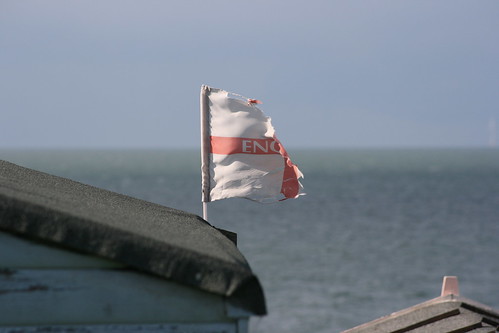
We need a special holiday to do English things. Like drinking tea, talking about the weather, overcooking vegetables and being casually rude about the Welsh for no obvious reason.
» In tatters, posted to Flickr by geraintwn and used under a Creative Commons attribution licence.