-
‘Looks like the writers are coming back to work. Amazing that the executives thought they could just do without them.’
Categories
Last year on 28th February I wrote this:
Last year it wasn’t until March 12th that I complained about hay fever. Nearly two weeks earlier, this year.
Well, it’s only the 9th, and my eyes have been painfully sore for days. Because of these little buggers I took a picture of yesterday:
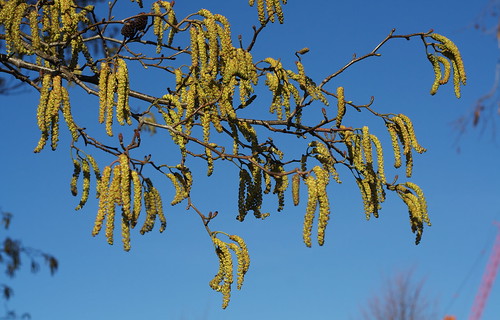
It’s not really fair to make year-on-year comparisons, because I haven’t consistently blogged at the first sign of any symptoms. But I’ve been getting hayfever for about 15 years now, and this is ludicrously early. I think of it as starting in March; this year the first itchiness at the back of my throat was at the end of January.
So I was interested to see this article. Basically the guys at Kew Gardens are making the same observation. They link it to climate change, and it certainly feels like yet another warning, along with the ibises and egrets and spoonbills, that climate change is happening right now and it’s not only affecting glaciers in Greenland.
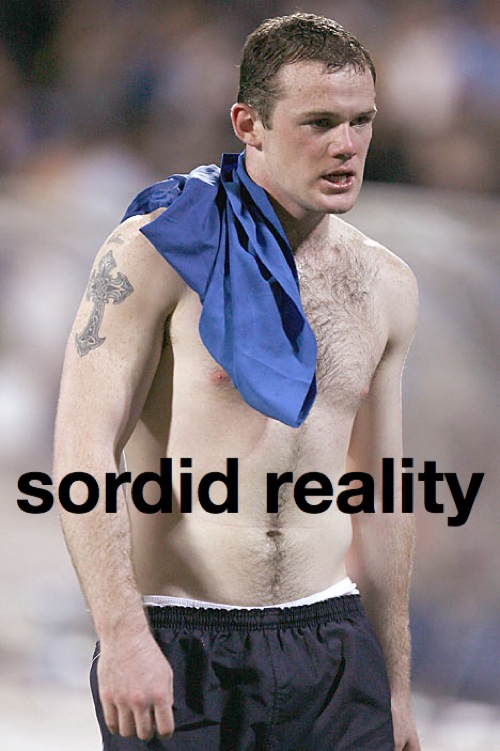
Well, today the Capello era really gets started. After two months of blissfully fact-free speculation, conjecture, analysis and day-dreaming, we have to get down to the sordid reality of playing actual football.
Even after the match, it’ll be too soon to tell much really. Not that that’ll stop the pundits. Obviously they have to offer some kind of opinion—they have airtime or newsprint to fill—but it’s a rare bird indeed who truly manages to bear in mind that, as the health warning on financial advertising puts it, past performance is not necessarily indicative of future results.
It’s not just the professionals, of course; we all do it. If a team is playing brilliantly in November, we confidently predict that they’re going to win the league. Even over the micro-short term: if a match is 3-0 at half time, and one team has been dominant, you can guarantee that the pundits, even the Beeb’s collection of melancholic pessimists, will predict a scoreline of 5, 6, or 7 to nil. This despite the fact that the balance of play almost always swings back and forward during a match, and that if one team has been particularly good it’s much more likely that they’ll go off the boil a bit in the second half.
The Thames Path is what it sounds like: a walking route that follows the Thames. It runs 184 miles from the source in the Cotswolds to the Thames flood barrier. I walked from the Thames barrier to Greenwich. My plan is to do the London part of the route in occasional sections; I’m not planning to walk all the way to Cirencester. Though it might be quite an interesting long-term project.
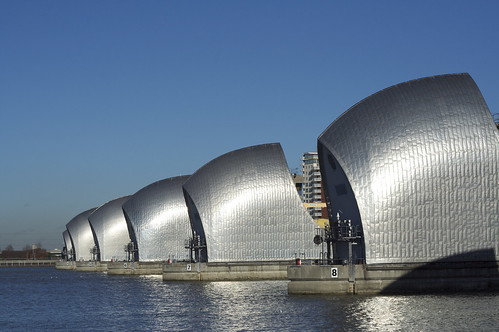
The section I’ve just done started at the Thames Barrier itself and went along the south bank, looping around the Greenwich peninsula past the Millennium Dome, with all the skyscrapers of Canary Wharf just over the river, and ended by going past the Royal Naval Hospital.
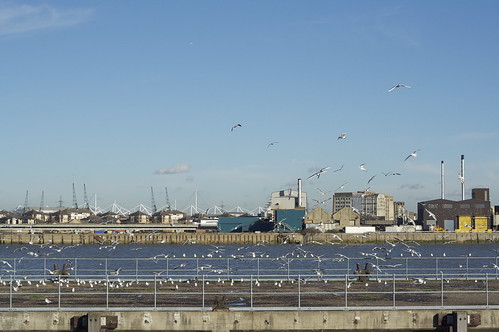
Despite the engineering marvels of the barrier and the dome and the shiny pointiness of Canary Wharf, it really was not a glamorous walk. The shipping which once would have made that stretch of river one of the busiest in the world now goes into more modern, deeper ports that are equipped to deal with container ships, and heavy industries have largely moved overseas, but despite a few outcrops of upmarket apartment blocks it’s still a working part of London. I noticed a Tate and Lyle factory, probably making sugar from EU-subsidised sugar beet, and an aggregate recycling plant; there were various yards that seemed to be stockpiles of gravel and sand for the construction industry. But most of the time I had no idea what businesses I was passing. I would guess some were chemical processing plants; at other times I was probably just passing behind warehouses. It was dusty and sometimes smelly, and for several sections of the walk the Thames Path ran between eight foot high chain-link fences, and felt like a peculiar and frivolous intrusion on the area.

Even so, it wasn’t without bits of wildlife. There were little groups of teal on sheltered spots all along the river, and hundreds of gulls. And hopping around in that most urban of shrubs, a dust-covered buddleia,
was my best bird of the day: a chiffchaff. These little greeny warblers are supposed to be in Africa at this time of the year, but a few stay for the winter. The RSPB suggests 500-1000 birds overwinter here compared to 800,000 pairs in summer.
I won’t be rushing to walk this route again—once was enough—but it was interesting, even so. From here on I have a choice of which side of the river to take, so I think I’ll probably cross over the river (well actually under the river, via the Greenwich foot tunnel) and walk around the Isle of Dogs side as far as London Bridge.
» I’ve started a Flickr set of pictures from the Thames Path. All the pictures in this post come from there. I’ve also posted a picture from the walk to Clouded Drab.