Categories
Culture

Harry’s advent calendar of paintings, day 14: Matisse

I was looking over the paintings I’ve posted so far, and it’s weirdly unrepresentative of my personal taste. I mean: Aelbert Cuyp, Jacob Jordaens, Jenny Saville, Lubin Baugin… these are fine artists but not exactly my particular favourites.

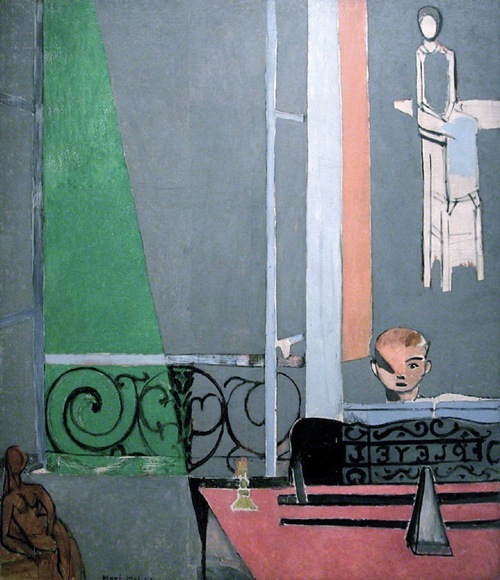
So here’s a particular painting that made a personal impression on me. The Piano Lesson, by Henri Matisse:

It’s a big painting, 8′ by 7′. It normally lives in MoMA, in New York. I’m not quite sure, but I think I must have seen it when the Matisse Picasso exhibition came to Tate Modern. It has stayed with me ever since, though it’s hard to articulate why. It’s something to do with the collision of modernism and formality, perhaps.

One reason I haven’t posted more of my personal favourites so far might be because I’m slightly protective of them; a little 500 pixel version is never going to be the same, and I want to do the paintings justice.

Is it weird that I worry about doing the paintings justice, rather than the artists?

Categories
Culture

Harry’s advent calendar of paintings, day 13: Baugin

I thought it was about time for a still life. This is Le dessert de gaufrettes by Lubin Baugin, from about 1630. ‘Gaufrettes’ are wafers, in this case ones which have been rolled up like brandy snaps or cannoli. I must say they look a little bit dry like that, but with a few mouthfuls of dessert wine to ease them down, I expect they’re delicious.

I like still lifes; there’s a kind of conceptual purity to them. By which I mean: if the challenge is to make a painting which engages the viewer’s attention, then anything with an actual human in it is pushing against an open door. People are so naturally drawn to faces that they see them everywhere.

But to stick a carafe of water, a couple of books and a pile of fruit on a table, and to make it into something beautiful and precious, something that people want to linger over in a way they would never linger over a real bowl of fruit: that’s magic.

Categories
Culture

Harry’s advent calendar of paintings, day 12: Renoir

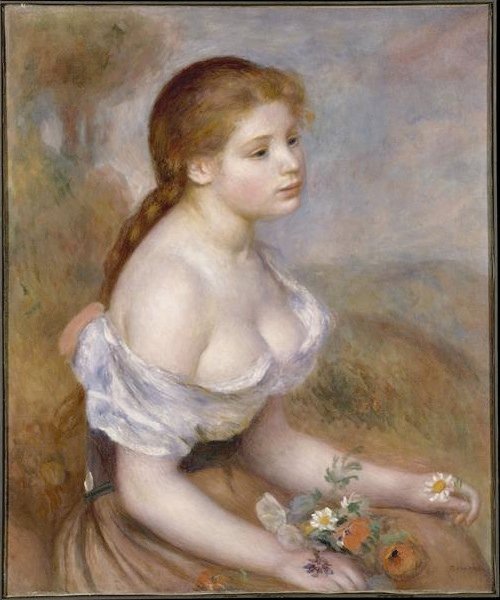
Has there ever been a supposedly great painter who produced as many awful paintings as Renoir? I mean, look at this:

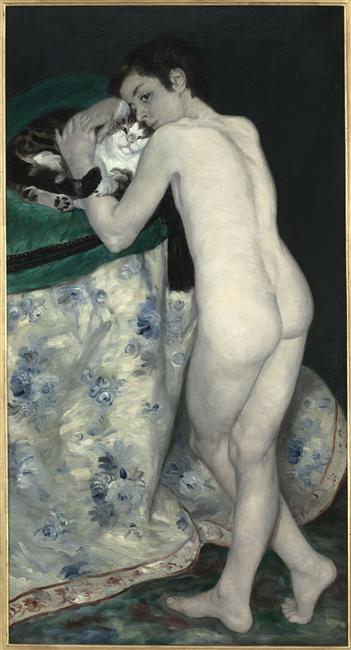
It’s not just the fact that it is, in the least subtle way possible, a painting of a pair of boobs which happen to have a girl attached to them. Or that her arms and hands appear to be suffering from a complete lack of skeletal structure. Or that every one of Renoir’s jeunes filles have interchangeable gormless faces. No, what is most annoying about this painting is that it was painted by the same man who, On a good day, when he was really trying, was capable of occasionally producing paintings like this:

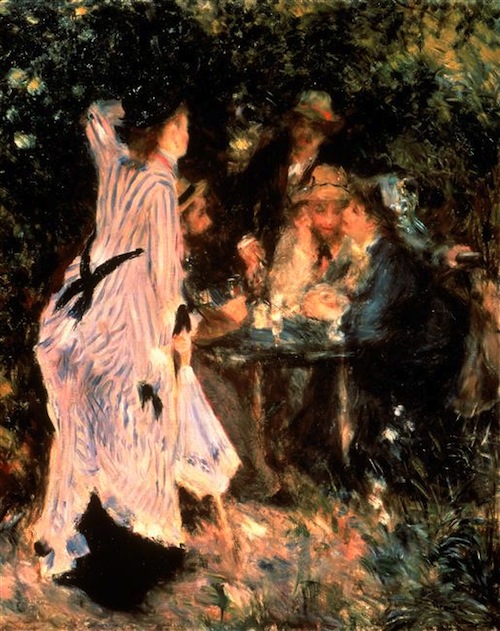
I don’t think it’s a surprise that when I find a painting of his I like, it’s when he’s being least Renoir-y. Although some of his more typical paintings are also rather magical:

Anyway, that seems to be three paintings, which is probably cheating. Better stop before I accidentally post any more.

Categories
Nature

Waxwings!

This year there has been an irruption of waxwings into the UK, presumably because of a shortage of berries in Scandinavia and Russia. It’s a bird I have wanted to see forever: it’s exceptionally glamorous looking and it’s a regular-but-uncommon visitor. So since it became apparent that there were a whole lot of them around, I have been religiously checking birdguides.com for news of sightings, looking for somewhere conveniently reachable by public transport from London. Initially they were all up north — flocks of hundreds in Scotland — but they have been spreading down across the country, and over the past week or so there have been quite a few seen in London. But a lot of those are records of the ‘twelve seen flying west’ variety; great for the person who saw them, but hardly worth rushing across town to try and get a look at.

But three days ago there were about 90 in the trees opposite the B&Q at Folkestone; and then the day after there were 160, and it seemed like a good bet that there would still be some yesterday, so off I went.
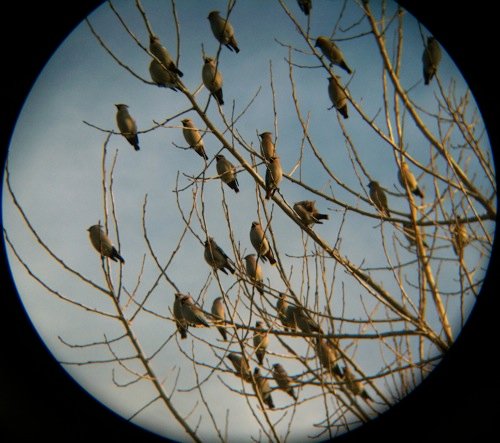
Result! That’s just a few of ’em. And I know it’s not the greatest picture, but I took it by pointing my phone camera through a pair of binoculars, so all things considered, I reckon it’s pretty good.

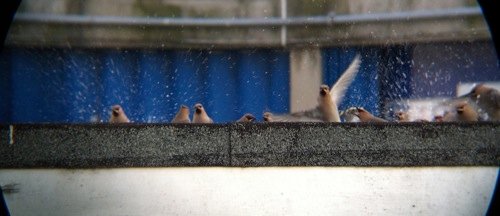
Here are some waxwings bathing in water that had collected on the roof of the Action Carpets warehouse:
And here are some waxwings scoffing berries:
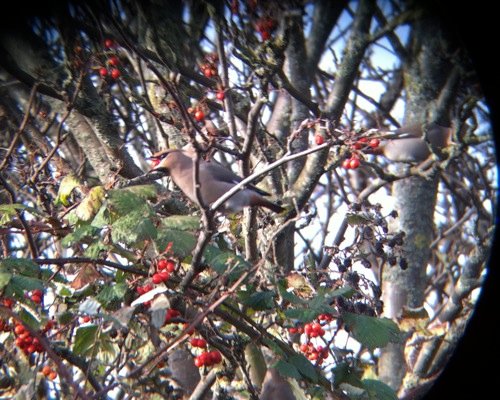
I had some pretty amazing views, although my photos don’t do them justice. If you want to see what they really look like, check out this photo which someone else took in Folkestone.

Incidentally, it would be nice to think that birdwatching would all take place in beautiful wild environments, like the Ecuadorean cloud forest or Pembrokeshire clifftops, but surprisingly often it seems to end up involving the car park of a large DIY retailer, or the roof of a carpet warehouse, or some other equally glamorous setting. I guess if you live somewhere as built up as the south of England, the birds just have to fit in where they can.

And I guess if I had been somewhere wilder, I wouldn’t have had access to a van selling what might be the most British sandwich I’ve ever seen: the Breakfast in Bread. Oh yes, it is what it sounds like: bacon, sausage, tomatoes, mushrooms, black pudding and fried egg, stuffed into a baguette. Amazing. I wimped out and had a BLT myself, but just the fact that the Breakfast in Bread exists is good enough for me.
Categories
Culture

Harry’s advent calendar of paintings, day 11: Unknown

Yesterday I featured a picture by a great painter of cows. To be fair, Aelbert Cuyp had many other notable qualities, including being a fine painter of skies and light… but one way or another an awful lot of his paintings have cows in. Maybe there were just a lot of cows in C17th Holland; if your country is flooded half the year, grass is a pretty good crop to focus on.

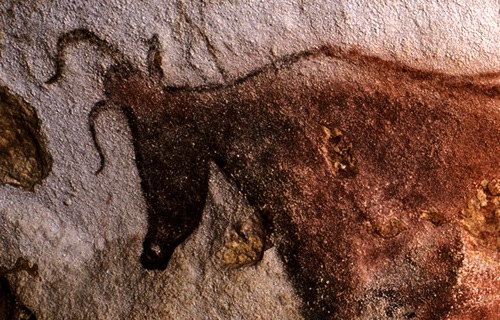
Anyway, here’s another great painting of a cow. But this is a wild cow, the ancestor of domestic cattle: the aurochs. The aurochs actually survived all the way to the seventeenth century before we wiped it out. But this is much older than that.

We don’t know who painted it, of course. Or why, although no doubt there are plenty of theories. What we do know is that fifteen thousand years before the birth of Christ, some people were living down inside a very dark cave in what is now the middle of France, and that on the walls, they painted the wild animals that lived around them: aurochs, horses and stags, especially.

They are beautiful images, I think, but what’s really amazing is their age, and what it says about the deep history of humanity. Before the Egyptians, before the Sumerians, before Çatalhöyük, there had already been hundreds of generations of our ancestors who were at least human enough to produce art. And Lascaux isn’t even the oldest cave art we’ve discovered; the art at Chauvet is another thirteen to fifteen thousand years older. In other words, there is nearly as much time between Chauvet and Lascaux as between Lascaux and us. Recorded history is just a pinprick in comparison.

You can see more of the paintings at the Lascaux website.

Categories
Culture

Harry’s advent calendar of paintings, day 10: Cuyp

Oops, nearly forgot again. I suppose I could cue up a few in advance, but I rather enjoy the semi-random process of picking the paintings.

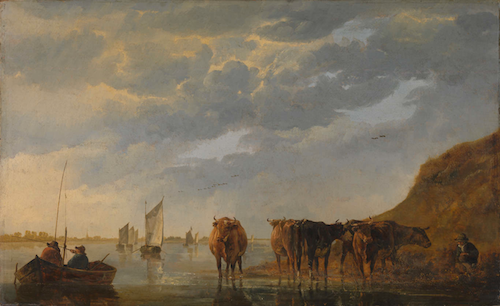
This is A Herdsman with Five Cows by a River by Aelbert Cuyp.