Categories
Culture Nature Other

Blogger Bio-blitz #1: Ayia Lake

blogger bioblitz

On April 21st, I went birding to a reservoir near the village of Αγια, written as either Agia or Ayia in Roman characters. Ayia is about 9 km SW of Chania, the capital of the westernmost province of Crete, and the reservoir is a good spot for migrating waterbirds. The reservoir is surrounded by reedbeds and then agricultural land; the walk down to the lake goes past orange groves.

To quote the post I wrote on the day, now with some pictures: “The guide to birdwatching in Crete listed, among the possible birds for the site, Little Crake, Spotted Crake and Baillon’s Crake. I’ve never seen any of those before, but I didn’t get my hopes up because all the crakes are notoriously difficult to see; they skulk.

So I arrived and pretty much the first thing I saw? A crake! In full view! And I had one of those panicky moments of trying to put down the telescope in a controlled fashion and get a proper look at the bird and check the field guide, all at the same time, thinking I had to make use of my lucky moment, while the crake just kept pottering about at the edge of the reeds. After I’d had a long look at it and decided it was Little Crake (plain blue underside and no barring on the flanks, since you ask) I had a quick check in the other direction along the lake, and there was another one! And it became apparent that not only were they not bothering to skulk, they were extremely approachable.
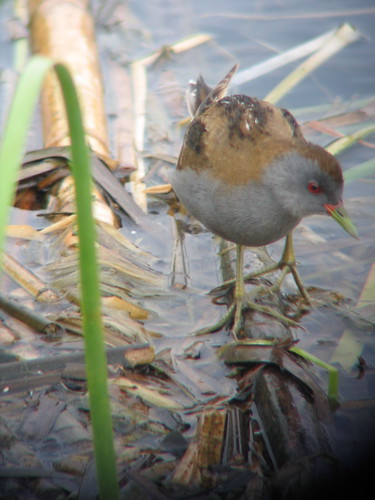
male Little Crake

I can only assume that they are so tame because they’re on migration and their priority is eating furiously to get their strength up. From Africa to, say, Poland is a long way to fly for a little bird with stubby wings. I also got incredibly good views of a Little Bittern that just sat and looked at me as I approached instead of ducking into the reeds. Again, it was probably knackered from all the flying.”
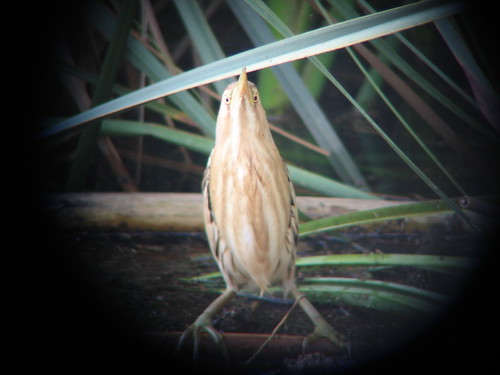
female Little Bittern

All that black around the edge of the picture is vignetting from the scope. Normally I’d zoom the camera to cut it off, but the bird was so close that I’d have to cut off its feet.

Here’s the rest of the list for the day, with a few comments:

Linnet
European Goldfinch
European Greenfinch
Chaffinch
European Serin

These finches are all residents on Crete, and may well have raised one brood already, even though the passage migrants are still heading north.

Spotted Flycatcher
European Pied Flycatcher
European Stonechat
Whinchat (below)
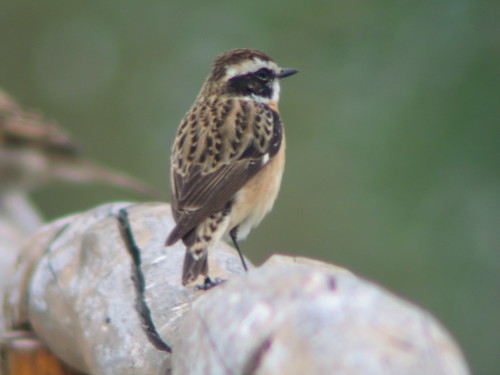
Whinchat

Nightingale (only heard)
Great Tit
Yellow Wagtail (the black-headed subspecies, Motacilla flava feldegg)
Sardinian Warbler
Cetti’s Warbler
Sedge Warbler
Common Blackbird

Barn Swallow
House Martin
Sand Martin
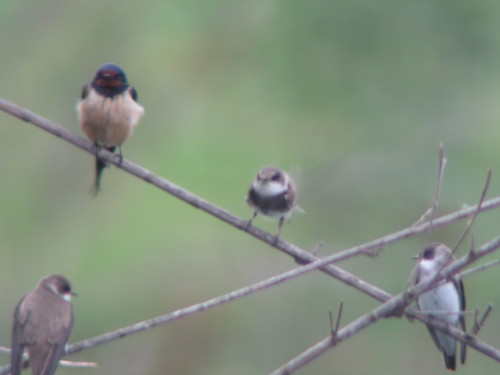
sand martins and swallow
Barn Swallow and some Sand Martins resting in the reeds. Most Barn Swallows in Europe have pure white underparts; the reddish breast of the one here is typical of the eastern Mediterranean. And I’ve just learnt that what I call a Sand Martin is known as a Bank Swallow in the US, so if you were thinking they looked familiar, that might be why.

House Sparrow – the subspecies known as ‘Italian Sparrow’, Passer domesticus italiae.

Hooded Crow

Common Swift
Alpine Swift

Eurasian Coot
Common Moorhen
Little Crake

Little Bittern
Black-crowned Night Heron
Grey Heron
Little Egret (below)
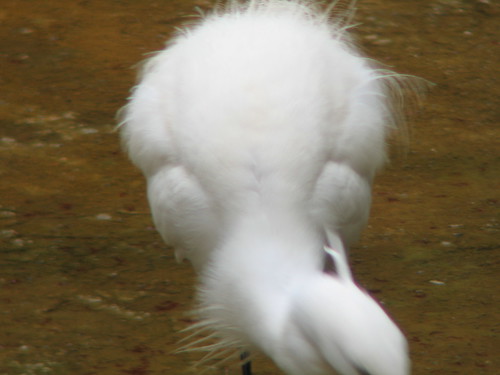
Little Egret

Little Stint
Common Sandpiper
Black-winged Stilt
Yellow-legged Gull

Common Kingfisher (below)
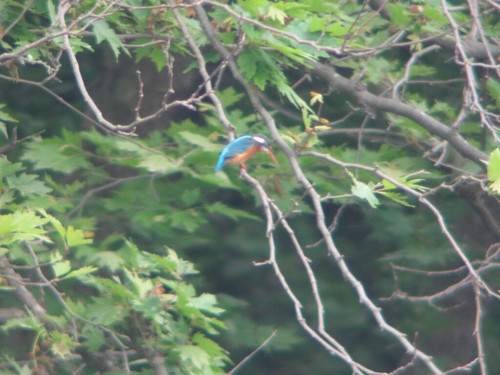
kingfisher

Common Cuckoo (below; another surprisingly tame bird)
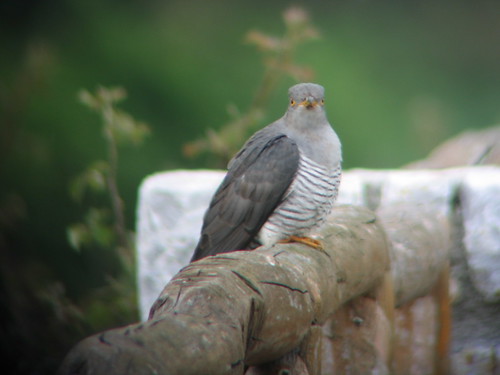
cuckoo

Little Grebe
Ferruginous Duck
My second lifetime tick for the day, after Little Crake. I was just settling down to a coffee (Greek, medium sugar) and saw a couple of birders intently peering through a scope at something which, when I wandered over, turned out to be a distant but definite Ferruginous Duck. It obviously pays to be nosy.

European Marsh Harrier
Common Buzzard
Peregrine Falcon

And one non-bird:

European Tree Frog
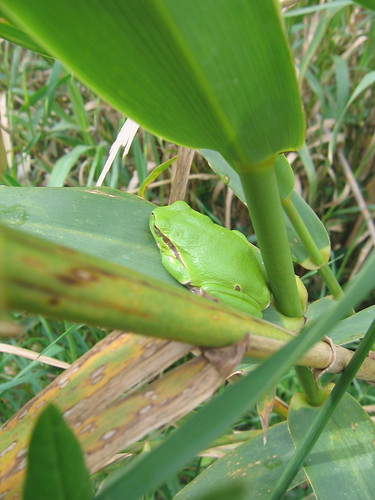
tree frog

That barn owl bio blitz button is derived from a photo on Flickr by Nick Lawes used under a by-nc-sa licence; the button is therefore available under the same licence. Not that there’s anything wrong with the Jennifer’s BBB buttons, but I wanted something to match my colour scheme.

Categories
Nature Other

Blogger Bio-blitz: Crete overview

blogger bioblitz

Well, I’ve got back from Crete, and now’s my opportunity to write up some of my birding as full Blogger Bio Blitz posts. Now with pictures!

Some general scene setting, first. Crete is a beautiful island, mainly consisting of spectacular mountains surrounded by blue Mediterranean water. But it’s not a forgiving place; in the interior of the island you’d be hard-pressed to find a patch of flat ground big enough to lay out a tennis court. Apparently, a few thousand years ago, Crete and the rest of the Greek islands were covered in forest, but thanks to a thriving goat population, they are now mainly bare, rocky terrain covered in low, scrubby, thorny vegetation, which, thanks especially to the wild thyme, the locals boast is the source of the best honey in the world. And where possible, they grow olives—there are miles and miles of grey-green olive groves—or if there’s a bit more water, grapes, oranges and other crops.

In January or August it must be a seriously harsh landscape; but in spring the island is covered in wild flowers. There are more species of plant in Crete than Great Britain, and 1 in 10 is endemic. And even more than the flowers, the reason I went in April is for the spring migration. The list of breeding birds for Crete is surprisingly short, and many species that are common all over Europe—Grey Heron, Cuckoo, Hoopoe—are missing. But in the spring, many of the birds migrating from Africa to Europe stop in Crete on their way over the Mediterranean.

I went primarily for the birding, and I was hoping to ID a few flowers for the Bio Blitz; but I found the flower guides I had just weren’t adequate to confidently identify many flowers down to the species level. So I’ll be posting a few pictures of flowers, but not, generally speaking, confident IDs for them. I do have lots of birds to report, though :)

That barn owl bio blitz button, btw, is derived from a photo on Flickr by Nick Lawes used under a by-nc-sa licence; the button is therefore available under the same licence. Not that there’s anything wrong with the Jennifer’s BBB buttons, but I wanted something to match my colour scheme.

Categories
Me Nature

Lasithi

Well, I spent a couple of days in Tzermiado on the Lasithi plateau, which is like a little chunk of Holland – flat fields and fruit trees – randomly inserted in among the Cretan mountains. Some good birds (wryneck, quail, cirl bunting, black eared wheatear, griffon vulture, peregrine, blue rock thrush), and up on the mountainsides, incredible flowers, including about 6 or seven species of orchid, as well as asphodel, cyclamens, and so on.

I’m nearly home now, so soon I’ll be able to show you the pictures :)

Categories
Me Nature

Red-letter day

For me, one of the nice things about birding in Europe is that, in a sense, every new bird represents a lifetime ambition fulfilled. If you live in the UK, soon after you start taking an interest in birds, you get a book of birds of Britain and Europe, and spend time looking at all the intriguing species that aren’t found in the UK. Obviously, not all the ambitions are equally deeply held; not even the most geekily bird-obsessed six-year old is going to get that excited by the drabber waders and warblers. But at least you’ve known the names for years; it’s not like birding in South America or Africa, where often the first time I consciously register the bird’s name is when I identify it.

There’s one group of birds, though, that I can sincerely say represent a lifetime’s ambition for me. One of the first bird books we had in the house was not a field guide exactly, but a large format book of British birds for the family library. I’m not sure it even had all the British breeding species, and it certainly didn’t have many rarities. But it did make room for one set, chosen more for their visual appeal than because the reader was likely to see them. On what was effectively the ‘colourful birds’ page, along with kingfisher and golden oriole, there were three species that are occasional vagrants to the UK: bee-eater, hoopoe and roller.

Well, as of today, I’ve finally seen the whole set, because today I saw a roller for the first time. I’ve actually seen other species of roller in Africa, but I’d never seen European Roller, and it was even better than I expected. I saw it flutter up onto a bare tree, where it was sitting facing me in full sunlight, and I knew they were blue, but it was just the most beautiful, unreal sky blue colour.

So this is a big day for me. I’ve also seen Golden Oriole, Woodchat Shrike, Quail and Peregrine Falcon, which would be pretty good by normal standards, but today is all about that roller.

EDIT: what’s more, I’ve now discovered that according to the book, Roller is a ‘Very Rare’ passage migrant here, so not only is it a beautiful bird and an exciting one for me personally, it’s actually a good record for Crete! Which isn’t really that important to me but adds a little extra je ne sais quoi.

Categories
Me Nature

The lake of crakes

I went out to a reservoir near Hania today. The guide to birdwatching in Crete listed, among the possible birds for the site, Little Crake, Spotted Crake and Baillon’s Crake. I’ve never seen any of those before, but I didn’t get my hopes up because all the crakes are notoriously difficult to see; they skulk.

So I arrived and pretty much the first thing I saw? A crake! In full view! And I had one of those panicky moments of trying to put down the telescope in a controlled fashion and get a proper look at the bird and check the field guide, all at the same time, thinking I had to make use of my lucky moment, while the crake just kept pottering about at the edge of the reeds. After I’d had a long look at it and decided it was Little Crake (plain blue underside and no barring on the flanks, since you ask) I had a quick check in the other direction along the lake, and there was another one! And it became apparent that not only were they not bothering to skulk, they were extremely approachable. I now have lots and lots of blurry crake photos. I don’t know how many individual birds there were – maybe eight, in total? – but I certainly had incredible views of them. All the same species, but it would be churlish to complain about that.

I can only assume that they are so tame because they’re on migration and their priority is eating furiously to get their strength up. From Africa to, say, Poland is a long way to fly for a little bird with stubby wings. I also got incredibly good views of a Little Bittern that just sat and looked at me as I approached instead of ducking into the reeds. Again, it was probably knackered from all the flying.

Being in Crete at the moment really brings home the scale of migration. The whole island is full of birds, but nearly all of them are just passing through. Even many species which are common all over Europe – hoopoe, cuckoo, grey
heron, little egret – don’t breed on Crete. I’ve seen all those species, and if I didn’t have a birdwatching guide to Crete with me I’d assume they were residents, but they’re all on their way somewhere else.

Categories
Me Nature

birding at Aghia Triada

‘Aghia Triada’ is ‘Holy Trinity’, and it’s a monastery on Akrotiri. I went there not just to look at the monastery, but mainly to do birding.

It was a good birding day, I’m pleased to say. Lots of birds, but the most notable were the black-headed race of Yellow Wagtail, Golden Oriole and two which are new for me: Black-eared Wheatear and Collared Flycatcher.

Also lots of flowers; my first orchid of the trip, a serapsis of some kind, and some extraordinary huge dark purple arums that looked like something from Day of the Triffids. So that was all good.

Cloudy all day, which was good for my personal comfort but not so good for photography.