Categories
Culture

The Railway by Hamid Ismailov

Having set myself the modest enough goal for 2010 of reading a few more books for the Read The World challenge than I did in 2009… I’m already behind schedule. We’re into March and I’ve only just finished my first. Ho-hum.

The Railway (translated by Robert Chandler) is my book from Uzbekistan. I was slightly peeved when I received the book to read in the author bio that Hamid Ismailov was actually born in Kirghizstan, but his Uzbek credentials appear to be otherwise impeccable. His parents were just working in Kirghizstan when he was born, at a time of course when both countries were part of the USSR anyway. In some ways it’s quite fitting for this novel, because it is a book full of a patchwork of different nationalities and ethnicities, and full of people moving from place to place, for traditional reasons like pilgrimage and trade; or as part of the army or civil service; or sent to labour camps; or forcibly relocated en masse by the government, like the ethnic Koreans from the far east of the USSR who were moved to Central Asia for some paranoid reason that presumably made sense to Stalin.

One of the reviews quoted on the cover says ‘imagine Marquez’s One Hundred Years of Solitude on the empty plains of Central Asia’, and although it’s perhaps not quite so overtly magical as 100YoS, it is certainly of that ilk, full of strange happenings and grotesquerie. It also has many many characters, all with long Uzbek names — there’s an eight-page list at the back to help you keep track of them, although I can’t say it helped me much — and it shifts around in time and place in a way which, to be honest, just meant I was usually a bit confused. It almost would have been better if I’d read it as a book of short stories, I think, because it would have saved me that sense of being permanently unsure what was going on. I have a relatively high tolerance for non-linear narratives and that sort of thing, but I found it hard going. I didn’t help myself by the way I read it; rather too many long gaps between picking it up.

On the positive side, the world it conjures up is an interesting one: a traditional Central Asian culture rubbing up against Russia and the Soviet bureaucracy, an Islamic culture in a sometimes aggressively secular state, petty local politics in the middle of it. It was one of those books where I kind of thought that maybe, if I had read it in a different place or a different mood I might have really enjoyed it, because it certainly had interesting stuff going on and I can’t put my finger on why I didn’t enjoy it… but there you go.

» Le pain rond ouzbek is © Mon Œil and used under a CC by-nc-sa licence.

Categories
Culture

Books of the Year 2009

As per usual, these are books I happened to read in 2009, rather than books published in 2009.

Don’t Let’s Go to the Dogs Tonight, Alexandra Fuller
Chaka, Thomas Mofolo
Anil’s Ghost, Michael Ondaatje
Echoes from the Dead Zone, Yiannis Papadakis
The Maias, José Maria de Eça de Queirós
Across Arctic America, Knud Rasmussen
Them, Jon Ronson
Your Inner Fish, Neil Shubin
The Culture of Lies, Dubravka Ugrešić
Leaves of the Banyan Tree, Albert Wendt

Glancing over that list, there’s plenty of good stuff, but I’m not sure it has been a completely vintage year. A nice healthy mix of subjects and genres, though.

Categories
Culture

Chaka by Thomas Mofolo

Chaka is a fictionalised account of the life of the C19th Zulu king Shaka. It’s unusually early for an African novel, originally published in 1925 but existing in manuscript in some form as early as 1910.

I wasn’t entirely looking forward to reading it. It has started to really bother me when those who rose to power and built empires through force are presented as Great Men, as admirable or heroic. Qin Shi Huang, Alexander the Great, Napoleon: these men were ruthless megalomaniacs who glorified themselves through the misery of others. But we are fascinated by power, and there’s never a shortage of people who are willing to read history through rose-tinted bifocals. Hell, the Russians are even doing their best to rehabilitate Stalin.

I assumed that Chaka would do the same; but part of the reason I enjoyed it so much is that, on the contrary, its portrayal of Shaka is absolutely excoriating. He is presented as a handsome man of great courage and physical and military prowess; but also as capricious, cruel, violent and terrifyingly, unswervingly power-hungry. In fact the scale of his violence, against his own people as well as his enemies, would seem ridiculously exaggerated, if you’d never heard of Stalin, or Mao, or Idi Amin.

Which isn’t to say that the novel is historically accurate. It doesn’t even pretend to be; it’s told very much in a mythic, folkloric style rather than a historically realist one, and it takes substantial liberties with the history for the sake of telling a good story, to the point of inventing major characters — including Chaka’s love interest and a sorcerer who provides him with his power. His life story is tweaked and manipulated to bring out the themes of ambition and power, and present him with decisions which are loaded with symbolic resonance. I would normally shy away from comparing a writer to Shakespeare — just too much baggage — but as a piece of myth-making based freely on a historical source, it really reminds me of Macbeth or King Lear.

I wasn’t immediately gripped by it, but as the action ramped up and Chaka developed into a more and more extreme character, I thought it was electrifying.

Chaka is my book from Lesotho for the Read The World challenge; a quick hat-tip to the translator, Daniel P. Kunene.

» The Chaka Print cloth ticket is from Trevira’s collection of cloth tickets on Flickr. She explains:

These large gummed labels – known as cloth tickets – were attached to bales of printed cotton cloth for export from Britain (read ‘Manchester’ in many cases). They were designed by British artists who depended on information from company agents in the various territories for subjects that were intended to be appealing for their markets.

It is used under a CC by-nc licence.

Categories
Culture

Dona Flor and Her Two Husbands by Jorge Amado

Dona Flor and Her Two Husbands is a novel about a cooking teacher whose first husband is a charming lowlife, who is always disappearing in search of wine, women, song and roulette, and her second marriage to an upright, responsible, devoted pharmacist who, for all his good qualities, is duller and more reserved. Especially in bed.

Having read the long and mildly tedious Island Boy, I picked it up in the hope it would be a bit more fun. It’s fiction, it’s Brazilian, all the blurbs on the cover go on about it being exotic, sexy, tropical, the work of a great story-teller… all the kind of joyous clichés you’d hope for from the country that gave us Elza Soares, Ronaldinho and the caipirinha. I don’t only want to read books reinforce national stereotypes, but in a wet London November, a bit of Brazil seems quite tempting.

And more importantly, it was recommended by a friend. So after some of the deeply obscure, hit and miss books I’ve read for the Read The World challenge, I was hoping for something juicy and enjoyable. Something that was not likely to feel like a chore.

Sadly it didn’t quite hit the spot. Not because it doesn’t have all those Brazilian clichés: it starts with a character dying unexpectedly during carnival while dancing in full drag, and the whole book is full of gamblers and whores and serenades, and sex and food, and humour and social satire, and a bundle of other things besides. Just reading my own description of it almost makes me want to read it again; but the actual experience of reading it wasn’t so great.

Not that it’s a bad book, but it didn’t ever quite grab me; and after 550 pages, any book that you’re not actively enjoying is going to seem like a bit of a chore. I’d be hard pressed to identify any very glaring problems with it. The characters seemed a trifle two-dimensional — particularly the two contrasting husbands, who might as well be called Id and Superego, or Apollonian and Dionysian — and the plot is perhaps stretched a bit thin; but it might just as well be that I wasn’t in the right mood for it and tried to read too much of it when I was half asleep. So while I’m not about to give it a glowing endorsement, I wouldn’t want to be too negative, either. Pathetically wishy-washy, I know.

» NOM NOM NOM is © Capitu and used under a CC by-nc licence.

Categories
Culture

Island Boy by Tom Davis

…or to give him his full title: Sir Tom Davis, Pa Tuterangi Ariki, KBE. The ‘Pa Tuterangi Ariki’ bit was a title he got by marriage; the knighthood was all his own. Davis was the Prime Minister of the Cook Islands from 1978-87, and Island Boy is his autobiography. He was undoubtedly an impressive individual — he studied medicine in New Zealand, then took the job of Medical Officer of the Cook Islands, where he modernised a decrepit colonial medical service; then he sailed his young family in a small yacht from the Cook Islands to Boston to study public health; did some medical work in Alaska; then he took various research jobs in the US, including research on physiological adaptions to extreme conditions for the army and the nascent space program; raced sports cars; then returned to the Cook Islands to enter politics as a free market ideologue, eventually becoming Prime Minister.

So there’s lots of good material. However, although Davis wrote perfectly well, he was not a dazzling prose stylist, or a man with a gift for anecdote, and he clearly had no intention of sharing anything very personal; he mentions two marriages, a divorce and several children during the book but gives absolutely no details at all. So what you get is a straightforward, by the numbers autobiography which is often interesting but also often a bit of a chore. I don’t think he was terribly introspective, to be honest. His obituary, which I found while trying to learn more about his title, says (among more flattering stuff):

A driven and ambitious man, he was sometimes seen by his peers as arrogant and conceited.

And that does ring true. He is certainly really quite dismissive of most of his political colleagues and opponents.

I ordered Island Boy as my book from the Cook Islands for the Read The World challenge, before realising that the Cook Islands wasn’t actually on my list of countries, which is based on UN membership. But the list isn’t that rigid, and having bought it I may as well count it.

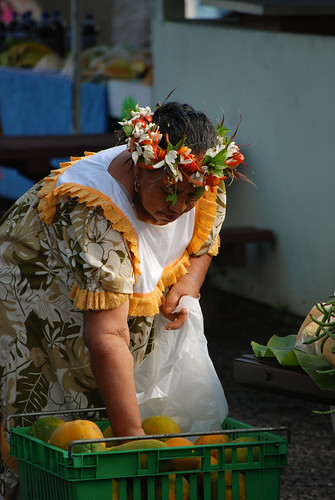
» The picture, Avarua Market, is © Daniele Sartori and used under a CC by-nc licence.

Categories
Culture

The Culture of Lies by Dubravka Ugrešić

The Culture of Lies by Dubravka Ugrešić is a book of essays written between 1991 and 1996 — that is, during and just after the wars that resulted from the collapse of Yugoslavia.* It is my book from Croatia for the Read The World challenge, although there is a slight awkwardness to that choice. This is from the ‘Glossary’ which Ugrešić includes at the back of the book:

Identity:

A few years ago my homeland was confiscated, and, along with it my passport. In exchange I was given a new homeland, far smaller and less comfortable. They handed me a passport, a ‘symbol’ of my new identity. Thousands of people paid for those new ‘identity symbols’ with their lives, thousands were driven out of their homes, scattered, humiliated, deprived of their rights, imprisoned and impoverished. I possess very expensive identity documents. the fact often fills me with horror. And shame.

croatpassport

My passport has not made me a Croat. On the contrary, I am far less that today than I was before.

I am no one. And everyone. In Croatia I shall be a Serb, in Serbia a Croat, in Bulgaria a Turk, in Turkey a Greek, in Greece a Macedonian, in Macedonia a Bulgarian… Being an ethnic ‘bastard’ or ‘schizophrenic’ is my natural choice, I even consider it a sign of mental and moral health. And I know that I am not alone. Violent, stubborn insitence on national identities has provoked a response: today many young citizens of former Yugoslavia, particularly those scattered throughout the world, stubbornly refuse any ethnic labels.

So, although Ugrešić was born in what is now Croatia, and so her book counts for my purposes as a book from Croatia, I should be careful not to label her as a ‘Croat writer’. But then it was never the intention for this challenge that the books and writers chosen should be taken as representative of those countries — or not in a straightforward way. In the context of this challenge, that dynamic between books and countries is quite interesting, but I think it needs a post of its own.

The essays are fascinating. They communicate a sense of an overwhelming cultural trauma, not just because of the war itself but because of the whiplash speed of the changes as all the ex-Yugoslavs created new identities for themselves. Streets were renamed, history rewritten, the literary canon divvied up.

And it wasn’t simply an assertion of a new positive identity for, for example, Croatia, it was necessarily a rejection not just of Serbia and Bosnia but of Yugoslavia. So the country where all of them had lived their whole lives, and which had been an imperfect but functional state for over 80 years, became a ‘prison of nations’, and anyone who questioned this was suffering from the dangerously subversive ‘Yugo-nostalgia’.

This is from the title essay:

I know of a writer colleague who claimed to a foreign journalist that he was ‘the victim of repression’ under Yugo-communism, that his books were banned, and that he had been in prison. That colleague was never in prison nor was he ‘the victim of repression’ and all his books were regularly published. I do not believe that he was lying. Exposed to media brainwashing, terror by forgetting and collective compulsion, my colleague had simply forgotten his personal history, he carried out an unconscious mental touching-up, and in the general context the spoken lie became an acceptable truth. And after all, the foreign journalist had come to hear just such a story, in his Westerner’s head he already carried such a stereotype: the story of a repressed writer in the former communist regime and a happy end in the new, democratic one.

I know of a Zagreb Japanologist who terrorised the whole Yugoslav cultural scene for years with — Japan! Throughout the whole of former Yugoslavia there sprang up haiku circles, haiku poets, ikebana courses, anthologies of Japanese poetry, twinnings between Osaka and Varaždin, festivals of Yugoslav haiku poets. Thanks to the activity of the aforementioned Japanologist, the inflation of haiku poetry during ‘totalitarianism’ had given us all a ‘pain in the neck’. Today the famous Japanologist claims that under the ‘Tito regime’ he was exposed to repression because of … haiku poetry!

We have always been at war with Eastasia.

The essays approach this central subject from various directions — the metaphor of cleanness and cleansing, the relationship between eastern and western Europe, the kitschiness of nationalist aesthetics, pop music — and they are all well-written, thought provoking and rather quotable. But instead of typing out long extracts I’ll just suggest you read it yourself.

Oddly enough, while reading it my mind kept wandering to the possibility of Scottish independence (which, for those who don’t know, is likely to be subject to a referendum sometime soon). In some ways it’s a ridiculous comparison; however the referendum turns out, I’m quite sure it won’t result in civil war and genocide. But there’s something depressing about the idea that after 300 years of the Scots and English managing to live together,† not always harmoniously but not disastrously either, we should have reached a point where we can’t bear to share a national border. And the shift from an intentionally inclusive (if ill-defined) identity like British to narrower, more exclusive, more ethnically specific identities like English or Scottish seems more likely to make us, if anything, more inward-looking and more parochial. But hopefully I’m wrong.

*or at least the first, main phase of those wars; there was the whole Kosovo thing after that.

†yes, I know, the Welsh and [northern] Irish live here too. But somehow I don’t think there are many Scots lobbying for independence because they want to get rid of the Welsh.