Categories
Other

A permanent swing to the Lib Dems?

There’s a post over at FiveThirtyEight suggesting, basically, that since first past the post tends to lock us into a two-party system, the Lib Dems could take the pragmatic (i.e. deeply cynical) decision to quietly drop the issue of voting reform and instead concentrate on cementing a place as the major left wing party in a two party system. In other words, to do to the Labour party what the Labour party did to them ninety years ago.

Personally I think that, ethics aside, if the LDs actually had a real chance of getting proportional representation and turned it down, it would be a HUGE gamble; the current Lib Dem surge seems just as likely to be a temporary blip as a long-term shift in the political landscape.

It did remind me, though, of having the same line of thought myself as a schoolboy back in the 80s. The Labour party was in the political wilderness and seemed completely out of step with the zeitgeist. The Liberals, or the SDP-Liberal Alliance as they then were, seemed a party on the way up, gaining vote share and seats in parliament — though thanks to FPTP, not very many seats. And I was learning about the history of British electoral reform in history lessons: the 1832 and 1867 Reform Bills, and suffragettes and suffragists and so on. Which I was finding deeply boring.

But in those lessons I learnt about the origins of the Labour Party in the unions, the extension of the franchise to the working class, the Jarrow Crusade and the General Strike, about the campaigns for better working conditions, for state pensions, and education, and the start of the welfare state. And since by the 1980s those historical battles had generally been won — not that it was a workers’ paradise, but we did at least have health and safety laws and a welfare state — it seemed possible that we were at the start of another great shift in British politics, as the Labour party lost its relevance and the Liberals filled the void.

But of course it didn’t happen; the however shambolic the Labour party were, the Liberals never managed to convert their share of the vote into enough MPs to matter. The Tories just kept winning election after election on a minority share of the vote, and in the meantime, the Labour party reinvented itself, explicitly cutting the connection to their old socialist principles and becoming almost exactly the same kind of left-flavoured centrist party as the Liberals. And the Tories eventually became so disliked that Labour won by a massive landslide and even now they are struggling to win an election, after 13 years of Labour government that included an unpopular war and an economic collapse.

The thing is, I still think that my original schoolboy analysis was, largely by chance, quite plausible; traditional socialism was on its way down, free-market economics was going to be the orthodoxy for a couple of decades, and Britain was no longer the largely industrial economy that spawned the Labour movement. Surely it was the logical moment for the Labour party to collapse. Instead, here we are at a time when free-market economics has taken a battering, and really it’s only the accident of history that it is the Labour party that is getting punished. There is no grand historical logic that I can see to this being the Liberal moment.

I don’t say that as an argument that it can’t happen, although I do think it makes it less likely. One way or another it’s just a weird moment in UK politics.
Categories
Other

More on voting reform

I think this statistic is very telling (from ten days ago, so the exact number has probably changed… but the point stands):

The Lib Dems climbed to a high of 33% in the voting intention polls this week, and it seems that this figure could be higher if Clegg’s party were perceived by the majority to have a significant chance of winning the General Election come May 6th. Just under half the country (49%) would vote for the Liberal Democrats if they were seen to have a reasonable chance of winning.

Ironically, if those 49% actually voted Lib Dem, they would win by a landslide. So we have a situation where if people actually voted for the party they wanted, the election would have a completely different result; but because they are guessing other people’s votes and trying to play the system, they end up cheating themselves.

It’s particularly stark at the moment because for the first time in decades we have three parties roughly even in the polls. But it’s always true at British elections that millions of people say they won’t be voting for their real first choice party because the electoral system would make their vote worthless.

It has been a fact of life in British politics for so long that we don’t even think it’s odd. And if it was simply an inevitable consequence of all democratic systems, well, fair enough. But since various ingenious people have come up with systems that allow people to vote for their real preference without their vote being wasted… doesn’t that seem like quite a good idea?

Categories
Other

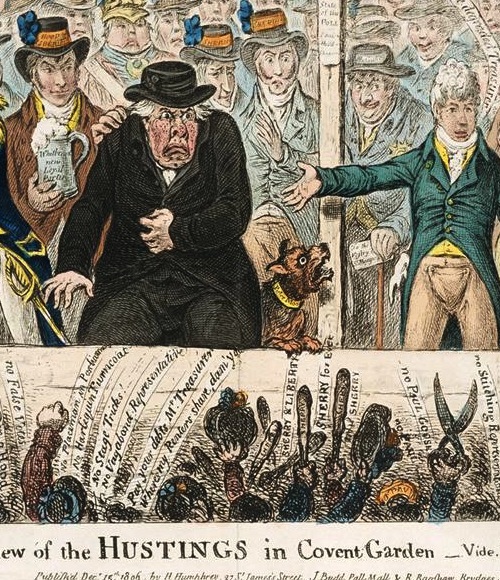
#bigotgate & proportional representation

Two passing observations on the election.

Firstly, on Gordon Brown’s little faux pas today. Clearly being caught describing a voter as ‘a bigoted woman’ makes him look like an idiot, especially since she hadn’t actually said anything especially bigoted.

On the other hand, I’m curious about the ethics of the news organisations using a recording of a private conversation which they recorded by accident. I bet that every news broadcaster keeps a store somewhere of the amusing, stupid, unguarded things that politicians say when they are miked up but not yet on air: a blooper reel for their own amusement. So for the sake of fairness, perhaps we should hear all those things. And indeed the things that journalists say between themselves after talking to members of the public.

And secondly, I’ve been thinking a bit about voting reform. I have become increasingly sick of first past the post; quite apart from the national implications of governments getting large majorities with a minority of the vote, I’m personally fed up with tactical voting. I don’t want to have to think about who can win in my constituency; I want to vote for the party I actually want and believe my vote counts for something.

But seems like something where the law of unintended consequences is sure to come into play. Depending on the exact system we switched to, it wouldn’t be a small change. After all, if you just took the last few decades of  election results and converted them to a proportional system, we would have had 25 or 30 years of permanent Lib-Lab coalition; or perhaps the LIb-Dems as permanent kingmakers. And having the same people permanently in power is exactly what we don’t want, I would think.

In fact, what would probably have happened by now is the increasing importance of small parties; the Greens, the BNP, UKIP might well all have MPs. The SNP, Plaid Cymru and the Irish parties would probably have more influence. And it’s quite possible that the major parties would have split: both Socialist Labour and New Labour MPs, for example. I have no idea whether all this would have been a good thing or not; but it is certainly a big deal.

The thing is, FPTP is only really suited to a two-party system. Which I think means that the current system is broken. On the other hand, changing to PR would mean a radical change in the political culture of the UK comparable to the great C19th Reform Acts. That doesn’t mean we shouldn’t do it, but we do need to go into it with our eyes open.

Categories
Other

Interesting idea in BNP manifesto

I never thought I’d find a thought-provoking idea in the BNP manifesto — it’s not a party of deep, lucid or original thinkers — but I did think this was, if not a good idea, at least an intriguing one:

30. Outlaw the conducting or publication of opinion polls in the last three weeks of an election campaign to prevent manipulation of the democratic process.

I can only assume that this policy has its origins in conspiracy theory — part of the BNP’s ‘New World Order, Jews control the media’ schtick — but it would genuinely be interesting to see what would happen if we tried this. Because it seems quite clear that polling results do feed back into peoples opinions and effect their voting intentions.

To take an example from the current campaign, the single thing which has done most to grant Nick Clegg credibility is the polls showing the Lib Dems overtaking Labour to move into second place. It’s one thing to watch the debate and think that Clegg did well, but quite another to learn that loads of other people thought so to. And everyone likes a winner.

I don’t know what the impact of banning polling would be: would it favour the minor parties? Would it hand more power to the newspapers? Certainly there’s no obvious reason to think it would produce better politics or better results. But it’s an interesting thought experiment. At the very least it would be amusing to watch the pundit class floundering as they tried to divine the public mood without the help of any actual information.

Categories
Other

The Church of the Long Now

The Clock of the Long Now is a very interesting book about the idea of building

a large (think Stonehenge) mechanical clock, powered by seasonal temperature changes. It ticks once a year, bongs once a century, and the cuckoo comes out every millennium.

This is not just an interesting engineering project. The idea is that the clock could act as a symbol of the ‘long now’: that is, a way of looking at the world which sees us within the long context of history.

Because ‘now’ means different things is different contexts: ‘I’m hungry now’; ‘tartan skirts are fashionable now’; ‘The United States is now the world’s only superpower’; ‘India is now moving northward into Asia, forming the Himalayas’.

The Long Now Foundation is actually building this clock; it’s not just a thought experiment. The idea is to promote long-term thinking: the kind of long term planning and policy making that might help to prepare for the risk of a hurricane hitting New Orleans, or to mitigate the economic impacts of an ageing population. Or, of course, try to minimise global warming.

These kinds of problems do not lend themselves to the five-year cycles of democratic politics, let alone to the ever-shorter cycles of 24 hour news media.

I remember it as a thought-provoking book, although I think I left my copy in Japan*. I don’t know whether it is really possible to make people take very long term planning seriously, for psychological as well as pragmatic reasons. But it’s an interesting idea.

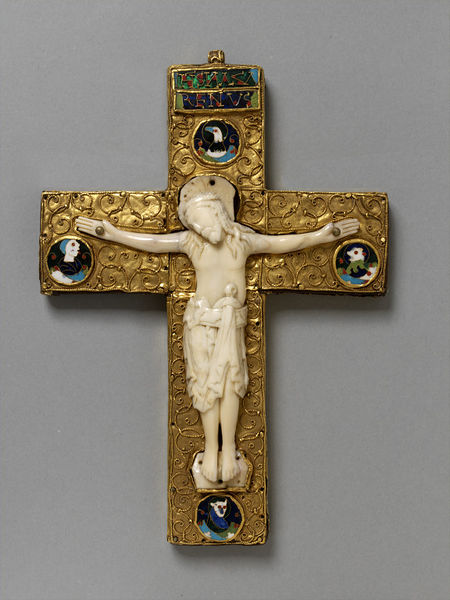
I’ve been thinking about the Long Now recently because of a particular current news story. If there is any human institution that lends itself to Long Now thinking, it is the Catholic church. Their holy book is 2000 years old, and they still refer back to theologians like Thomas Aquinas and St. Augustine, from 700 and 1600 years ago respectively. I recently went round the V&A’s newly refurbished Medieval and Renaissance galleries, and they are a reminder that the church was a wealthy and powerful organisation before the Norman Conquest. It is nowhere near as wealthy or powerful now, in relative terms, as it was back in the middle ages; but it’s not doing badly.

Perhaps that’s why their PR in response to child abuse stories has seemed so woefully inept: when you operate over a timescale of centuries, a scathing article in the New York Times doesn’t seem like such a big deal. An organisation which has survived the Great Schism, the Reformation and the Enlightenment, not to mention the crusades, the Spanish Inquisition and a whole load of religious wars, is not going to throw around the word ‘crisis’ lightly.

And strategically speaking, they’re probably right: Benedict XVI is the 265th pope. Does anyone really think there won’t be a 266th? And by the time we get to 269 or 270, these scandals will be very old news indeed.

It’s not necessarily a morally bankrupt attitude; it’s not the same as ignoring the problem and waiting for it to go away. It might be nice to see them reaching out to the victims a little better and show a bit more public remorse, but the most important thing is to ensure that those kind of cover-ups don’t happen in future, and they say they have reformed the system to prevent it happening again.

I find it fascinating, looking at the world in this way. For example, I think it is an important principle of human rights and human dignity that women should be treated as full human beings with all the same rights and responsibilities as men. So if I was pope — an odd thought, admittedly — I would allow women to be priests. But from the long view of the Catholic church, with 20 centuries of institutional and theological tradition to draw on, the women’s rights movement could turn out to be a passing phase. Hell, there aren’t many countries where women have even had the vote for one century.†

And if I was pope, I’d allow gay marriage, contraception, and abortion. But I don’t expect the church to agree with me any time soon. And even though I disagree with everything they believe, from the existence of God downwards, there is something deeply intriguing about that kind of institutional continuity. You can see why some people find it seductive.

The Catholic church may be old-fashioned, but it has been old-fashioned for hundreds of years now; entire empires have risen and fallen while the church trundled on, being old-fashioned. It may be ludicrously archaic that important church documents are still issued in Latin, but the church was communicating in Latin before the English language even existed, and the church is still here. They are hardly going to be stung by the accusation that they’re not keeping up with the times.

* if only I’d had the long-term perspective to realise I would want to write a blog post about it several years later…

† In chronological order: The Pitcairn Islands, The Isle of Man, The Cook Islands, New Zealand, Australia, and Finland. According to Wikipedia.

» From top to bottom, the images are: the first prototype of the Clock of the Long Now, a C9th-10th crucifix reliquary from the V&A, and Titian’s portrait of Poe Paul III.

Categories
Other

Cooking tips: boil potatoes in cold water

Another thing I wish someone had told me when I first started cooking: you should cook potatoes in cold water. Obviously you do need to apply heat, otherwise you just get wet potatoes. The idea is to put them in a pan of cold water and then bring it up to the boil.

I think I learned this from a TV show where it was simply stated as Truth without explanation, but you can see why it makes sense: you don’t want the outside of the potato to be cooked while the middle is still raw. That’s not a problem with something like green beans, so those can be put straight into a pan of boiling water.

So for example, to make delicious boiled new potatoes: put the potatoes into a pan, add enough cold water to just cover them, and heat it until the water starts to boil. Add some salt, put a lid on the pan, and leave it on a low heat until the potatoes are cooked (test by sticking a knife into them). Drain the water off, chuck a bit of butter and some salt and pepper into the pan. Add some chopped chives or something, if you like. Swirl the potatoes around a bit to coat them with butter, take them off the heat and leave with the lid on for a few minutes so they absorb some of the butter and seasoning.

The potatoes will retain their heat for a surprisingly long time in a covered pan, so I often put the potatoes on the heat even before I’ve decided what else I’m cooking. They’ll still be fine after sitting around for twenty minutes or so.

The other cunning tip about boiling potatoes is: don’t just throw away the water you cooked them in. It serves as a sort of basic stock, just a bit more savoury than plain water. I always use it in the gravy when I’m cooking a roast, for example. I’m not suggesting you keep little tubs of it in the freezer; just don’t tip it straight down the sink, in case it comes in handy.

» New potatoes is © Jack Hynes and used under a CC by-nc-sa licence.