Categories
Culture

Irrationality by Stuart Sutherland

The general message of Irrationality is that, if there has ever been a rational decision taken in the history of humankind, it was a fluke.

Sutherland goes through various different kinds of bias and error that are present in the way people think – obedience to authority, conformity to the group, a poor grasp of probability and statistics, being influenced by whatever you heard most recently, placing too much emphasis on unusual cases, looking for evidence that confirms your hypothesis and not evidence that contradicts it, being influenced by the order in which information is provided, placing too much confidence in intuition, being unwilling to cut your losses, and so on and so on – and for each of them he provides examples of psychology experiments that demonstrate that people systematically and repeatedly make the same stupid mistakes.
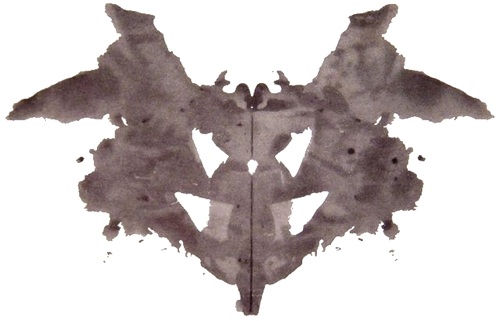
Rorschach inkblot

It’s a reminder that the scientific method is, in the end, just a whole series of elaborate ways to resist the tendency of the human mind to leap to the wrong conclusion. Not that science always gets it right first time as a result, but least at its best there’s a cultural understanding within science that it’s very easy to be wrong in lots of different ways and that you have to be very careful and methodical to try to avoid error.

It also tends to suggest that anyone who has to make complicated and important decisions – politicians, doctors, judges, engineers – could usefully take similar care to carefully and methodically eliminate systemic biases in the way they decide things, because they’re almost certainly less good at it than they think they are. That’s true of all of us, of course, but most of the decisions most of us make aren’t actually going to have particularly serious consequences.

Anyway, the book. It’s mainly made up of lots and lots of examples – often with several experiments described in a single paragraph – so it’s somewhat dense, and I should probably read it again if I want to take it all in, but it’s well written, which helps. And always interesting.
Categories
Culture Other

Samurai William by Giles Milton

William Adam was an English sailor working as a pilot on a Dutch expedition of five ships that set out in 1598 to make money in the Orient. In 1600, after a disastrous voyage during which just about everything went wrong, Adam was one of just 24 men surviving on one of the ships – the Liefde – when it reached Japan, the men too weak with starvation and disease to row ashore.

He rose to become the most influential westerner in Japan, with direct access to Tokugawa Ieyasu, the effective ruler, and was granted a court title normally given only to senior samurai. Samurai William: The Adventurer Who Unlocked Japan is his story, and the story of the early English attempts to set up a trade with Japan. It’s by the same chap as Big Chief Elizabeth, a book about the English settlement at Jamestown.

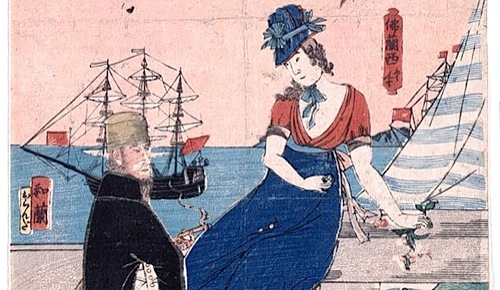
A Dutch man and a French woman

As with that book, the emphasis is on telling a good story rather than exploring the finer ethical and semiotic nuances of colonisation. Which isn’t to say that he glosses over the frequently bad behaviour of everyone involved; just that the book is pitched as entertainment.

And the stories from that period of European exploration are really extraordinary; the men in their tiny little ships sailing off optimistically into unknown waters, and ending up either fabulously wealthy or dead. Or enslaved. Or marooned. It’s like Star Trek, if instead of peaceful, multi-cultural, non-interventionist scientists and diplomats, the Enterprise had been crewed by greedy, heavy-drinking, violent, unwashed men who were only really interested in local cultures if they could make money from them or have sex with them.

» The picture is from over 200 years after the period dealt with in Samurai William, but it seemed too good not to use. It’s a detail from a Japanese woodcut of a Dutch man with a French woman, from an exhibition about the Dutch in Nagasaki on the website of the International Institute of Social History, where you can see a larger version as well as lots of other great pictures.

Categories
Culture Other

The Satanic Verses by Salman Rushdie

I bought The Satanic Verses in irritation at all the fuckwits who were complaining about Rushdie getting a knighthood. Not surprisingly perhaps, having bought it as a gesture rather than because of an urgent desire to read it, it ended up at the bottom of my to-read pile. It didn’t help that it has a bit of a reputation as being unreadable.

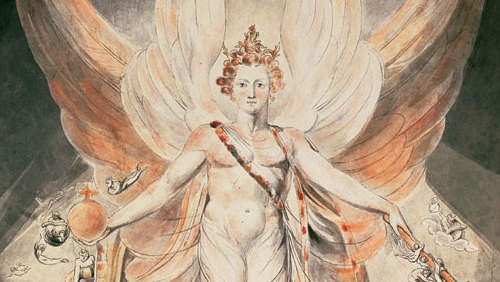
section of ‘Satan in His Original Glory’ by William Blake

You know what, though? It’s actually a really good novel.

It’s full of inventive ideas and images, playful use of language, barbed social comment and, you know, good novelly things generally. It’s magical realism – two men mysteriously survive falling from an exploding plane, only to find themselves transforming, one into the image of the archangel Gabriel and the other into Satan – but the realism part of the equation is strong enough to keep the book grounded in the real world of London and Bombay.

I can understand why quite a few people found it hard to finish, though. It has that rambling quality that quite a lot of Serious Literary Novels have had ever since modernism: lots of characters, lots of narrative threads which are only loosely connected, long digressions which seem a bit irrelevant. I have to admit it’s not a quality I find particularly attractive. It seems like an excellent recipe for a book which is less than the sum of its parts. And a great way of reducing the book’s forward momentum; I don’t demand that everything I read is an un-put-downable page-turner, but I do like to feel it’s going somewhere. There were times, reading The Satanic Verses, when it felt a bit becalmed.

On balance, though, I enjoyed it.

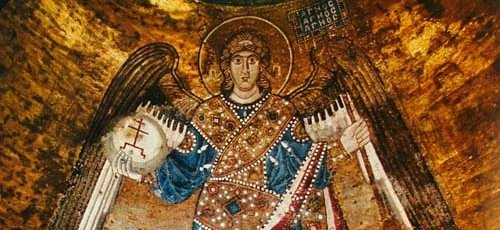
detail of a mosaic of the Archangel Gabriel from the dome of St Sophia Cathedral, Kiev

I suppose I can hardly review the most controversial novel since Lady Chatterley’s Lover without some comment on the controversy. Mohammed is a character in the book – or at least the Gabriel character has dream visions in which Mohammed appears – and he is presented as self-serving, opportunistic and not a real prophet. Which I can understand might irritate Muslims. But actually it wasn’t nearly as inflammatory as I thought it might be. Compared, for example, to the portrayal of Moses in Timothy Findley’s Not Wanted On The Voyage, it’s really very gentle. It just portrays Mohammed as human.

picture credits: the first is a detail from William Blake’s ‘Satan in His Original Glory’ from Tate Britain; the second is a detail of a mosaic of the Archangel Gabriel in the dome of St Sophia Cathedral in Kiev.

Categories
Culture Other

Elizabeth by David Starkey

I’ve just been reading Elizabeth by David Starkey, a book about the early life of Elizabeth I. It covers the very start of her reign, but most of it is about her relationships with Henry VIII, Edward VI and Mary Tudor.

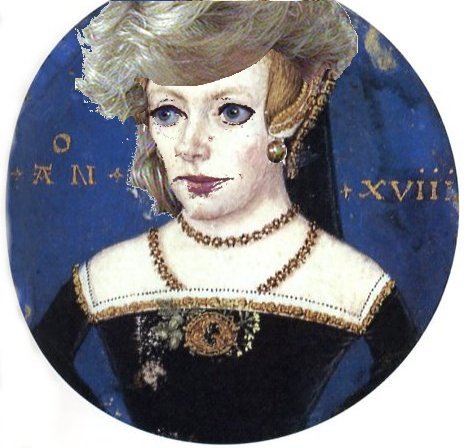
Eliziana

It raises the question: when little girls want to be princesses, what kind of princess are they thinking of? The modern princess, who gets to live under relentless, unforgiving media scrutiny and has no possibility of publicly expressing any opinions? Or the medieval type, with a bunch of scheming old men arranging her a dynastic marriage to a corrupt, inbred foreign prince – if she’s not imprisoned or disposed of by the monarch as a potential threat to the succession.

The book was also a fine example of how toxic the mixture of politics and religion is. That period of English history would have been messy anyway, because of the lack of a clear line of succession, but the switching back and forth between Catholic and Protestant certainly didn’t make it any easier for anyone.

It’s a good book – Starkey knows how to tell a story – and an interesting period of English history. I’m just glad I didn’t live through it.

Categories
Culture

The Elements of Typographic Style

I’ve been reading The Elements of Typographic Style by Robert Bringhurst. When I ordered it, I noticed the mild coincidence that the author has the same name as the chap who translated the poetry of the Haida (the native inhabitants of the Queen Charlotte islands in the Pacific Northwest). As it turns out, though, it’s the same man. Which certainly explains why the books of Haida poetry are so attractively designed.

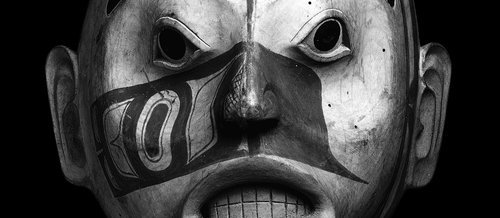
Haida mask

Alderwood mask of a woman of high rank, possibly Djiláquons. Haida, around 1830; in the British Museum.

It’s an impressive combination of talents, but there is a natural fit between poetry and typography. After spending all that time choosing and arranging words, what poet wouldn’t want them physically arranged on the page with equal care?

The parallel is marked: it’s all about the combined effect of a thousand tiny decisions. The poet and the typographer have to believe that every tiny tweak matters, that no detail is unimportant.

Now, with powerful computers at home, we all have the possibility of being our own typographers. But one thing that’s clear, reading the book, is that it’s not as simple as it sounds. There’s a lot more to it than choosing the least ugly font that came with your computer, picking a type size and a line height and letting the computer do the work. The point this was really brought home to me was where he argues convincingly that digital fonts often come from the foundries insufficiently precisely kerned, and that you will probably need to spend a couple of days with each new typeface manually adjusting the kerning so that even unusual letter pairs found in words like Ypres, Rwanda or Vázquez will be properly spaced.

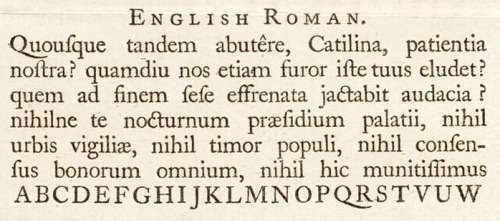
section of William Caslon’s specimen sheet

A section of a specimen sheet printed by William Caslon; from Wikipedia.

Even so, there is a lot of information and advice in the book which can be used even for the normal user of Microsoft Word; about choosing the right type size and measure, arranging the text block on the page, and creating headers which are harmonious with the body type, for example.

This is one field where the internet lets us down, of course. I can specify a typeface – from a very limited range I can rely on the reader’s computer to have – a type size, a line height and a line length, but I can’t control the way your system and browser deal with the kerning, anti-aliasing or any of the other nuances that completely transform the appearance it will have on your screen. Still, even here, some knowledge of typography can only help, and the technology is moving fast.

It’s an interesting, readable and, as one would hope, very attractive book. The Haida poetry is fascinating as well, but that would need a post to itself, methinks.

Categories
Other

David Beckham and the Deathly Hallows

With Beckham and Harry Potter both being in the news at the moment, I started seeing them as a parallel pair: you can identify lots of sound reasons why Becks is a big star and the Harry Potter books have sold so many copies, but in both cases you’re left with a sense that their actual level of success is out of proportion.

Becks with a Harry Potter scar

If anything it’s easier to see why David Beckham is a star: he was a key member of the most successful incarnation of the most popular team in world sport; he started going out with, and duly married, a member of one of the most successful British pop groups of all time when they were at their peak; he’s incredibly good-looking, and not just by footballer standards; he played a key role in some of the most memorable moments for the England football team; and his whole metrosexual, homoerotic image seemed genuinely radical in the blokey, working-class context of British football. And he seems like a nice man.

And yet… how did all that amount to him becoming a global superstar, without him, for example, winning the World Cup? Having lived through the whole period of his rise to prominence, I know that, in a British context, it all seemed to make sense at the time. But did the sarong really make a big impact in Tehran? Were the Spice Girls such a big deal in Shanghai? I remember reading about a journalist who went to do a story about would-be suicide bombers in Palestine. While he was interviewing them, someone came in with the football results. “Manchester United won!” (much cheering) “and Beckham scored!” (even more cheering, and cries of Allahu Akbar! Allahu Akbar!). Why him, and not Ryan Giggs, or Michael Owen, or any of his other talented contemporaries? Raul? Batistuta? Figo?

The same can be said about the Harry Potter books (and indeed the Spice Girls). You can easily find reasons why they’re popular: they combine a sense of teen alienation with an inventive magical world; boarding school stories are popular; the wordplay is entertaining. There are a lot of boxes being ticked. But why are they a complete publishing phenomenon? Presumably J.K. Rowling has no more idea than the rest of us. After two or three books, did she ever lie awake at night wondering whether she was going to suddenly lose her touch, and her fans would pick up the next volume, read a hundred pages and never quite feel the need to finish it?

It’s easy to dismiss it as being driven solely by ‘hype’. And there is clearly a snowball effect where the marketing people seize on a success and drive it forward by spending money on it. But if it was as easy as that, there would never be a blockbuster movie that flopped or an unsuccessful second album. LA Galaxy may well be about to discover that no amount of hype can magically persuade people to spend money on something that doesn’t interest them.

And I’m not saying that they are overrated, exactly. Beckham at his best is a very very good footballer; the books are an enjoyable read. But Beckham would have to be Pele, Puskas and Cruyff rolled into one to justify his profile, and the Harry Potter books have been so freakishly successful that it would be disproportionate for anything short of the second coming of Shakespeare. That’s not their fault. I just wonder how it happens. Some magic combination of ingredients? Mob hysteria? Blind luck?