Categories
Culture

Chris Ofili at Tate Britain

Chris Ofili is a contemporary British artist who is, I suppose, best known for using balls of elephant dung in his paintings. Indeed I’ve been well-disposed towards Ofili for years, ever since The Daily Mail or some other self-consciously philistine rag decided to be terribly outraged when he was nominated for the Turner Prize. It’s always irritating when hard-nosed tabloid journalists pretend to have the delicate sensibilities of Victorian spinsters, but it particularly irritated me because actually elephant dung is really very innocuous stuff: I remember reading about palaeontologists in Africa having ‘snowball’ fights with elephant dung, which gives you an idea of how harmless it is. They eat lots of dry vegetable matter and it passes through them barely digested, emerging almost as tightly-bundled balls of hay.

In retrospect, this quibble about the particular characteristics of elephant dung was rather missing the point. Especially since when you look at the early paintings he clearly was being intentionally provocative; for example, one of the titles is 7 Bitches Tossing their Pussies Before the Divine Dung. And several works with ‘shit’ in the title, like the distinctly creepy little sculpted head, made with elephant dung, dreadlocks and human teeth, called Shithead. And the painting of the Virgin Mary surrounded by snippets cut from pornographic magazines. Indeed, if you’re an artist who wants to shock people the Daily Mail* provides a valuable service; it must be difficult to find anyone easily offended in the world of contemporary art.

Not that the dung is just there to wind people up; it’s also a symbol of Ofili’s African background. Apparently he started using elephant dung after a trip to Zimbabwe, along with a dot-painting style inspired by cave paintings in the Matobo hills. The style developed into elaborate paintings that combine paint with collage, sequins, resin in layer after layer, and the effect is both decorative and very visually engaging: there’s a lot to look at in these paintings. The major theme is, broadly, images of black identity: hip-hop and blaxploitation movies provide a lot of the visual cues. These paintings really are gorgeous as objects, which always helps.

Over time his paintings got less aggressively confrontational and more, um, spiritual, I guess. But he still kept developing that style, with the dots and the elephant dung and so on, in various different ways, until recently he clearly felt he had taken it as far as it could go, because his latest paintings are quite different, much more straightforward, painted with big sweeps of colour. I’m sorry to say I wasn’t really keen on these new works: they didn’t have the same visual impact and they just felt a bit insubstantial to me. But it will be interesting to see where he goes with them, because he’s a talented man.

* And, incidentally, Rudy Giuliani.

» The Adoration of Captain Shit and the Legend of the Black Stars 1998 © Chris Ofili. Courtesy Victoria Miro Gallery, London
Categories
Culture

Un prophète

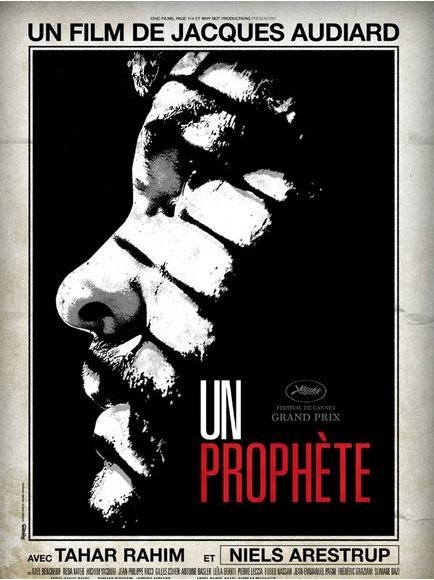
I went to see Un prophète today, which is, as you can see below, un film de Jacques Audiard. Though obviously I saw the subtitled version.

It’s a gangster/prison drama about a young French Arab, played by Tahar Rahim, who arrives in prison at the start of the film and is immediately approached by a Corsican gang who threaten him and offer him protection in return for killing someone.

The film starts with Malik arriving in prison — we learn almost nothing of his life beforehand — and ends when he leaves, so it’s set in a very grey, constrained, claustrophobic world, and visually it’s mainly a kind of gritty realism. It’s rather Wire-esque, both in that visual style and in the attention to the procedural and mechanical details of prison life.

I thought it was a very good film. It works as a gangster movie — perhaps slightly slower-paced than you might expect from most American movies in the same genre, but none the worse for that. But it’s a gangster movie with an underlying serious-mindedness and darkness, and with other themes running through it, most obviously the French muslim immigrant experience, that give it a bit of heft. And it has a very good, understated central performance by Tahar Rahim.

Categories
Culture

‘The Real Van Gogh’ at the Royal Academy

Not that rubbishy fake Van Gogh that other galleries having been fobbing us off with, then.

The exhibition’s full title is ‘The Real Van Gogh: The Artist and His Letters’. The inclusion of some of Van Gogh’s letters supposedly provides a bit of biographical-intellectual-psychological context for the paintings. Which is an interesting idea, but calling it ‘The Real Van Gogh’ is still ridiculous.

The show hardly needs a special hook to attract the public’s attention; it is, somewhat surprisingly, the first major Van Gogh exhibition in London for 40 years, and I’m quite sure that it will be packed for the whole run. And rightly so: it has a lot of marvellous paintings in it. Van Gogh is so universally popular that the bloody-minded part of me almost wants to argue that he’s overrated, but I can’t bring myself to do it. Quite apart from anything else there is to say about his work, there is just such a lot of straightforward pleasure to be had from it.

Looking at the late landscapes I found myself thinking of El Greco: the strength of colour, the tension in the distorted forms, the stretching of the possibilities of figurative painting without losing that connection with real objects. By which I mean: he doesn’t seem to have been heading towards abstraction in that way that, in Cezanne’s landscapes, the mountain sometimes seems to be fragmenting into patterns of light and colour. Van Gogh’s landscapes are full of the thingness of things.

So it is a marvellous exhibition which I highly recommend. On the other hand I thought the letters were a bit of a sideshow. Most of them were written to his brother Theo; in the relatively short sections which the curators have translated from Flemish or French, Vincent talks about what he has been doing, how his work is going, and provides little ink sketches of the paintings he has been doing. It’s quite interesting; you do get some sense of his personality, of how articulate and thoughtful he was. And some of what he has to say about the work is somewhat interesting. But even without buying into the Death Of The Author idea that the artist’s life is irrelevant to understanding the work, I do think there is a limit to its value. Artists’ comments about their own work always seem so vague and generic compared to the specificity and particularity of the work itself; which I guess is why they end up as artists rather than writers. And the awkwardness of putting too much text in an exhibition mean that you’re not getting that much of Vincent’s thought anyway.

Perhaps there is a particular value in providing this kind of biographical material for Van Gogh, since he is probably still widely thought of as the mad genius artist. The letters at least give a more rounded sense of a real human being, since he comes across in them as, well, fairly normal. Intelligent, good with languages and incomprehensibly good with paint, but certainly not frothing at the mouth. I guess that point is worth making.

Categories
Culture

The Guildhall Art Gallery and Roman Amphitheatre

The Guildhall, for those who don’t know, was basically the town hall for medieval London; it is now the only surviving stone building in the City from before the Great Fire which isn’t a church. And, again for those who don’t know, when I say ‘the City’, I don’t mean ‘the city’; i.e. not the whole metropolis of London, but the City of London, the area within the medieval city walls, which now operated as its own special little fiefdom by the Corporation of the City of London. It’s the kind of place where you can’t throw a plate of tapas without hitting a banker or a lawyer.

The Guildhall Art Gallery is another gallery which I decided to check out because it’s on the Art Fund list and I’d never been there. Unlike the Guildhall, the gallery building is fairly new. The original gallery was extensively remodelled by the Luftwaffe in 1941 and didn’t reopen until 1999. And the building is rather grand — though if the City of London couldn’t grub together a few quid to build an art gallery, it’s hard to imagine who could.

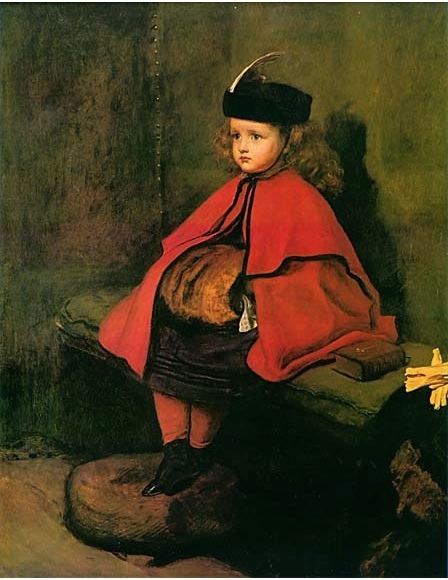
The actual art was a bit underwhelming (or at least not my taste). Especially so at the moment as they are between exhibitions, so one of the large rooms was closed. What was left was a load of portraits of royalty and City grandees (Lord Mayors, heads of livery companies, yawn), some scenes of London, and a selection of Victorian/Pre-Raphaelite paintings. Some of their Pre-Raphs are rather famous, but still: really not my favourite thing.

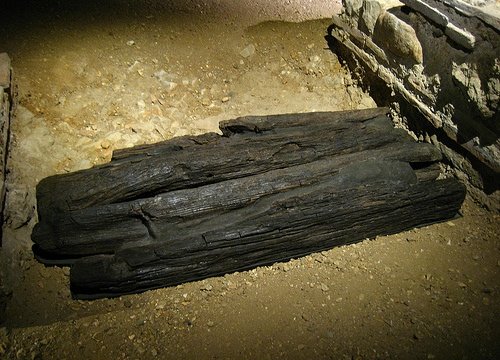
The amphitheatre was quite interesting, although rather less spectacular than the word might suggest. Ephesus it ain’t. They didn’t even know it was there until 1988, when archeologists found it, and they decided to incorporate it into the building of the new gallery. So you go down to the basement and you can see a section that was the entranceway. Basically it’s a few traces of wall and some wooden drain, but it was interesting to see it.

» The painting is My First Sermon by John Everett Millais. The photo is of a bit of the 2000-year-old wooden drain from the Roman Amphitheatre. OPH 2008__0079_Guidhall.JPG is © king_david_uk and used under a CC by-nd licence.

Categories
Culture

‘Mini Picture Show’ at the Bankside Gallery

I was given a membership of The Art Fund for Christmas. For those who don’t know, The Art Fund uses membership fees and other donations to help British museums and galleries to buy art for their collections; membership gets you discounted or free entry to a range of museums and galleries. So that was a nice present.

Anyway, they sent me a booklet with all the various participating venues in it; there are 78 in London. I’m familiar with quite a lot of them, but there are still plenty that are new to me. It occurred to me that it would be quite an interesting exercise to visit all of them; I’m not officially committing myself to that right now, but it’s certainly a possible project. I might as well get my money’s worth.

In that spirit, when I went to buy coffee today I glanced at the map to see if there were any galleries near Borough Market, and sure enough, there was the Bankside Gallery, just next to Tate Modern. I’ve been past the Bankside many times, but I’ve obviously been suffering from Curiosity Fail because I never went in. It turns out to be the gallery of the Royal Watercolour Society and the Royal Society of Painter-Printmakers.* Or perhaps the shop of those societies, since the work was all for sale; except that places selling art have done an excellent PR job of making sure that we think of them as part of a subtly different category from places that sell fridges or mayonnaise. Their current line of produce is

Work on a small scale by Members of the Royal Watercolour Society and the Royal Society of Painter-Printmakers. Original paintings and prints are immediately available, both framed and unframed, with prices from just £50.

Which I’m guessing is basically an exhibition aimed at the Christmas present market. And why not, after all. I actually rather like going around exhibitions where everything has a price next to it; it focusses the mind a bit.

It reminded me of the rooms at the Royal Academy Summer Exhibition where they stick all the small pieces, although the art wasn’t quite crowded together as it normally is at the RA. It’s the same mixture of stuff, tending toward the conventional, occasionally very covetable. Certainly well worth popping in and having a look round for the bargain price of free, and I shall do so again from time to time (to be clear, the Bankside has free entry for everyone, not just Art Fund members).

So, this may turn out to the be the first in a long series of posts about some of London’s more obscure museums and galleries; or it may not. We’ll see.

* The Royal Watercolour Society is the RWS; the Royal Society of Painter-Printmakers is the RE. Obviously.

» The images are ‘Rikyu Tea Whisk’ and ‘Tea Bowl’ from the ‘One Hundred Views of MITATE’ series by Nana Shiomi. Which I really liked.

Categories
Culture

Books of the Year 2009

As per usual, these are books I happened to read in 2009, rather than books published in 2009.

Don’t Let’s Go to the Dogs Tonight, Alexandra Fuller
Chaka, Thomas Mofolo
Anil’s Ghost, Michael Ondaatje
Echoes from the Dead Zone, Yiannis Papadakis
The Maias, José Maria de Eça de Queirós
Across Arctic America, Knud Rasmussen
Them, Jon Ronson
Your Inner Fish, Neil Shubin
The Culture of Lies, Dubravka Ugrešić
Leaves of the Banyan Tree, Albert Wendt

Glancing over that list, there’s plenty of good stuff, but I’m not sure it has been a completely vintage year. A nice healthy mix of subjects and genres, though.