Categories
Culture

Rothko at Tate Modern

I went to the Rothko exhibition at Tate Modern today. The show is of his ‘late series’: the centrepiece is the Seagram Murals (i.e. the group of dark Rothkos which have been in the Tate for years, plus some related works that normally live in Japan), but there are also some other groups of works (the ‘Black-Form’, ‘Brown and Grey’ and ‘Black on Gray’ paintings) as well as related odds and ends.

'Red on Maroon Mural', Mark Rothko, Tate

It’s quite suggestive, I think, that the Seagram murals were commissioned for the Four Seasons restaurant in the new Seagram building in New York, and that they ‘never reached their original destination, after Rothko decided that a private dining room was an unsuitable environment to experience his paintings.’ Because with these big colour-field paintings there is always going to be a delicate path to tread between art and interior design. And indeed you can see why the restaurant might have wanted them: they would have added a touch of modernity and sophistication without actually challenging the air of hushed pomposity which is so important to an expensive restaurant.

But although they could serve as interior design, they are certainly more than that. They are seductive pieces, and they do reward patient contemplation. Partially that’s because they are much more carefully made than the simplest description of them might suggest: a painting may be, in the most reductive terms, a big maroon blob on a red background, but they have more presence than that. Apparently he painted them with many many layers of very thin paint, and they remind me slightly of fine Japanese lacquer; the way a plain red and black rice bowl can be a deeply desirable object because of the texture and way the light falls on it.

And despite what I said in my last post, and despite the funereal colour-schemes, they aren’t gloomy. They are whatever the antithesis of frivolous is — suolovirf — but half an hour spent in their company was restful rather than depressing. They are beautiful things: big, but subtle in their colours and textures.

Or at least the Seagram murals are; some of the others were less exciting, most notably the ‘Black on Gray’ works, all divided into an area of black at the top and pale grey below. Those ones managed to be exactly as boring as the description suggests.

» The painting is ‘Red on Maroon Mural’, from the Tate. I’ve taken it from the exhibition website, which as usual with the Tate, is very good, so do go and take a look.
Categories
Culture

Mood music for the apocalypse

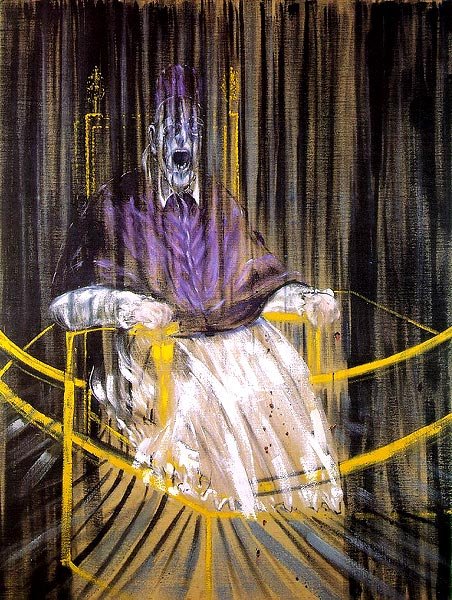
It seems weirdly fitting that the Tate’s two current big exhibitions are Rothko and Bacon. I don’t suppose that the Tate can take any responsibility for the gloomy state of the world’s financial market: I don’t think it’s all because City bankers are popping over in their lunch break and being given the willies.

I wonder, though, if you swamped the world’s financial centres with upbeat, cheerful stimuli, whether it would soothe the savage breasts of the money-men. Plaster New York with huge posters by Thomas Kinkade and Beatrix Potter; have Sesame Street and the Tellytubbies playing on big video screens. And all those glowing, scary tickers: don’t have stock values on them, go for zen koans and dirty limericks.

Categories
Daily Links

Links

Categories
Culture

Podcasts I listen to, part 1

Hardly a day goes past without nobody asking me what podcasts I listen to. So, in defiance of public demand, here goes. This is the first of two posts, in alphabetical order.

Adam & Joe

Adam Buxton and Joe Cornish have a radio show on BBC Radio 6; Radio 6 is a music channel, but because of licensing restrictions, this is their show with all the music taken out so that you’re just left with their chatter. Which is, clearly, a great idea, and I only hope that the BBC never manages to negotiate a version of the podcast with music on it.

Silly and reliably entertaining.

Answer Me This!

Even sillier, and also entertaining. People submit questions, Helen and Olly answer them.

Apple Keynotes

Videos of Steve Jobs doing his bit as the Freddie Mercury of the computer industry. Boom! Probably only one for Apple fanboys like myself.

Armstrong & Miller – Timeghost

Comedians Alex Armstrong and Ben Miller provide culturally-themed chitchat in the personae of art critics Craig Children and Martin Baine-Jones. I’m not really convinced that they’ve worked out how to get enough value from doing it in character, but after a weak start it’s now an entertaining show.

Arts and Ideas R3

A selection of highlights from BBC Radio 3’s arts coverage. Variable but worth a listen.

The Bugle

This is probably the single podcast I would recommend most strongly: John Oliver (that English bloke from The Daily Show) and Andy Zaltzman (English comedian) provide satirical comment on the week’s news. Very very funny.

CERN podcast

An occasional podcast from the nice atom-smashers in Switzerland. It has mostly been (interesting) cheerleading so far; now that the LHC has been turned on and then gone phut, it’ll be interesting to see if they do a podcast about the problems

The Collings and Herrin podcasts

Comedians Andrew Collins and Richard Herring. Funnny enough that I keep listening to it, but every time I find myself thinking that it could usefully be just a bit shorter.

Friday Night Comedy

Depending on the time of year, either The News Quiz or the Now Show, two current-affairs comedy shows on BBC Radio 4. The News Quiz has unsurprisingly lost some of its lustre over the past couple of years since the sad loss of Linda Smith and then Alan Coren — difficult people to replace — but it’s still worth listening to.

Front Row Highlights

Front Row is a daily arts programme on Radio 4; this is a weekly highlights package. 

Global Arts and Entertainment (World Service)

Selected arts coverage from the BBC World Service. Variable but worth subscribing.

Categories
Daily Links

Links

  • 'A special program about the housing crisis produced in a special collaboration with NPR News. We explain it all to you.' Superb edition of TAL from 5th of September; there's a follow-up show coming out imminently.
    (del.icio.us tags: none)
Categories
Other

The return of Mandelson

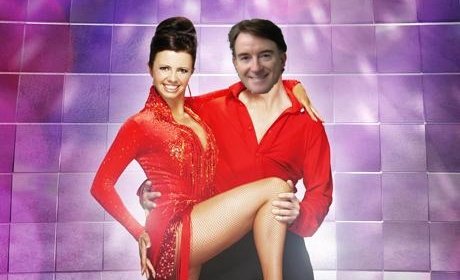
It was a weird moment to see Peter Mandelson of all people return to the cabinet. Particularly weird, for me, because I had been half-heartedly composing a mental list of the celebrities I would most enjoy seeing on Strictly Come Dancing*, and so far the only people definitely on it were Christiano Ronaldo, Rachel Weisz and Peter Mandelson. He is, one way or another, one of the most intriguing political figures of the last fifteen years.

All the analysis in the papers has been focussed on the electoral logic of it — the need to build bridges within the Labour party seems to be the popular explanation — but I’m not sure I buy that; he’s certainly not someone the voting public have ever warmed to. Perhaps Gordon Brown really does just think that Mandelson is the right person for the job.

Which scares me a bit. Not because I have any doubts about Mandelson’s competence and expertise; on the contrary, because he is associated in the public mind primarily with spin and internal party feuding, I suspect he’s never been given enough credit as a talented politician. No, it’s because if the seriousness of the economic situation was measured in terms of things Gordon Brown is worried enough to do, then ‘cut a fraction of a percent off interest rates’ might be economic DEFCON 4, with ‘nationalise a high-street bank’ as DEFCON 3, and if everything we’ve ever been told about their relationship is true, ‘give Peter a job in my cabinet’ must be about DEFCON ‑27⁑.

* note for Americans: what you call Dancing With the Stars.
⁑ Amusing trivia I learned from the Wikipedia DEFCON article: the British equivalent is called the BIKINI state.