Categories
Culture

Echoes from the Dead Zone by Yiannis Papadakis

Yiannis Papadakis is a Greek Cypriot anthropologist, and Echoes from the Dead Zone is based on his fieldwork in Turkey and on both sides of the Green Line in Cyprus. he investigates the different attitudes of people on each side of the conflict, and in the process has to confront all his own prejudices from growing up on the Greek side.

Papadakis only managed to spend a month in the so-called Turkish Republic of Northern Cyprus and was accompanied by government minders the whole time, although as well as that he spent a few months in Turkey itself and a year in the village of Pyla/Pile which is within the UN-controlled ‘Dead Zone’.
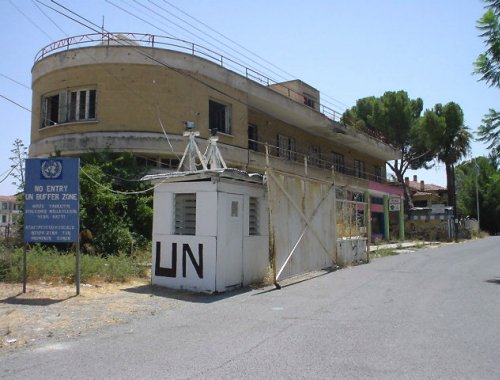
cyprus

I came to it vaguely expecting it to be a basically two-sided conflict, Greeks vs. Turks, but of course it’s much messier than that; there are tensions between the Greek Cypriots and Greeks from Greece, and between Turkish Cypriots and Turks from Turkey. There are tensions on both sides of the divide between those who see themselves as Cypriot first and Greek or Turkish second, and those who look to the motherland, who see themselves as Greeks or Turks who happen to live in Cyprus.

And the different groups have quite different views of history; not just the relevant modern history, the half-century or so that takes in Cyprus winning independence from the British, the Turkish invasion and so on, but also the longer history of classical Greece and Byzantium and the Ottoman empire.

I think it’s probably inevitable, as a British reader, that it reminded me above all of Northern Ireland; but I guess all these local religio-culturo-ethnic conflicts are fundamentally rather similar: deeply intractable and ultimately pointless.

Weather forecasts in Cyprus did not just tell the weather, I now noted. They expressed positions on the Cyprus Problem. ‘The Flag’, the Turkish Cypriot TV channel, broadcast a daily news bulletin in Greek for the enlightenment of Greek Cypriots. During the weather forecast, they gave temperatures only in towns in the north, where no Greek Cypriots lived. The towns were called by their Turkish names. On the Greek Cypriot side, RIK, the state TV station, used a map of Cyprus without a dividing line, but only mentioned the temperatures in the south. other Greek Cypriot channels, right-wing private ones, regarded this as unpatriotic. they also showed temperatures in the north to make the point that those areas too belonged to Greek Cypriots.

Maps in Cyprus, as elsewhere, were a political instrument. I remembered the map of Greece — not of Cyprus — at school. In order for Cyprus to appear in the map of Greece, it was cut and placed in a box next to Crete. I only became aware of this when I first saw Turkish Cypriot maps. No need to cut and paste to include Cyprus in the map of Turkey. Greek Cypriot maps showing Cyprus in the world at large always extended westwards, positioning Cyprus in a European context. The never showed Cyprus in the Middle East or Africa. The problem with the ‘Cyprus in Europe’ maps was that bits of Africa, the Middle East, and — sadly — Turkey were visible. One such map by the Greek Cypriot Public Information Office presented such undesirable bits as blank. The biggest challenge was to make a map of Cyprus that included Greece but not Turkey. The map shown as background during the news on The Word, the Church channel, managed best, with Turkey obscured by mist, as if weather conditions had rendered it invisible.

Echoes from the Dead Zone is my book from Cyprus for the Read The World challenge.

» The photo, crossing the “green line”, is © danceinthesky and used under a CC by-nc-sa licence.

Categories
Culture

Broken Glass by Alain Mabanckou

Broken Glass is a novel from the Congo (aka the Republic of the Congo aka Congo-Brazzaville; i.e. the smaller of the two Congos, not the one which used to be Zaire). It was translated from French by Helen Stevenson.

It takes the form of the notebook jottings of the customer at a bar called Credit Gone West. Perhaps rather than try to explain:

let’s say the boss of the bar Credit Gone West gave me this notebook to fill, he’s convinced that I – Broken Glass – can turn out a book, because one day, for a laugh, I told him about this famous writer who drank like a fish, and had to be picked up off the the street when he got drunk, which shows you should never joke with the boss, he takes everything literally, when he gave me this notebook he said from the start it was only for him, no one else would read it, and when I asked why he was so set on this notebook, he said he didn’t want Credit Gone West just to vanish one day, and added that people in this country have no sense of the importance of memory, that the days when grandmothers reminisced from their  deathbeds was gone now, this is the age of the written word, that’s all that’s left, the spoken word’s just black smoke, wild cat’s piss, the boss of Credit Gone West doesn’t like ready-made phrases like ‘in Africa, when an old person dies, a library burns‘, every time he hears that worn-out cliché he gets mad, he’ll say ‘depends which old person, don’t talk crap, I only trust what’s written down‘, so I thought I’d jot a few things down here from time to time, just to make him happy, though I’m not sure what I’m saying, I admit I’ve begun to quite enjoy it, I won’t tell him that, though, he’ll get ideas and start to push me to do more and more, and I want to be free to write when I want, when I can, there’s nothing worse than forced labour, I’m not his ghost, I’m writing this for myself as well, that’s why I wouldn’t want to be in his shoes when he reads these pages, I don’t intend to spare him or anyone else, by the time he reads this, though, I’ll no longer be one of his customers, I’ll be dragging my bag of bones about some other place, just slip him the document quietly before I go saying ‘mission accomplished’

That’s the whole of the first chapter; the entire book is written without full stops in this way as long, run-on sentences. Generally it’s a pretty effective device, though at times it can be a bit tiring to read.

The first few chapters tell the stories of other customers at the bar, and then the second half of the book concentrates on Broken Glass’s own life, and how he went from being a school teacher to a drunkard. As the material becomes more personal the tone shifts from comic to melancholy, and the book ended up being more moving than I would have expected after the first couple of chapters.

I heard Mabanckou interviewed on the radio (or a podcast?) and one thing he said was that he didn’t particularly want to write about politics. Well, that’s fine by me. Over the course of reading books from every African country I can see that I’m likely to read an awful lot about civil war and dictatorship, both because that’s a real part of the African experience and because it is the kind of thing that is likely to attract Western publishers; so it’s good to read more personal narratives as well.

Broken Glass is my book from Congo for the Read The World challenge.

» the photo is 032_BIERE NGOK, uploaded to Flickr by & © jmlaurent.

Categories
Daily Links

Links

Categories
Culture

The Maias by José Maria de Eça de Queiroz

The Maias, by Eça de Queiroz/de Queirós, is a proper doorstop of a C19th novel, over 700 pages long. It’s late C19th, though, 1888. I was trying to think of apt comparisons, and none of them seemed exactly right, but it’s more like George Eliot or Tolstoy than Dickens. Or even early C20th novelists like Forster or Proust. Though the Proust comparison is not so much to do with style as subject matter: the romantic entanglements of wealthy, mildly bohemian society types.

One of the blurbs on the back compares him to Flaubert — ‘Eça de Queiroz rivals Flaubert in his suavely satiric pictures of provincial torpor and metropolitan glitter’ — which is another plausible choice.

eca_de_queiros_c-1_1882

Among the themes running through the book, the one I found most interesting was the question of Portugal’s place in the world, which is seen in terms of tradition vs. modernity but also Portugal’s cultural relationship with other European powers: there’s a real sense of a smallish country on the edge of Europe looking towards London and Paris with a hint of an inferiority complex. So the characters swing between claiming unique virtues for Portugal and admiring, for example, a dress that could only have come from Paris. Every discussion, of literature or an event or whatever, turns to comparisons with other countries; the yardstick for quality is an external one. It’s oddly like reading post-colonial fiction, even though Portugal was in fact colonist rather than colonised.

I think what I liked most about the book was the leisurely pace of it. Events at which nothing much happens — or at least nothing which is essential to advancing the plot —are allowed to spread over five or ten pages. There’s a 30-page description of them going to the races which is a big set piece within the book, full of social observation, incident and humour, but none of it is actually crucial to the plot. On another occasion, in another mood, I might have just been bored by it; but this time I enjoyed that expansiveness.

In Lisbon, from the Grémio to the Casa Havanesa, there was already talk of ‘Ega’s mistress’. He, for his part, was trying very hard to keep his happiness safe from prying eyes. While perfectly serious about the complicated precautions this entailed, he also took a romantic delight in mystery, and so always chose the most out-of-the-way places, n the outskirts of the city, in the area near the slaughterhouse, for his furtive meetings with the maid who brought him Raquel’s letters. But his every gesture (event he affected way he had of pretending not to look at the clock) revealed the enormous pride he felt in that elegant adultery. He was perfectly aware that his friends knew all about this glorious adventure of his, and were au fait with the whole drama, and this was perhaps why, when in the company of Carlos or the others, he never even mentioned her name or betrayed the slightest flicker of emotion.

One night, however, a night lit by a calm white moon, as he and Carlos were walking along together in silence on their way to Ramalhete, Ega, doubtless filled by a sudden inrush of passion, uttered a heartfelt sigh, reached out his arms and declared to the moon in a tremulous voice:

Oh, laisse-toi donc aimer, oh, l’amour c’est la vie!

This escaped his lips like the beginning of a confession. Carlos, at his side, said nothing, and simply blew his cigar smoke out into the air.

Ega clearly felt somewhat ridiculous, because he immediately recovered himself and pretended a mere literary interest.

‘They can say what they want, but there’s no one like old Hugo.’

Carlos still said nothing, but he recalled Ega’s Naturalist outbursts, in which he had inveighed against Victor Hugo, calling him a ‘spiritualist blabbermouth’, ‘an imitative yokel’, ‘a lyrical old fool’ and worse.

But that night, Ega, the great phrase-maker, went on:

‘Ah yes, old Hugo, the heroic champion of the eternal truths. We need a bit of idealism, damn it, because the ideal might one day become reality.’

And with this formal recantation he shattered the silence of the streets.

It’s good stuff. Another of the blurbs says ‘Eça ought to be up there with Dickens, Balzac, and Tolstoy as one of the talismanic names of the nineteenth century’, and without deciding at this moment exactly where I think he ought to come in the leaderboard for C19th novelists, I would say this: The Maias is undoubtedly a substantial, high quality and important novel, and at the very least deserves to be better known. I certainly hadn’t even heard of it before I noticed it in a bookshop.

A quick name-check for Margaret Jull Costa, who translated this edition, and has done a good job of it, as far as I can tell without knowing any Portuguese.

The Maias is my book from Portugal for the Read The World challenge. I realised after making up my original list that I had actually read a book from Portugal already: The Lusiads by Luís de Camões, which I read in a second hand copy of a 1950s Penguin Classic edition which I seem to have lost. But I was happy to read another.

» The photo, which comes from Wikipedia, is of Eça de Queiroz.

Categories
Daily Links

Links

Categories
Me

Good bird days

I’ve had a couple of good days of birding. Yesterday we had a walk in some dry scrubby brush – cistus (ie rock rose), wild lavender, broom and flowers like wild gladiolus, orchids and so on. There were nightingales and woodlarks singing, and I also saw Dartford warbler, woodchat shrike, black kite and possibly most exciting, turtle dove, a bird I haven’t seen for a surprisingly long time.

Then today we went for a walk somewhere picked for no other reason than there was a big lake on the map, and again it was a lovely landscape with masses of flowers. Nightingales singing beautifully, and this time I managed to see subalpine warbler. And even better, red-backed shrike, which is a bird I’ve only seen once before, many years ago, and then I saw a juvenile or a female, so it was a boring mottled brown instead of the attractive male I saw today with a pink tummy, a rufous back, grey head and a rakish highwayman’s mask.

Then just to top it off, a family of crested tits turned up at the villa during lunch. So that was nice.