Categories
Culture

Read the world: a map

I’ve made an interactive map to show which countries I’ve read books from.

Short version: I’ve read books from the countries marked blue or green, but not the ones marked yellow or red.

Blue are books I had already read before starting the challenge.
Green are books read since starting the challenge. Red is for countries I haven’t read yet; a black dot means a country I have an idea for.
Yellow is for countries where I have a copy of the book waiting to be read.

Categories
Culture

Half of a Yellow Sun by Chimamanda Ngozi Adichie

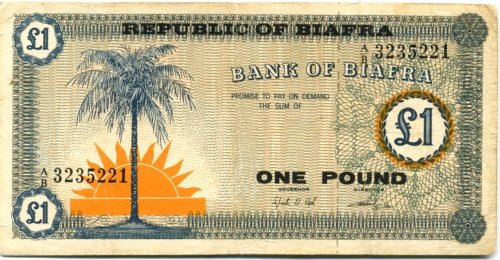
Half of a Yellow Sun is a novel about the Biafran war, told from the perspective of three people on the Biafran side. It switches back and forth between their lives pre-war and the war years. Adichie is too young to have been part of the war herself, but I gather from the Author’s Note that her parents and grandparents were in the middle of it, and that this novel is at least in part based on their stories about it.

Although it is in a sense written from a partisan perspective, in that all the main characters are fairly keenly pro-Biafran, the novel is inevitably written and read with the knowledge that Biafra was a doomed entity. So that gives a gloomy irony to all the optimistic political rhetoric. 

Sitting here with the book in front of me, with the Daily Mail quoted on the cover as saying that it is “without doubt, a literary masterpiece and a classic”, I am churlishly inclined to start finding fault, because I’m not quite sure that it is an undoubted instant classic. It’s a well-written if fairly conventional novel with strong characters, touches of humour even amid the gloom, a streak of satire and interesting subject matter. But a masterpiece? Maybe not.

Still, it’s a really good novel and something of a page-turner, and I would unreservedly recommend it to anyone.

Categories
Culture

We killed Mangy-Dog by Luis Bernardo Honwana

We killed Mangy-Dog & other Mozambique stories is one for the reading around the world challenge and also for the African Reading Challenge. I came across it when I was browsing through my bookshelves looking for books by people with foreign-sounding names. 

I have actually read it before — I read it when I bought it, about 15 years ago — but it’s short, so I thought I’d re-read it before ticking Mozambique off the list. I don’t remember it making much impact on me then, but this time I was impressed. It’s a slim (117 page) collection of vivid, fatalistic short stories, set in rural Mozambique and mainly told from a child’s perspective. Stylistically it has a kind of plain directness, in this translation at least. Kind of Hemingwayish. Not that I’ve read any Hemingway recently.

It seems to be out of print, unfortunately, but if you happen upon a copy somewhere, pick it up.

» The picture, Students returning from the school farm, was posted to Flickr by afronie and is used under a by-sa CC licence. It has no particular connection to the book except that it was taken in Mozambique.

Categories
Culture

Reading is a way round the world

I used to have a cookbook for kids — still do, come to think of it — called Cooking is a Way Round the World. Hence the post title. To quote Julie:

In one of my Goodreads groups, a clever person had the idea of each of us challenging ourselves to read a book by an author from every country. Obviously, this is a big challenge, and not something that can be banged out in three minutes, or even three months (for most of us!)

This struck me as an excellent idea. I think of it as like Munroing: there may be a few nutters who race to climb all 284 peaks in the fastest possible time, but for most people it’s a lifetime target, just picking off a few a year as opportunity allows.

Until the sport’s governing body comes up with an official set of rules, I’m allowing myself any genre, fiction, non-fiction, poetry, whatever; and I’m starting with the 192 member states of the UN plus any additional pseudo-nations I think are worth adding. At the moment the target is 201: the UN states, with the UK broken down into four regions, plus Palestine, Tibet, Antarctica, Greenland and the Cook Islands. EDIT: And as of July 2011, South Sudan; which isn’t a member of the UN yet, but I assume will be soon.

Just racking my brains for books I’d already read, my starting score was 36.

My current total is: 157 read, 44 to go.

Details below the fold.

Categories
Nature

Microcosm by Carl Zimmer

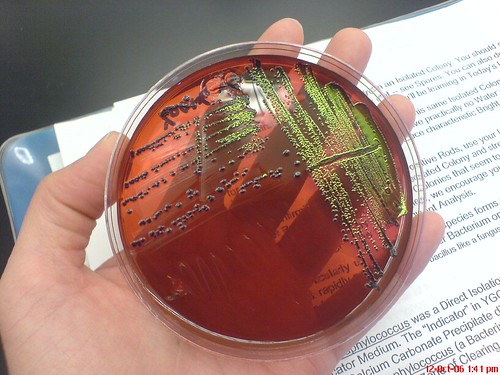
Full title: Microcosm: E. Coli and the New Science of Life. The bacteria Escherichia coli is best known for occasionally causing food poisoning outbreaks, but most strains of it are harmless and indeed a normal part of our gut flora. It’s also one of the most-studied life forms on earth because, like fruit flies and white mice, they are used as a standard laboratory research subject. So Zimmer has been able to use E. coli as a way of looking at a whole range of related topics: evolution, cell biology, genetic engineering and so forth.

'Metallic green E. coli on EMB plate'

As I would expect from him, he writes clearly and well, and the book is certainly interesting, but I wasn’t as excited by it as I expected. The material was broadly familiar: I wouldn’t claim to know the subject well — I only know the bits and pieces I’ve picked up in other popular science books and New Scientist — but there weren’t that many wow moments when I learnt something surprising and new. Or perhaps it’s just that I’m not too excited by bacteria.

I do tend to find microbiology rather hard going. It’s not that it’s too conceptually difficult, I think, at least at the level it’s being presented here; it just doesn’t seem to stick in my head. I think it’s partially that I can’t visualise the action, and partially that there are all these long names for enzymes and proteins and I can’t keep track of them.

This book is pretty good, but if you haven’t read anything by Zimmer, I’d suggest you read Parasite Rex first, because that’s one of my favourite science books ever.

» The photo, Metallic green E. coli on EMB plate, was posted to Flickr by YW Lim and used under a by-nc-nd licence.

Categories
Culture Nature

The Stuff of Thought by Steven Pinker

This is the latest of Pinker’s books on various aspects of language and psychology. Specifically, it looks at what language can tell us about the ways the human mind understands the world. For example, the various tenses available to us might tell us something about the human brain’s inherent models for understanding time. Or different kinds of action verbs tell us something about the underlying concepts our minds use to understand the interaction of objects. All his examples are from English, but he assures us, on his honour as a linguist, that the points he makes are more broadly applicable.
weasel diorama

He sounds very plausible, but as so often with these things I don’t really have the expertise to judge. I daresay there may be other linguists/cognitive scientists/psychologists who strongly disagree with everything he says, but I have no idea what their arguments might be. What has a broad plausibility for me is that Pinker provides a layer of cognitive concepts that act as a framework to make language-acquisition easier without being too implausibly complex. In other words: I am persuaded that infants learn their mother tongue so quickly and easily that their must be some kind of (presumably innate) cognitive headstart. Pinker’s model requires really quite a lot of innate ideas, and I can imagine some people boggling at it, but it is at least an idea of what kind of explanation might be needed. So I found all that broad process interesting.

If anything, I sometimes found myself fighting the instinct to dismiss it because it seems too obvious. I read him arguing that the human mind understands something in such-and-such a way and there was a bit at the back of my head saying “well yes, obviously” even though there’s nothing inevitable about it. It might just be that these ways of thinking seem obvious because they are innate. On the other hand I’ve read books about psychology which have been full of surprising insights, so there’s no reason to assume that we have a clear idea of how our own minds work.
sad lion

So the project is an interesting one. And Pinker writes well, on the whole: it’s sometimes heavy going, because the subject requires lots of close attention to fine details of usage, but he writes clearly and, as far as possible, he keeps the book ticking over with peculiar facts, anecdotes and other sparkly objects designed to hold the attention of the magpie mind. If anything, I get the sense that he has slightly toned down that aspect of his style, though I haven’t done a direct comparison: I seem to remember that in The Language Instinct, which was the first of his books that I read, he could hardly go half a paragraph without some kind of popular culture reference or joke, and it sometimes came across as trying too hard. But there’s still enough there to help sugar the pill.

When I read The Language Instinct I was at university doing an English Literature degree, so I naturally read it with half an eye on whether it could tell me anything about literature. There are two observations I’d make about that: firstly, although many of the literary/critical theories I was introduced to were implicitly or explicitly theories about language, none of them bore any relationship whatever to the ways of analysing language I found in Pinker. Literary theorists, in trying to understand language, had not apparently felt any need to talk to any linguists. The only linguist whose name came up was Saussure; and while I don’t hold Saussure responsible for all the ridiculous things that have been said by the people who name-check him, I’d at least point out that he died in 1913, and linguistics has moved on since then.
bear and dog

The second observation is that, although I found this state of affairs irritating, I didn’t suddenly find I had lots of new and interesting insights on literature after reading the book. It’s only a popular treatment and I didn’t make any attempt to follow it up by reading other books, but still, I spent time thinking about it and didn’t get anywhere. The same goes for The Stuff Of Thought; it’s all quite interesting, but it doesn’t instantly give me any new way of thinking about the literary use of language. In the chapter about metaphor, there’s a short discussion about literary metaphor, which is fine but doesn’t offer anything that you wouldn’t find in a good book on how to write poetry.

Linguistics, cognitive science and other disciplines which examine language and the interface between language and thought don’t actually need to offer an insight into literature to justify their existence. We can’t claim to have a complete understanding of language until we can say how poetry works, but I guess that can wait; in the meantime, The Stuff Of Thought is an interesting read.
» I couldn’t think what pictures to use for this post, neither language nor thought being very visually striking, so I went with stuffed animals. The weasels are by dogseat; the lion is by cenzMounted bear and the hunting dog who found him, and was killed by him is by Curious Expeditions. All are used under a by-nc-sa licence.