Categories
Other

Doublehard Goans

I made ‘rechad’ spice paste today. It’s a recipe from Goa; Goa was a Portuguese colony, and the name is apparently from the Portuguese recheado, ‘to stuff’, because the Goans use it to stuff fish*. I used some of it tonight to make a particularly good Goan seafood curry called ambot tik which uses the paste with some tamarind to make a hot, fragrant, sour dish. I got both recipes from Madhur Jaffrey’s Flavours of India. Her ambot tik recipe uses squid; I made it with prawns today.

I’ve made the paste a few times before, but I noticed something today. Her recipe calls for ‘about 45’ dried chillies, and even the first time I made it I thought that seemed a lot and toned it down to about 15. That still makes something with a kick to it, and my ambot tik tonight seemed quite hot enough to me. But actually the recipe calls for ‘1oz of dried chillies (about 45)’. She’s clearly using chillies which are bigger and heavier than mine – I’ve got the little tiddly ones, and 45 of them barely weigh enough to register on the scales. I weighed out an ounce, and I reckon my paste is about one-twentieth as fiery as her recipe suggests.

Even allowing for variable hotness in the chillies, all I can say is: OMG. Those Goans are like superheroes with lips and tongues and throats and indeed whole digestive tracts of steel.

*Similarly, ‘vindaloo’ is derived from ‘vin d’alho’ because it’s derived from a Portuguese dish made with wine and garlic.
Categories
Daily Links

Links

Categories
Daily Links

Links

Categories
Culture Nature

The Beak of the Finch by Jonathan Weiner

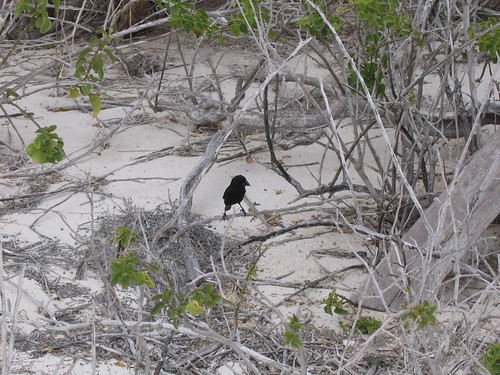
This book was recommended to me when I was in the Galapagos; I finally got round to reading it and I’m really glad I did. It’s an account of Peter and Rosemary Grant’s long-term study to measure the effects of natural selection on finches in the Galapagos. When this book was published in 1994, the study had been going for twenty years, but it’s still ongoing.

The choice of Galapagos finches isn’t just because of their iconic status in history of evolution; they’re an isolated population, they’re particularly variable, and a few very similar competing species live together in a very simple environment — only a few species of food plant, and almost no other small birds.

Over that period, they and their students have collected a staggering amount of data; detailed measurements of every finch on the island of Daphne Major, and records of who breeds with who, where their territories are, what songs they sing, what they eat, which territories are most productive, how the food supply varies from year to year and so on. That data has enabled them to show not just that tiny variations (in this case, particularly beak size) can have a measurable effect on the survival and breeding prospects of a bird, but that a change to the environment — a very wet year or a drought — can select for different physical characteristics to the extent of having a measurable impact on the average measurements of the population.

In effect, they have showed that you can observe evolution in action and that in the right circumstances it can happen extremely fast.

I really thought this was an excellent book. The detailed account of a single large research study sets it apart from all the other popular accounts of evolution I’ve read. There’s easily enough material to sustain a whole book and Weiner does an excellent job of communicating all the details with enough human interest to keep the book getting bogged down.

Categories
Culture Other

FSotW: Polaroids

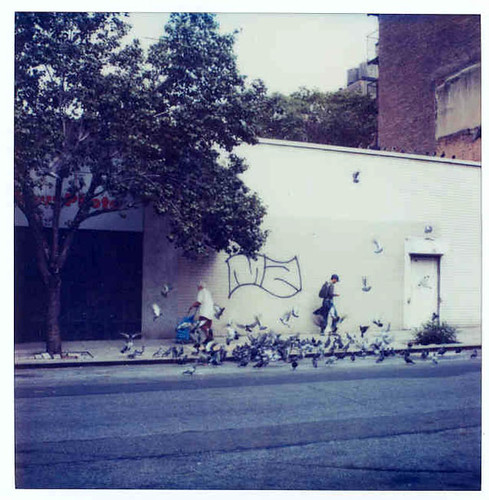
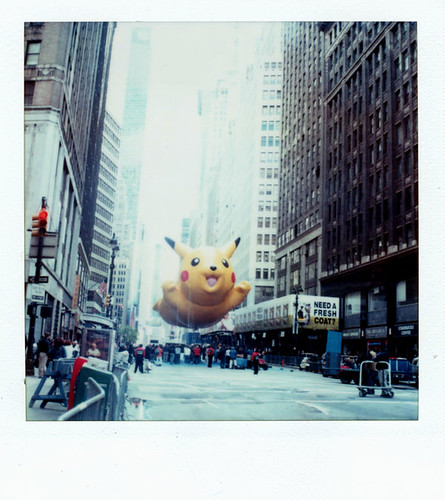
Flickr set of the week is Polaroids, by anniebee. They’re polaroids (obviously)
mainly taken in New York. I really like these – do check out the whole set. Particularly, but not only, the glorious ones of Coney Island.

Categories
Daily Links

Links