Categories
Other

Needling camels

I think it’s fascinating the way that, quite accidentally, the Church of England has been drawn into a debate about the state of capitalism. Because the protestors were not targeting the church; it was a pure accident of geography that a protest aimed at the Stock Exchange should end up camped around St Paul’s.

But that was how it turned out, and the church has been forced to take a position, and lots of commentators have been cheerfully picking out their favourite bible verses about camels going through the eye of a needle, and money-changers in the temple, and arguing about whether or not it makes any sense to call Jesus a socialist. And a lot of people who would not normally have any interest in the opinions of the Dean of St Paul’s or the Bishop of London are suddenly watching them very carefully and asking serious questions about the kind of relationship the church should have to wealth and power: always awkward ground for an established church which has the Queen as its head and an archbishop chosen by the Prime Minister.
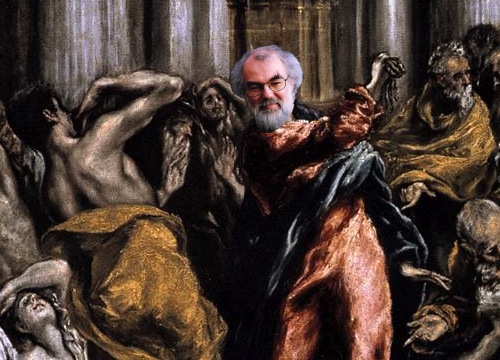
And unexpectedly, the support for the protest by at least some of the staff of the Cathedral has given the protesters extra credibility. Because, after all, the protestors who turn up to these things are easy to mock, and their specific political aims, insofar as they have been articulated at all, are often a bit dubious; but the ham-fisted and divided way that the church handled the situation helped frame the debate as a moral question about inequalities of wealth and power.

But the next confrontation could be even more interesting. Now that the church has had a change of heart, the legal challenge to the protests comes from that strange entity called the City of London Corporation. At its most mundane level the Corporation is the local government for the ancient City of London, the ‘Square Mile’. But it is also a very weird historical anomaly. The Corporation has been around for a very long time — the oldest recorded charter, in 1067, confirmed rights and privileges that already existed — and over the centuries it has carved out a semi-detached relationship to the rest of the country; mainly because a succession of kings and governments were willing to make concessions in return for the financial support of the City.

And so, in the middle of what is nominally a modern democracy, we have a borough where corporations still have the vote, and the votes of actual human individuals are vastly outnumbered by the votes cast by businesses. That anachronism wouldn’t be particularly sinister if the Corporation confined itself to organising street-sweepers and mending the roads. But it is also a very wealthy organisation explicitly committed to lobbying for the interests of business, and particularly for the financial industry. It even has its own representative inside Parliament, the ‘City Remembrancer‘.

In other words, it is the perfect symbol for the influence of money over politics. Over many centuries, time and again, from autocratic kings to democratic governments, everyone has flinched in the face of the City’s power. The anomalous existence of the City of London is the result of a thousand years of regulatory capture.

That makes them an excellent focus for protests. If the protestors do manage to turn the spotlight on the Corporation, it could be interesting to watch.
Categories
Culture

The Book of Disquiet by Fernando Pessoa

I think there’s a great division among readers between those who read fiction primarily for the plots and characters, and those who read for the pleasure of the prose. Not that the two are mutually exclusive — indeed one might argue that at its best literature should provide both — but I do think there’s a real difference there, and if you read book discussions on the internet, you often see people from the two sides talking across each other.

I would generally say that I am one of those who are more interested in prose style than narrative. But The Book of Disquiet really served to test that idea. It contains some of the finest writing I have encountered for a long time; it also has absolutely no plot.

It is presented as the ‘factless autobiography’ of a Lisbon clerk named Bernardo Soares, and it is a compilation of short pieces — some just a few lines, others three or four pages — which chronicle his inner life: philosophical musings about literature, love, dreaming, religion, and so on. Sometimes it’s aphoristic, sometimes detached and analytical, sometimes more personal and emotional; but it’s almost all inside his own head. We get little glimpses of his office and colleagues, and the streets of Lisbon; but really very little.

The result is often brilliant, sometimes funny, sometimes moving, sometimes waffly, sometimes aggravating — Soares is too snobbish and solipsistic to be completely likeable — and I did actually enjoy it as well as being impressed by it. But what it doesn’t have is a lot of forward momentum. And so it took me quite a long time to read and I had to make a conscious effort to pick it up again and push through to the end.

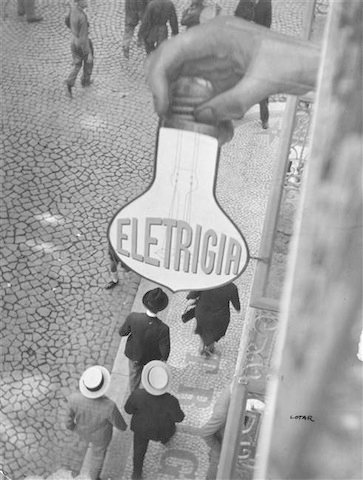
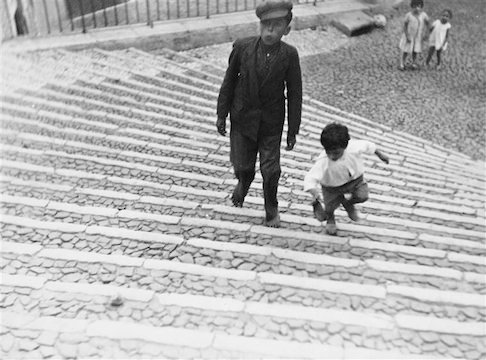
» The two photographs are by Eli Lotar from the series ‘Lisbon from 1930-1934’. I found them on the website of the Réunion des Musées Nationaux [1, 2].

Categories
Culture

London Film Festival: Target and Tahrir 2011

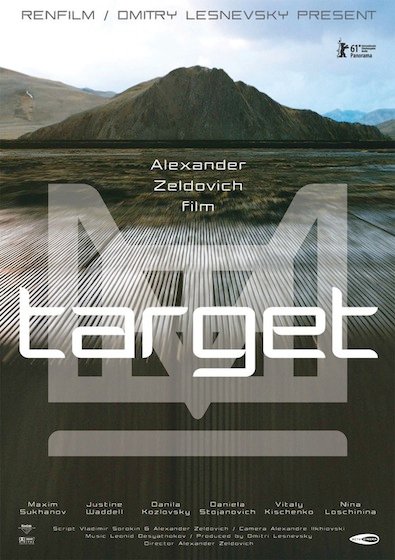
The last two films I went to see at the LFF were Target, a Russian film directed by Alexander Zeldovich, and a documentary abou the recent Egyptian revolution called Tahrir 2011: The Good, the Bad, and the Politician.

They don’t have distribution for Target in the UK at least, so I don’t know how likely you are to get to see it, but if you’re the kind of person who cares about such things I should warn now: SPOILERS.

Target is science fiction, from the philosophical end of that genre rather than the lasers and bug eyed monsters end. It’s set in a near future which is described in the LFF catalogue as ‘dystopian’, although I’m not sure that’s quite right: it’s quite hard to tell exactly what kind of society they live in, because the focus is quite narrowly on a group of wealthy Muscovites. There’s some sign of serious wealth inequalities, government corruption and a trashy media culture; but by those standards, Russia is probably a dystopia already. There are also hints of some kind of odd, bureaucratic, government enforced social hierarchy, but it’s never really explained in detail.

The film centres around a group of people who go out to a site way out in the Russian steppes to have a treatment which is supposed to be rejuvenating; it becomes apparent that the treatment actually stops ageing altogether, but it also makes them slightly mad: full of energy but manic and impulsive. Most of them self-destruct, including two who die and two who have to flee the consequences of their actions.

There were things to like about the film: it often looks great, for a start. One of the characters works as customs on a massive 12-lane motorway packed with heavy goods vehicles travelling between Europe and China, which looks spectacular on screen. And the landscape out on the wilds were they get the treatment looks amazing too, especially in the final shot of the film which is stitched together out of three separate shots, the first of which is, they think, the longest single tracking shot in cinema history. And there are some nice set pieces, including scenes of a trashy celebrity cooking show, manically presented by one of the main characters.

And I rather liked the fact that the film had unlikeable characters and a shortage of happy endings. Although that fact is only noteworthy because the bulk of commercial cinema is quite so incredibly conventional and limited.

But in the end 2½ hours was too long. It almost always is, really; at least at the theatre you get an interval so you can stretch your legs and relieve your bladder. Not that it was a slow film — it’s not 150 minutes of meaningful silences, thank God — there was just a lot of material. Too many subplots. And so by the end I was losing concentration and finding my stiff buttocks increasingly distracting.

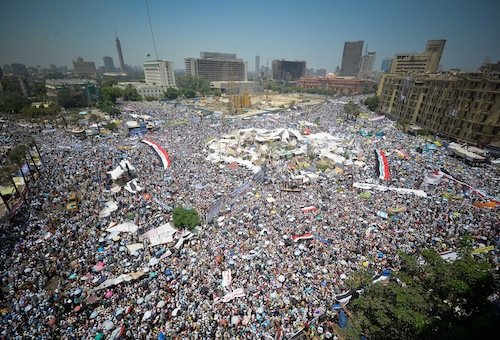
Tahrir 2011 is actually three documentaries made by different people and stitched together — hence The Good, The Bad, and the Politician. The first of them, ‘The Good’, is a fairly nuts and bolts telling of what happened in Tahrir Square this spring, which combined interviews with people who took part and lots of footage filmed at the protests. It’s a fairly conventional documentary, but the events were so amazing that it is riveting to watch. Fascinating and moving.

‘The Bad’ is made up of interviews with members of the police and security services, asking for their account of what happened. Potentially that’s a fascinating subject, but it’s less successful than it could be because they obviously found it very difficult to find anyone willing to talk to them — some of the interviews are conducted in silhouette — and the interviewees are obviously very conscious of finding themselves on the wrong side of history, so they are understandably cagey and defensive.

‘The Politician’ is a portrayal of Hosni Mubarak, framed as an attempt to find out how someone who came to power as a liberal, reforming figure ended up as a dictator. It attempts to present it in a fairly tongue-in-cheek, jokey way, broken into a list of ten items with little animated inserts between them, like a Channel 4 list program. But it doesn’t really come off, and by the end I was falling asleep.

» The photo ميدان التحرير يوم الجمعه ٢٩-٧-٢٠١١ is some rights reserved by أحمد عبد الفتاح Ahmed Abd El-fatah.

Categories
Culture

The Monk

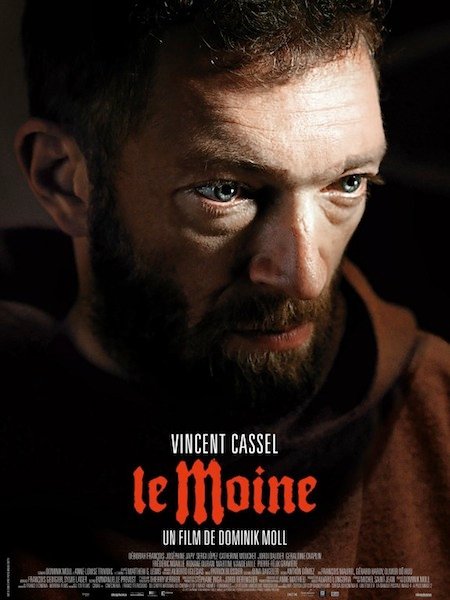
More from the London Film Festival. Le Moine is a film of the 1796 gothic novel The Monk by Matthew Lewis. It’s a long time since I read the book, but I remembered that it was an overblown, melodramatic, sensational novel, so naturally I was keen to see a film version of it.

It lived up to the melodramatic tone of the book, anyway, although it didn’t really try to be shocking by modern standards; they could easily have incorporated a lot more graphic sex and violence if they wanted to, especially since they were messing around with the plot anyway.*

It reminded me of Black Swan, actually: a fundamentally silly paper-thin melodrama masquerading as an art film. It even has Vincent Cassel. It’s set in [early C17th?] Spain, and it looks beautiful, with lots of medieval buildings, arid Spanish landscapes, winding back alleys, and even some gorgeous frocks. Plus an amazing scene of a religious procession through the streets of the town. And the broody Cassel holds the film together as the monk. But no amount of intense acting and beautiful camerawork can disguise the basic ludicrousness of the plot.

Now personally I enjoyed Black Swan, although I know a lot of people hated it, and I enjoyed The Monk. But I think in both cases you need to go in with appropriate expectations: I think a few people went into Black Swan expecting a serious psychological thriller and were irritated to find themselves watching an expensively made horror movie. Whereas I went in expecting it to be a piece of high camp, because I had seen the trailer, and I enjoyed it for what it was. And I enjoyed The Monk on the same terms.

* something I didn’t realise while watching the film — I don’t remember the book well enough for that — but while checking the novel’s synopsis on Wikipedia. I don’t think it’s the kind of book that invites reverential treatment, though.

Categories
Culture

Grayson Perry: The Tomb of the Unknown Craftsman

Grayson Perry has curated an exhibition at the British Museum that combines his own work — ceramics, textiles, ironwork — with objects from the museum collection. Which must have been *the most fun ever*. I mean seriously, I’ve spent hours browsing the BM’s collection online, looking for things to post to Tumblr, but how much more fun to actually wander around the stores, talking to the experts, poking around in drawers and cabinets, and actually handle everything, with an open-ended brief to find anything which is beautiful, or interesting, or funny.

In fact, if it had just been stuff from the collection with some commentary from Perry, that would be enough to make a very interesting exhibition, because he always writes well and interestingly about art and he clearly has an excellent eye.

But the inclusion of his own work does work well. His work always combines a seriousness with humour and absurdity, and its presence affects the way you look at the other objects. Human beings often are absurd, after all, and museums aren’t always the best places to bring that out. For that matter, museums don’t always do seriousness very well. I mean, they’re good at dry, academic seriousness, but they don’t necessarily create the environment for human seriousness.

And in turn it gives you some insight into how he sees his own art to see the things he’s chosen to show alongside his work, and the themes he arranged the exhibition around: pilgrimage, magic, sexuality, maps and so on. And since I haven’t said so explicitly yet: Perry’s work is interesting and attractive in its own right.

So, yeah, a playful, entertaining exhibition full of striking, interesting and beautiful things. Go and see it.

» The image is of a painted wooden figure of a dancing Bes holding a tambourine, standing on a lotus. It’s Egyptian, from about 1800BC. It is from the BM, but it wasn’t in the exhibition.

Categories
Culture

On The Ice, London Film Festival

The London Film Festival is going on at the moment, and I went to see the first of the four films I’ve booked, which was On The Ice, set in Barrow, an Alaskan town which is the most northerly in the US. It focuses on a pair of Inuit teenagers, and in some ways it’s your classic conflict-between-tradition-and-modernity setup. The film equivalent of a lot of the books I’ve been reading for the Read The World challenge. So they’re living in a world of drugs and hip hop, but also seal hunting and whaling.

The plot revolves around a drunken fight which gets out of hand, and the unfolding consequences. And generally I thought it was very effective. There was a moment in the middle when I thought it was in danger of losing its way, but it pulled itself together and finished strongly.

There’s a particular appeal to these kind of films, made on a microscopic budget with no real prospect of making any money. Not that I have anything against commercial cinema; on the contrary, I tend to think that when an art form ceases to have a real popular following, it dies as an art and becomes a heritage activity, like calligraphy, or hand-weaving, or jazz. Nothing wrong with those things, but their golden ages are behind us.

But still, it seems like there’s a kind of clarity of purpose when a film isn’t even trying to be commercial. It can just focus very straightforwardly on the characters and the story. And while the lack of budget presumably brings its own set of compromises, at least it helps keep the director from being distracted by all the bells and whistles.

Anyway, it’s a good movie, worth checking out if you get the chance.