Categories
Culture Nature

Digiscoping and Lomography

I was looking back at some of my old digiscoped pictures yesterday.
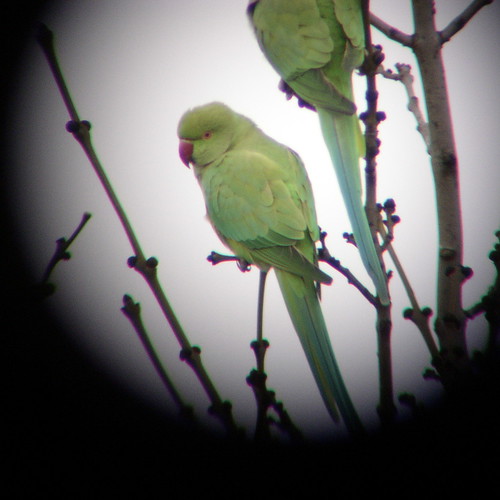
‘Digiscoping’ is the trick of using your birding telescope as very high-powered telephoto lens. At the simplest level, you just hold the camera up to the eyepiece and shoot through the scope; to get the best results you need more sophisticated equipment. You could do this with a film camera, of course, but it makes it a lot easier to have a screen so you can see what you’re doing, and to know that you can just delete the ones that don’t come out.

Anyway, I was vaguely wondering what they reminded me of, other than themselves.
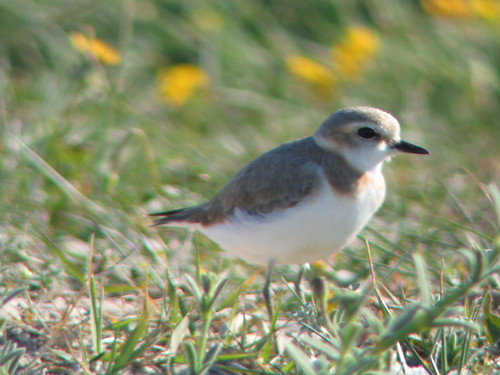
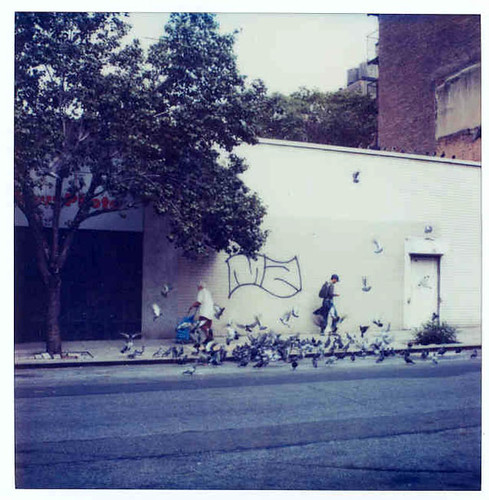
I realised that it was ‘toy camera’ pictures. You may not have encountered this trend, but there’s a [recent?] fashion for taking pictures with very basic old mass-market compact cameras, like the Soviet Lomo, or the Chinese Holga. The poor construction of these cameras, including plastic lenses and light leaks, produce distinctive pictures with lurid colours, dodgy focus, vignetting and other technical flaws. Which sounds crap, but actually the pictures have a rough-edged immediacy which can be very attractive.

My telescope doesn’t have plastic lenses, of course. But it wasn’t designed for taking pictures, either. And my adaptor consists of the bottom of a film canister glued into the lid of a pill bottle, with a hole cut through them. It serves to keep the camera roughly in the centre of the eyepiece, but it doesn’t keep it properly lined up along the axis of the telescope or keep it steady.
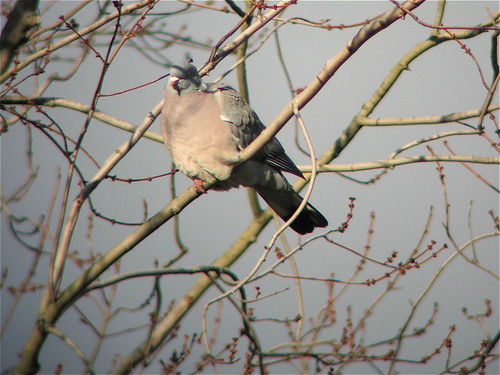
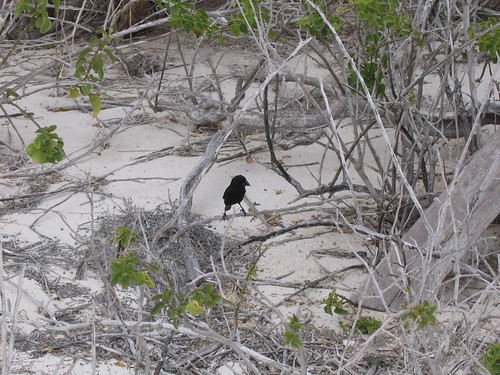
When I took them, I was doing my damnedest to take the best possible pictures despite the technical limitations of my equipment. The results aren’t going to win any wildlife photography prizes, but some of them do have something of that same weird vividness that I find attractive in toy camera pictures.

This kind of lo-fi aesthetic probably doesn’t appeal to everyone. But I might as well enjoy it in my own pictures. Not that I feel defensive about them; I enjoyed the challenge of taking them and never expected them to be anything other than holiday snaps. I’d never really tried bird photography before — they don’t make an easy subject and it’s difficult enough trying to see them normally — but if birding is the main point of a trip, it’s a treat to have a record of birds instead of just places.
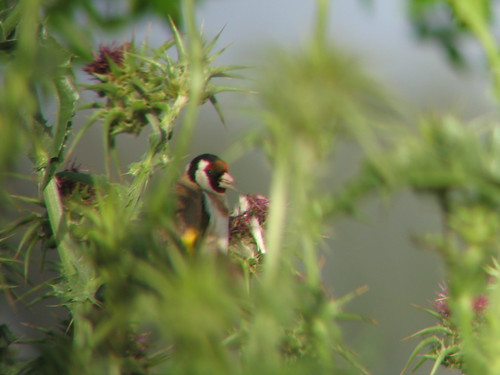
I liked these pictures anyway. Does a spiffy aesthetic context make me like them any more? Should it?

Perhaps it doesn’t matter. I just wanted to note the comparison.

» All pictures are from Flickr and are links so you can click through to the relevant pages. The birdy ones are by me; the child was taken with a Holga by john.makarewicz and the Peruvian valley was taken with a LOMO by phoosh.

Categories
Culture Other

FSotW: Stereographic Projections

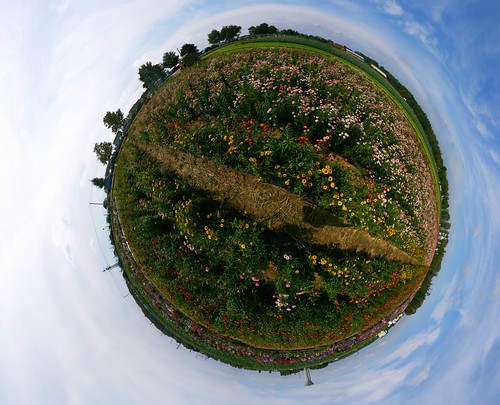
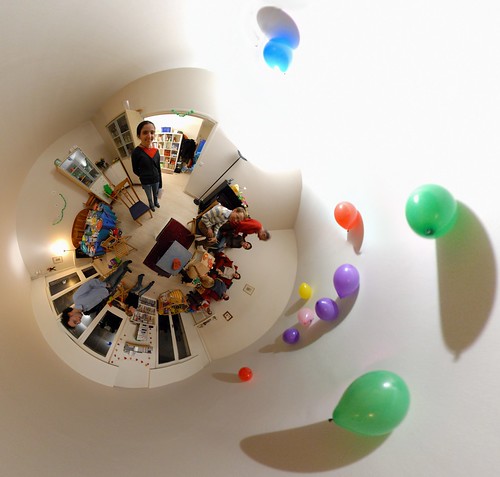
Flickr set of the week is Stereographic Projections by Seb Przd. I don’t understand the details of how these are made, but he starts with a panorama and applies some kind of mathematical wizardry to it. As always, click on one of the photos to go to the page on Flickr.

Categories
Culture Nature

The Beak of the Finch by Jonathan Weiner

This book was recommended to me when I was in the Galapagos; I finally got round to reading it and I’m really glad I did. It’s an account of Peter and Rosemary Grant’s long-term study to measure the effects of natural selection on finches in the Galapagos. When this book was published in 1994, the study had been going for twenty years, but it’s still ongoing.

The choice of Galapagos finches isn’t just because of their iconic status in history of evolution; they’re an isolated population, they’re particularly variable, and a few very similar competing species live together in a very simple environment — only a few species of food plant, and almost no other small birds.

Over that period, they and their students have collected a staggering amount of data; detailed measurements of every finch on the island of Daphne Major, and records of who breeds with who, where their territories are, what songs they sing, what they eat, which territories are most productive, how the food supply varies from year to year and so on. That data has enabled them to show not just that tiny variations (in this case, particularly beak size) can have a measurable effect on the survival and breeding prospects of a bird, but that a change to the environment — a very wet year or a drought — can select for different physical characteristics to the extent of having a measurable impact on the average measurements of the population.

In effect, they have showed that you can observe evolution in action and that in the right circumstances it can happen extremely fast.

I really thought this was an excellent book. The detailed account of a single large research study sets it apart from all the other popular accounts of evolution I’ve read. There’s easily enough material to sustain a whole book and Weiner does an excellent job of communicating all the details with enough human interest to keep the book getting bogged down.

Categories
Culture Other

FSotW: Polaroids

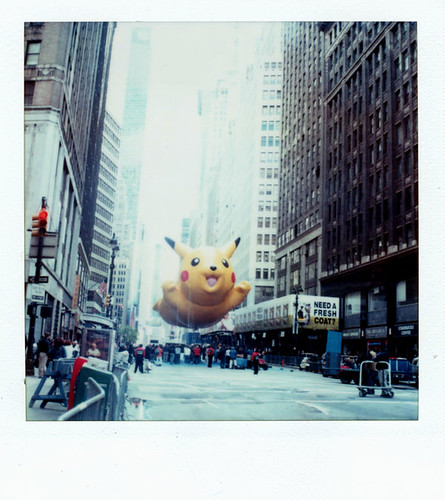
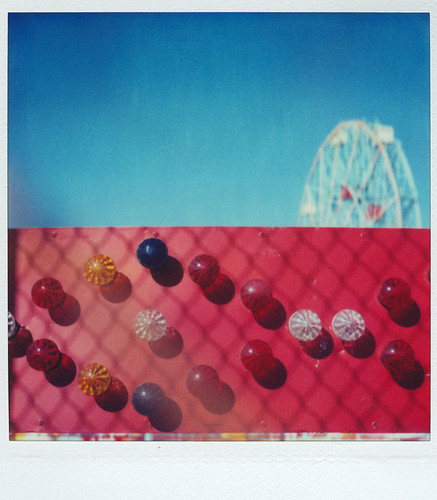
Flickr set of the week is Polaroids, by anniebee. They’re polaroids (obviously)
mainly taken in New York. I really like these – do check out the whole set. Particularly, but not only, the glorious ones of Coney Island.

Categories
Culture

Art at Christie’s

I went to the preview today of an auction of Impressionist and Modern Art at Christie’s. It made me think I should go to see art at auction houses more often.

What you don’t get is a curated exhibition, with the pieces arranged around some kind of (hopefully) illuminating theme. It’s a rather random selection of work determined by what happens to come up for sale. But there’s no entry fee, the paintings are well-displayed, it’s less crowded than exhibitions at major London galleries tend to be, and the staff are more deferential, even though they must have taken one look at me and realised that I was unlikely to be splashing out a few million quid for a Renoir. And the catalogue (expensive, but there are copies chained around the place for you to consult) gives loads of information about the work.

There were some nice paintings, too; Cezanne, Picasso, Miro, Kandinsky, Degas, Modigliani and so on. I rather liked Portrait d’Eugène Lamy by Gustave Caillebotte and this bull by Oscar Dominguez, for example, as well as some nice Vuillards. Most unexpected item: Giacometti chairs.

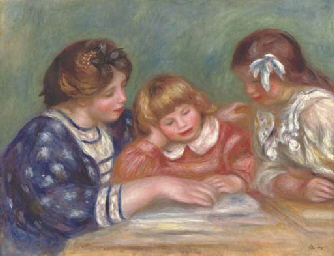
Of course the other thing that makes an auction different from a gallery is that all the work has an estimated price on the label. So you can find out that an awful marshmallowy Renoir group portrait of a lesson is worth 2.5 – 3.5 million pounds:

Isn’t that horrible? It’s interesting, though, trying to get some sense of who’s hot and who’s not in the current art market. Despite the price tag on that one, Renoirs were generally estimated at less than I expected; the Schieles on the other hand were pretty expensive.

It would be quite interesting if places like the National Gallery had valuations displayed on the labels. Would you be able to resist being swayed by the number of zeros? Of course they’d never do something so vulgar, and they’re probably quite keen to appear above such things, but I’m sure museums, academia and the art market have a symbiotic relationship. If an artist’s reputation is on the rise, I’m sure curators and collectors are affected in much the same way.

Categories
Culture Other

YouTube Madness

Otis Redding:

Matt Le Tissier*:

Baile Funk:

*via More Than Mind Games