Categories
Me Nature Other

Sparrow!

I was reading in the garden today and heard a distinctive chirp: there was a female house sparrow on the bird feeder. Once, this would have been normal, but British house sparrow numbers have plummeted in the past few years; the sparrow population of London declined 75% between 1999 and 2004. It was the first one I’ve seen here for years.

No-one quite knows why they disappeared. Loss of nest sites because of changing roofing materials? Loss of hedging? Less waste ground? Inevitably some ‘bird lovers’ blame sparrowhawks and magpies, or cats or squirrels; equally inevitably some people have tried to blame it on mobile phone masts. It seems difficult to account for the suddenness and scale of the decline by any obvious change in the environment, and it’s tempting to suggest disease; but honestly we don’t know.

Food Fight!, originally uploaded by ScottCatskill.

There’s a particular poignancy because Londoners have long identified with the house sparrow as the ‘cockney sparra’. In Victorian London, when the air was murk and anything left in one place for too long was gradually covered in a layer of flaky soot, and city gardeners had to choose their flowers from species which could survive the pollution, there weren’t many birds found in the heart of the city. But the sparrows were there, nesting in the gutters and tiled roofs and any little nook in the brickwork which would offer them enough space to build a nest out of sweet papers and cigarette butts. The very character of them—drab, scruffy, gregarious, chirpy, impudent, noisy, tuneless, and given to squabbling and shagging in public—makes them seem like proper London birds.

Behind the most ancient part of Holborn, London, where certain gabled houses some centuries of age still stand looking on the public way, as if disconsolately looking for the Old Bourne that has long run dry, is a little nook composed of two irregular quadrangles, called Staple Inn. It is one of those nooks, the turning into which out of the clashing street, imparts to the relieved pedestrian the sensation of having put cotton in his ears, and velvet soles on his boots. It is one of those nooks where a few smoky sparrows twitter in smoky trees, as though they called to one another, ‘Let us play at country,’ and where a few feet of garden-mould and a few yards of gravel enable them to do that refreshing violence to their tiny understandings.

—from Dickens’s The Mystery of Edwin Drood

The idea that the house sparrow is a cockney bird is admittedly parochial. Sparrows are found nearly everywhere there are people. And they are only found where there are people; they have become so closely tied to human habitation that no-one knows quite what habitat the ancestral sparrows preferred, or what part of the world they lived in. I like to think that sparrows started hanging out around people at about the moment some Mesopotamian farmer built the first granary, and they’ve been with us ever since, hopping around our barns and farmyards, our parks, markets and pavement cafés; nesting in our thatch, under our tiles, and in our lamp-posts.

Little bandit,……, originally uploaded by Hans Viveen.

I also feel a certain kinship in the fact that house sparrows, like the other species that have hitched a ride with humanity—rats, pigeons, cockroaches—have been successful because, like us, they are generalists. They are adaptable. They may not be exquisitely adapted to efficiently exploit a particular evolutionary niche, but provide them with a new environment like a city, and they find a way to thrive while other species are left stuck in their evolutionary rut.

When the sparrows disappeared from this bit of London, I didn’t consciously notice them go. But when I’m staying somewhere that does have them—if I’m woken in the morning by their chirping, if they try to steal the crumbs from my morning croissant—there is a sense of order restored. Deep down, I feel that a house without sparrows is lacking something important. I know that people in the Americas and Australia, for whom the house sparrow is an invasive, non-native species, may not feel the same way. But to me, the sparrows are our companions, our familiars, our symbionts.

I just hope that today’s was the first of many.
Categories
Other

Barbecue weather and frozen breakfast

It’s a measure of how thoroughly miserable the weather has been that I just used the barbecue for the first time this year. But today it feels like summer.

blue sky

I just did some lamb, tomato salad and potato salad. The lamb was marinated in olive oil, garlic, lemon and oregano for that Greek flavour. I came up with what seemed like quite a cunning trick for the salads, though: I boiled some Anya potatoes, drained the pan and left them sitting for a while in a French dressing (olive oil, wine vinegar, Dijon mustard, honey, salt and pepper). Then I poured that vinaigrette off the potatoes to use in the tomato salad, and chopped the potatoes and mixed them with mayonnaise and a bit of parsley. That way the potatoes absorbed some of the flavour of the dressing, and the dressing got some extra savoury flavour from the potatoes. I don’t know how much difference it made to the tomato salad; it was certainly tasty, but you can’t go far wrong with tomatoes, shallot, fresh basil and some French dressing. The potatoes were really good though.

Then I made some Frozen Breakfast ice cream, which would be a bit more radical if my typical breakfast was eggs, bacon, chips and beans. Or even toast and marmalade. But my current breakfast of choice is yoghurt, oats and honey; I put that in an ice cream maker and it was yummy. The freezing seems to bring out the sourness of the yoghurt, which I quite like. I toasted the oats a bit first in a dry frying pan to add a bit more flavour (which I don’t do at breakfast time), but I don’t think it was strictly necessary.

I suppose you could call it frozen yoghurt instead of ice cream, but that seems desperately 1980s to me. And it sounds a bit joyless and health-foody, which wasn’t the point at all. I certainly didn’t use low-fat yoghurt, which I think is the devil’s work.

Mmm. Toast and marmalade ice-cream. Now that’s an intriguing idea. Made with lightly toasted brioche, maybe.

Categories
Other

David Beckham and the Deathly Hallows

With Beckham and Harry Potter both being in the news at the moment, I started seeing them as a parallel pair: you can identify lots of sound reasons why Becks is a big star and the Harry Potter books have sold so many copies, but in both cases you’re left with a sense that their actual level of success is out of proportion.

Becks with a Harry Potter scar

If anything it’s easier to see why David Beckham is a star: he was a key member of the most successful incarnation of the most popular team in world sport; he started going out with, and duly married, a member of one of the most successful British pop groups of all time when they were at their peak; he’s incredibly good-looking, and not just by footballer standards; he played a key role in some of the most memorable moments for the England football team; and his whole metrosexual, homoerotic image seemed genuinely radical in the blokey, working-class context of British football. And he seems like a nice man.

And yet… how did all that amount to him becoming a global superstar, without him, for example, winning the World Cup? Having lived through the whole period of his rise to prominence, I know that, in a British context, it all seemed to make sense at the time. But did the sarong really make a big impact in Tehran? Were the Spice Girls such a big deal in Shanghai? I remember reading about a journalist who went to do a story about would-be suicide bombers in Palestine. While he was interviewing them, someone came in with the football results. “Manchester United won!” (much cheering) “and Beckham scored!” (even more cheering, and cries of Allahu Akbar! Allahu Akbar!). Why him, and not Ryan Giggs, or Michael Owen, or any of his other talented contemporaries? Raul? Batistuta? Figo?

The same can be said about the Harry Potter books (and indeed the Spice Girls). You can easily find reasons why they’re popular: they combine a sense of teen alienation with an inventive magical world; boarding school stories are popular; the wordplay is entertaining. There are a lot of boxes being ticked. But why are they a complete publishing phenomenon? Presumably J.K. Rowling has no more idea than the rest of us. After two or three books, did she ever lie awake at night wondering whether she was going to suddenly lose her touch, and her fans would pick up the next volume, read a hundred pages and never quite feel the need to finish it?

It’s easy to dismiss it as being driven solely by ‘hype’. And there is clearly a snowball effect where the marketing people seize on a success and drive it forward by spending money on it. But if it was as easy as that, there would never be a blockbuster movie that flopped or an unsuccessful second album. LA Galaxy may well be about to discover that no amount of hype can magically persuade people to spend money on something that doesn’t interest them.

And I’m not saying that they are overrated, exactly. Beckham at his best is a very very good footballer; the books are an enjoyable read. But Beckham would have to be Pele, Puskas and Cruyff rolled into one to justify his profile, and the Harry Potter books have been so freakishly successful that it would be disproportionate for anything short of the second coming of Shakespeare. That’s not their fault. I just wonder how it happens. Some magic combination of ingredients? Mob hysteria? Blind luck?

Categories
Other

Atheist, not agnostic. Honestly.

Scavella has a post about her religious belief, the general drift of which is entirely reasonable. Obviously I don’t actually agree with it all—no surprise there—but I don’t feel the need to argue with it. I do have a problem with this, though:

I tend to regard agnosticism as more honest, and more politically palatable. The fundamental truth is that we do not know what lies beyond our experience (which for some people is a religious experience and for others is a material one, and both experiences are similarly bounded by our physical and physiological limitations), and to assert that we do know is fallacious.

I accept that I can’t prove the non-existence of gods. I think there are good reasons to believe that there are no gods, but in the end it has to be an assumption. Nonetheless I describe myself as an atheist rather than an agnostic. I believe there is no god, although I can’t prove it. The Archbishop of Canterbury believes there is a God, although he can’t prove it. Why should I be described as an agnostic if he isn’t?

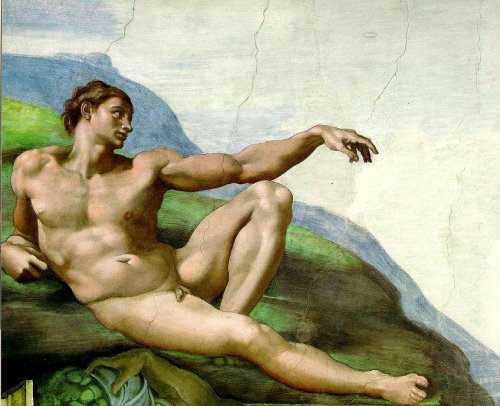
Adam alone

The other reason I feel there’s a difference between an agnostic and an atheist is that I’ve been both. I come from a non-religious family—I think my father identifies himself as Church of England on the census, but as far as I can tell he’s nothing of the kind—but I got the usual English kind of low-key religious education at school. I’m sure there was a point when I sort of believed that it was sort of true, in the non-critical way that children believe things that adults tell them. I’m not saying that I ever had any kind of religious period, or strong sense of identity as a Christian, but Christian ideas were floating around in my head along with a jumble of other stuff like Father Christmas, astrology, the wolf in the attic, and that eating carrots help you see in the dark.

As I got older and more sceptical these beliefs got winnowed out. Naturally you start by losing things like Santa and vampires, which are universally understood to be fictional. But there are a range of more-or-less supernatural beliefs which are widely endorsed by adults and so are much harder for a child to confidently dismiss: UFOs, astrology, homeopathy, dowsing, ESP and of course religion, which has the whole weight of centuries of European culture giving it authority. So there was a period when although I was sceptical by inclination and certainly not a believer, I described myself as an agnostic, and actually meant ‘I don’t know what I believe’.

But after spending years thinking about these issues, arguing them with people, learning more about both religion and science, and encountering the usual arguments for and against, my position became clearer (or firmer, or more rigid; pick your own adjective) and I reached a strictly materialistic view of the world. For me, as I never had much emotional investment in Christianity and I never lived in a very devout community, it genuinely was as much a rejection of dowsing, ESP and crystal healing as a rejection of God or religion. The point is that it wasn’t a quick or impulsive decision.

To call myself an agnostic now would feel like a denial of a process, which was, for me, real and important. I can see the temptation; ‘agnostic’ is a label I can live with, and it’s softer and less confrontational than ‘atheist’. But in the end, for me, it’s calling myself agnostic which feels like the less honest option.

Categories
Culture Other

Anthony Gormley at the Hayward

Last week I went to Blind Light, the Gormley show at the Hayward. Gormley must be the third most famous artist in Britain, I should think*, particularly on the back of two spectacular public works: Angel of the North and Another Place.

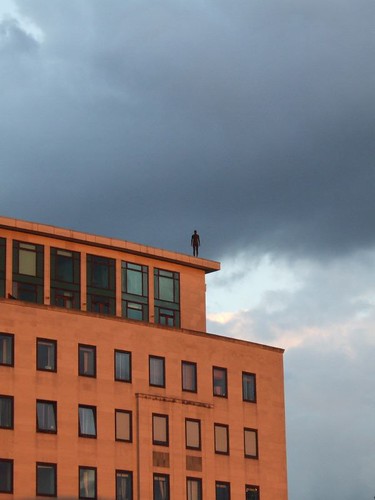
For those of you who don’t know his work—foreigners and the like—he has produced an endless series of variations of the human form; his visual signature is a blank-faced statue, standing rigid with its hands by the sides. I believe most of them are cast from his own body, but any distinctive characteristics are removed to leave a generic male form. The two works I’ve linked to above give you an idea of how he varies the basic template. To accompany the current exhibition, he has created another such installation: a number of life-size male figures, cast in bronze, positioned on rooftops and other prominent places over a 1.5 km radius, all facing towards the gallery.

0706290002, originally uploaded by domeheid.

This installation, titled Event Horizon, is a joy in itself; you start seeing the figures as you walk to the gallery, and then from the various exterior spaces of the gallery you can scan the rooftops of London to look for more of them. All these mute figures watching from the rooftops are almost rather creepy—it’s very Doctor Who—but mainly it adds a touch of magic to some very mundane buildings and creates a striking relationship between the exhibition and its surroundings.

Part of what makes it so good is the sheer scale. It must have been a major undertaking just identifying places to put them, negotiating with the owners of the buildings, and getting them into position. You could imagine an artist doing the same thing but being content to just place half a dozen figures on nearby buildings. Gormley has placed 31 figures (according to Wikipedia); some are so far from the gallery that you can’t even be certain that you’ve identified them correctly.

That commitment, I think, is typical of the artist. With someone whose work has quite such a consistent theme running through it, there’s a risk of them being a one-trick pony, but Gormley doesn’t just have lots of ideas for how to develop his basic theme; he develops and executes those ideas thoroughly. My most frequent irritation with contemporary art is when I feel that it’s under-developed. Half baked. I don’t get that with Gormley.

It helps of course that, being human ourselves, we tend to find the human form endlessly fascinating.

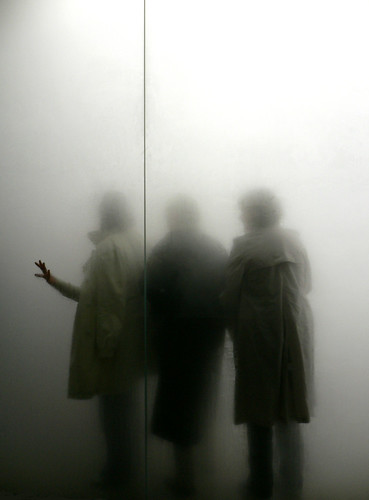
The most striking work inside the gallery is called Blind Light; it’s a glass-walled box, about 10m square, which, with the help of ultrasonic humidifiers and flourescent lights, is filled with bright white fog. Once you enter, visibility is down to a couple of feet, sound is muffled, the floor is wet underfoot; I only walked across the box and then turned round to walk back to the entrance, but still got lost enough that I had to feel my way along the wall to find the door again. Meanwhile, from the outside, you see people’s figures appear as ghostly shadows in the mist.

people in the mist

blind light by _imax, used under a by-nc-nd Creative Commons licence.

What I found most striking was the disjuncture between the immersive, disorientating strangeness of being inside the box and the relative mundanity of what it looks like from the outside. Intellectually you know what it will be like, and you can see other people stumbling around in the mist, but it doesn’t quite prepare you for actually being in there. In a sense this feels like a trick; yes, it’s an intense experience being unable to see where you’re going. Does that mean it has artistic worth or is it just a fairground ride with an arty blurb attached to it?

One point to make is the way it relates to the other work in the exhibition; the box obscures people’s individuality and turns them into shadowy versions of Gormley’s blank-faced statues. And when you’re in there, you become very aware of your own body and your relationship with your surroundings. In the same room there’s a work from 1991 called Sense, a block of concrete with a couple of holes that turn out to be just the ends of a body-shaped void in the block. A model of Gormley’s body was cast in wax, the concrete was poured around it, and then the wax melted to leave the empty space. Blind Light is like a live-action version of the same thing; everyone who walks into it carves out a body-shaped hole in the mist.

There were lots of other works as well which I haven’t touched on; this slideshow from the Telegraph gives you some idea.

*Hirst and Emin.

Categories
Other

FSotW: Paleontology

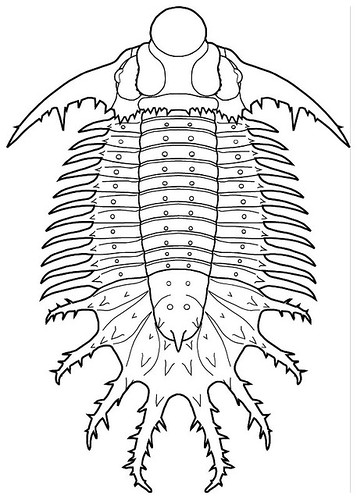
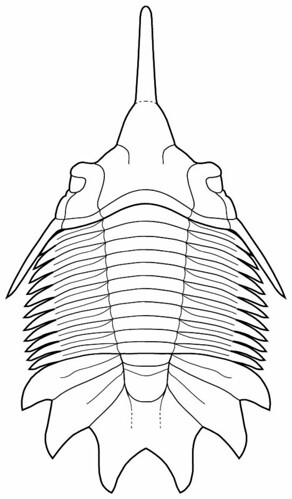
Via Pharyngula, Flickr set of the week is Paleontology by Goniagnostus.

Terataspis grandis fh new lg

Probolichas FH lg, originally uploaded by Goniagnostus.