Categories
Other

Hot News!

Forget the elections about to be held in the Canada/Mexico area, forget the way the Dow Jones and the FTSE are chasing each other up and down like a pair of territorial squirrels who both want the same tree trunk, something really newsworthy is happening.

Argentina have apparently picked a new manager for their national football team, and it is the one, the only: Diego Maradona.

Employing a man with minimal management experience, who is a drug cheat, a cheat cheat, a political radical, a cocaine user, someone whose weight problem lead to him having a gastric bypass: what could possibly go wrong?

It’s as though they saw Newcastle United pick Kevin Keegan as manager and thought ‘Call that soap opera? Hell, we can do better than that.’

[Seriously, though, watch the video: it’s four and a half minutes of pure joy. Even when he’s scoring against England.]

Categories
Daily Links

Links

Categories
Culture

scribble scribble

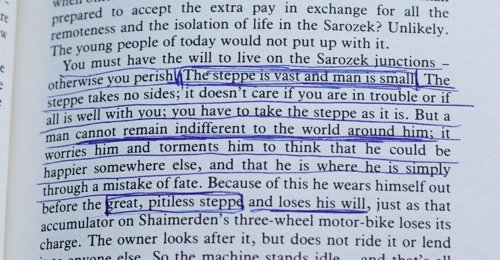
Because I need to find rather obscure books for the Read The World challenge, I’ve been buying second-hand copies online. And that has meant an irritation I’ve barely had to deal with since university: people who write all over books.

To be fair, whoever wrote in this book was presumably its owner, so they can be spared the special level of hell that I can only hope is reserved for people who write in library books. But eight lines of underlining in blue biro cannot possibly be the best way of annotating a book, even for your own use. It’s far too distracting when you come back to have a look at what you marked earlier.

Use pencil, dammit. And confine the markings to the margin, as God intended. And while I’m on the subject: one sheet of A4 can easily be torn into about 200 scraps of paper that make perfectly serviceable bookmarks; so there’s no need to turn down the page corners.

Harumph.

Categories
Culture

The Kite Runner by Khaled Hosseini

The Kite Runner was really the obvious choice from Afghanistan for the Read The World challenge, since my mother had a copy already. I have to admit I was sceptical about it; the very fact it became so popular at a time when Afghanistan was in the news made me wonder whether its success was based more on topicality than merit. Also the UK edition has a very wishy-washy cover with a sepia-tinged photograph of a small boy on it, and while covers are often misleading, they do at least tell you something about what the publishers think is the market for the book.

And so I rather expected The Kite Runner to be a bit like the book I read for Iran, also written by a refugee who has lived for many years away their home country: nostalgic and rather insubstantial. In fact, it is much darker than I was expecting.

It tells the story of the narrator Amir’s childhood in Kabul, particularly focussing on his relationship with his father and his friendship with the servant boy Hassan; then his life with his father as a refugee in California in the 80s after the Soviet invasion, and a trip back to Taliban-controlled Afghanistan to do a favour for someone. Some of the darkness comes from the brutality of the past 30 years of Afghan history, but Amir’s personal story is one of betrayal and guilt even in his childhood in the relatively peaceful pre-Soviet days.

Generally I thought it was successful: the childhood stuff is gripping and moving; the portrayal of the refugee experience, and the contrast with their life in Afghanistan, is very effective; and the vision of an absolutely shattered Afghanistan under the Taliban is also pretty good. I found the book to be a genuine page-turner; I was reading until 2am a couple of times. Just to be clear, I don’t think it’s a literary masterpiece. But it is a well-written novel that tells a good story.

Hosseini isn’t afraid to pile on the emotive material, and most of the time he manages that without tipping over into corny or melodramatic, but towards the end of the book he did trigger my own personal cynic a couple of times. There’s a confrontation with a member of the Taliban in Afghanistan where the coincidences got a bit too Hollywood for me, and I never quite got pulled back into the book again in the same way after that. I also think he fluffed the last few pages.

So having been thoroughly gripped by the book initially, I was a bit disappointed at the end; even so I would recommend it.
» the photo of boys flying a kite in Kabul is AFG_20071109_169.jpg, posted to Flickr by AndyHiggins.

Categories
Daily Links

Links

Categories
Culture

Told by Starlight in Chad by Joseph Brahim Seid

Told by Starlight in Chad is a collection of stories by Chadian writer Joseph Brahim Seid, translated from French by Karen Haire Hoenig. I’ve tagged this post with ‘short stories’ but they aren’t really short stories in the literary tradition: they are fables or folk tales in the oral tradition. I’m not sure whether they are all traditional stories or new ones, or how true they are to the way the stories might be ‘told by starlight’.

In some ways the material seems very familiar — wicked stepmothers, magic purses, and beautiful princesses — although the stories feature hyenas and gazelles rather than foxes and rabbits. Sometimes the stories end with a moral or an explanation of the ‘and that’s why we do so-and-so’ type, and sometimes they are, as far as I can tell, just stories.

Just to give you an idea of the style, here’s the opening to a story called Bidi-Camoun, Tchourouma’s Horse.

A very long time ago, in the days when miracles and wonders were still common among us, a little prince was born in the kingdom of Lake Fitri. Tchourouma was his name; noone knew the reason why. His father loved him dearly and his mother adored him. At a very young age, they had given him as a gift Bidi-Camoun, a splendid chestnut horse. When Tchourouma had barely reached his fifteenth year, his gentle mother died, snatched away by a cruel disease in her chest, which neither the skill of the fakihs, the fetish doctors nor the Bulala witchdoctors could cure. In memory of his beloved wife, the Sultan retained a great deal of affection for the child. He took him lion hunting and on walks around the lake which is the sanctuary of the ancestral spirits and the safeguard of the kingdom. Devoured with envy by the King’s great fondness for his son, the women of the harem devised plots to kill the child….

All quite interesting and quite enjoyable, though I can’t say I was completely grabbed by it. Told by Starlight in Chad is my book from Chad for the Read The World challenge.

» The picture of rock art in Chad, “Round head” paintings, is © Franck Zecchin and used under a by-nc-sa licence.