Categories
Culture

Mother’s Beloved by Outhine Bounyavong

Mother’s Beloved is a collection of short stories from Laos; even with an introductory essay and with the Lao printed opposite the English, it’s only 160 pages. BTW, I don’t know a lot about Lao names, but I think that ‘Outhine’ is the surname.

I knew absolutely nothing about Laos except its approximate location (between Thailand and Vietnam). Fortunately this book has an essay about contemporary Lao literature that acted as a quick primer on the country’s modern history, which has been fairly grim: it went from being a Thai colony to a French one, got caught up in the Indochina War and the Vietnam War, when the Americans bombed it extremely heavily, then had about 15 years of communist government. Apparently it has liberalised somewhat since the fall of Russian communism, but there’s still only one legal political party: the Lao People’s Revolutionary Party.
The stories themselves are short and simple, both stylistically (as far as I can tell from these translations) and in terms of action. And indeed morality: by which I mean that you could often end each story with ‘and the moral of this story is … [something].’ I don’t think it’s a coincidence that most of them were published when Laos was a communist state; I think some of that simplicity that comes from writing in a country where too much ambiguity might be regarded as politically suspicious. And often the ‘morals’ are as much political as moral: ‘every one of us, no matter how humble, can make our own sacrifice in aid of the war effort’, for example.

Still, the very simplicity of the stories has its own appeal, and one or two of them managed to combine that simplicity with just the right emotional note in a way I found effective. I’ve decided that one way I could make these little reviews more useful would be quote some of the books, so here’s the opening of a story called The Eternal Pair of Birds. It’s actually an unusually elaborate passage, but you can see it has a kind of plainness to the language.

It was late February. At the edge of the rice fields grew a flame tree full of red blooms whose colour, when reflecting the setting sun, was so bright it hurt the eyes. Next to it stood a lone palmyra. It stretched so high as if to challenge the rainstorm, the hurricane, and the sunshine. It had stood there, strong and graceful, for ages. To the people in this rural hamlet, it was like a timepiece. When the sun was high above its crown, it was noon. When the sun’s rays struck parallel across the top of its fronds, it was time to herd the cattle back to the stable and for the housewives to prepare dinner.

Mother’s Beloved is my book from Laos for the Read The World challenge. I quite enjoyed it, on balance, and if nothing else, it encouraged me to learn a bit more about the country.

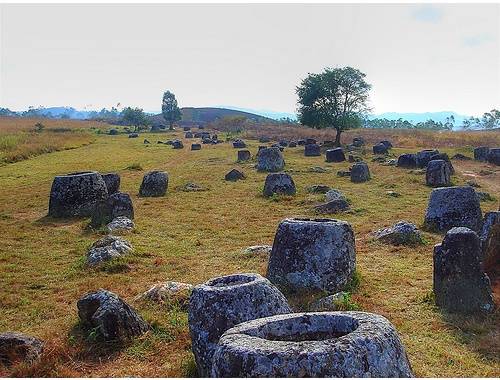
» The picture is from the Plain of Jars, an archeological site in Laos which I hadn’t heard of before but is mentioned in one of the stories. The stone ‘jars’, about 1500-2000 years old, are of unknown purpose but may be funerary urns or for food storage. Apparently it’s now one of the most dangerous archeological sites on earth because of all the left-over American cluster bombs. The photo, from Flickr, is © Kumar Nav and used under a CC by-nc-nd licence.
Categories
Daily Links

Links

Categories
Culture Nature

Dry Store Room No. 1 by Richard Fortey

Dry Store Room No. 1: The Secret Life of the Natural History Museum is about the behind-the-scenes work at the Natural History Museum in London. Whether you find that an appealing subject for a book depends, I suppose, on your feelings about museums and/or natural history; personally I found it irresistible.

The public face of the museum — animatronic dinosaurs and overexcited schoolchildren — gives relatively little sense of the scientific work that goes on behind the scenes, all of which is centred on the museum’s collection of biological specimens: pressed plants, trays of pinned beetles, drawers full of bird skins or fossils, jars of starfish in alcohol. The sheer scale of these collections is hard to comprehend: the museum holds over 70 million specimens. That means every person in the UK could be given one to take home and they’d still have enough left over for everyone in Sweden. 28 million of them are insects.

The collections haven’t been accumulated simply through an excess of acquisitiveness, although there must be some connection between the satisfaction biologists get from collecting beetles and other people’s collections of stamps, obscure soul 45s or golf memorabilia. The point of the collection is that it is a vast reference library: if you find an earwig in Burma and you’re not sure whether it’s a new species, you can start by checking the literature; but if all else fails, the last resort is to go to a museum, open up the drawers full of earwigs, and start peering at them through a microscope.

This kind of taxonomical work — preparing specimens, describing species, working out their relationships, publishing highly technical articles about it — might seem to be complete drudgery to an outsider; it is slow, careful, precise, unglamorous. But it obviously has a hold on people, because the book is full of people who spend decades working on some particular group of organisms, retire, and then keep coming in to the museum to continue their work in retirement. Fortey himself is apparently one of them, retired in 2006 but still working away at his trilobites.

The books combines a history of the museum, examples of the work done there, anecdotes about characters on the staff (not surprisingly, perhaps, there have been a few notable eccentrics) and a passionate defence of taxonomy as a valuable field of study. It’s well-written, entertaining, pitched at the interested amateur, and I thoroughly enjoyed it.

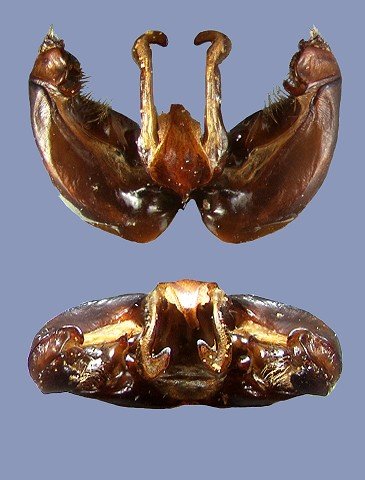
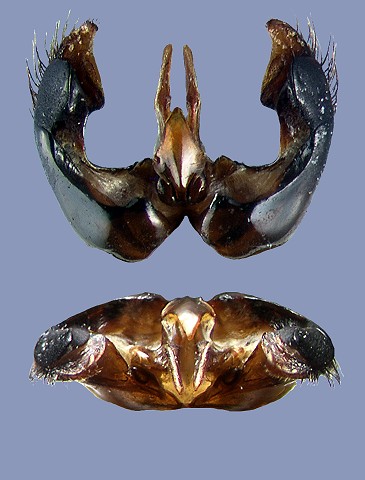
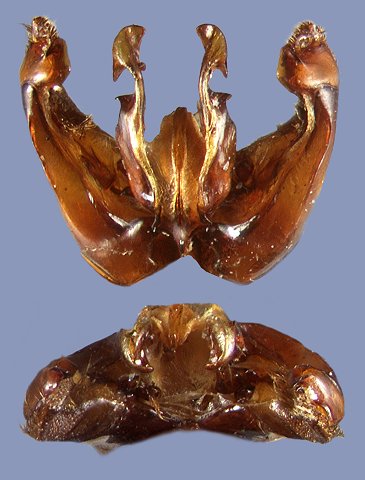
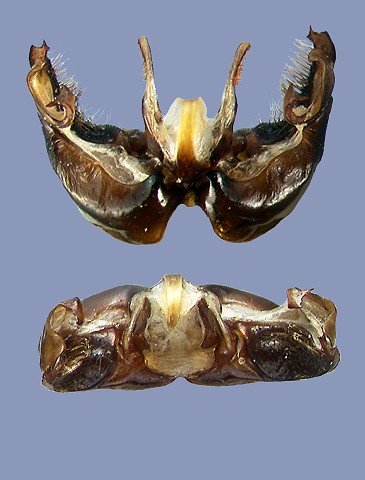
» The pictures, from the Bombus pages at the NHM website, are of male bumblebee genitalia. This isn’t a highly specialised branch of pornography; it’s a normal way of identifying them (and quite a few other kinds of insects).

Categories
Culture

The Wah-Wah Diaries by Richard E. Grant

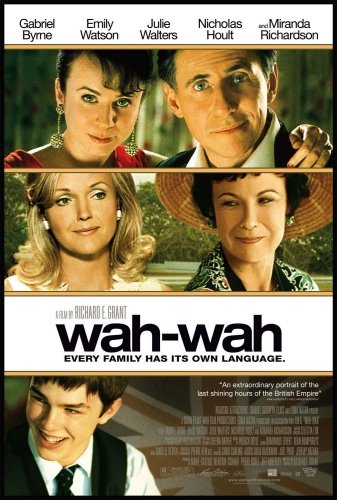
This is Grant’s account of making Wah-Wah, his first film as director. Grant grew up in Swaziland and the film is about growing up there, so I read it as my book from Swaziland for the Read The World challenge.

For me, the book is mainly interesting for its portrayal of film-making, which is fascinating but sounds very very stressful: complicated, expensive, highly time-sensitive, and requiring the juggling of dozens of cast and crew, all of whom have other work commitments.

The film was a French co-production, for the sake of getting the right funding and tax breaks; and Grant had an exceptionally bad relationship with his French producer, who comes across in the book as startlingly incompetent and badly-suited to her job. In fact I suspect her first reaction on reading it was probably to call her lawyer.

It was slightly odd to be reading a making-of book for a film I haven’t seen, but it was an engaging read. I’ll keep an eye out for the film.

(and by the way, is it me or does Julie Walters look really weird in the poster?)

Categories
Daily Links

Links

Categories
Culture

Maiba by Russell Soaba

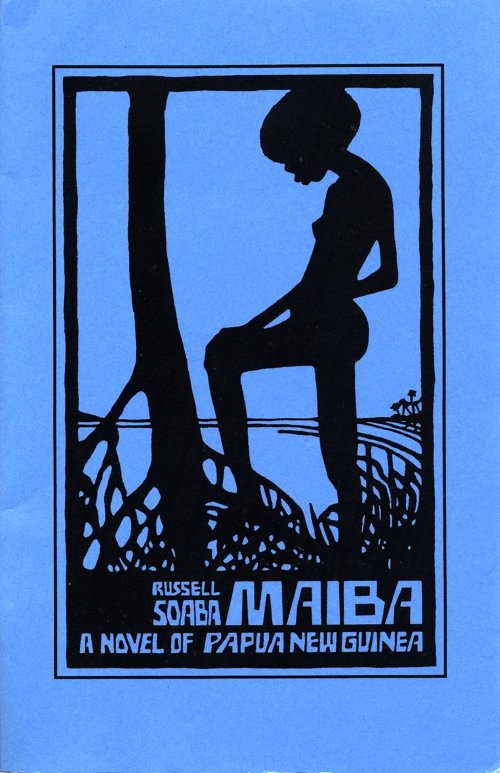
Maiba: A Novel of Papua New Guinea* is, you won’t be surprised to hear, my book from PNG for the Read The World challenge. I ordered it second-hand and was surprised to find when it came that it was a print-on-demand edition (I’m sure it’s a second-hand copy rather than one printed for me, btw). Of course POD services — or indeed e-books — are perfect for this kind of niche literature. Because of the challenge, I’ve been browsing around for second-hand copies of obscure books from around the world, and they don’t normally come cheap.

The print quality, for the moment, is noticeably weaker; my Maiba is perfectly adequate but a bit cheaper-looking and more generic than a normal mass-market paperback. But if POD helps keep books available at reasonable prices, then a slight compromise on print quality seems a good trade-off.

I imagine that most of the people ordering copies of Maiba are teaching or studying post-colonial literature, and it does fit fairly neatly into that niche. If I had to identify a central theme I’d say it was about the conflict between traditional Papuan culture and modernity — or change, anyway. The agents of change aren’t actually particularly strongly present in the book; the action takes place in a somewhat remote coastal village where the lifestyle is still fairly traditional (as far as I can judge from my complete lack of knowledge), but the relevance and authority of that tradition is oozing away.

I imagine that tradition vs. change is going to be a frequently recurring theme in the course of this challenge; but then I suppose rapid societal change has been the experience of most of the world’s population for the past century or so. Perhaps it’s just more obvious to me when I’m reading a novel set in PNG than one set in Surrey.

To be honest, I’m not quite sure what to make of it, as a novel. It’s short — only 115 pages — and rather open-ended. But it is well-suited to literary tourism; it has plenty of local detail about landscape, food, local buildings, bits of folklore and custom. And it’s well written. Perhaps my only real problem with it is that I’m not a big fan of short forms of fiction.

* Or at least that’s the title on the cover; inside it’s called Maiba: A Papuan Novel.