Categories
Culture

The Land Without Shadows by Abdourahman A. Waberi

The Land Without Shadows is my book from Djibouti for the Read The World challenge. There are a few options available in French, but Waberi seems to be the only choice in English. Having read a few underwhelmed reviews of his novel, In The United States of Africa, I thought I’d try this collection of short pieces.

It seems to be broadly true that Francophone literature from Africa is much more overtly ‘literary’ than the English-language stuff; more playful, more given to formal and stylistic flourishes. Which says something about the influence of French culture and French academia.

Some of these are fairly conventional short stories, others are more like essays or parables or long prose poems. They add up to a sort of portrait of Djibouti — the land without shadows — both in the present and historically.

It’s quite inventive and well-written, but the plain truth is that it never really held my attention. Shrug.

» Djibouti is © Stéphane Pouyllau and used under a CC by-nc-sa licence.

Categories
Other

Scary research

Genuinely terrifying:

Researchers [in Israel] looked at 1,112 rulings involving requests for parole (or for changes of incarceration terms) presented to eight judges. They heard cases daily, interrupting for a morning snack and lunch.

The odds of an inmate receiving a favorable decision started at 65%, first thing in the morning, then steadily dropped until the snack break. If the judge heard eight cases in the morning, the average success rate for the last one was 25%. If the judge heard 12 cases, the average success rate for the final one was 0%. Favorable rulings popped back up to 65% when the judge returned, then slid again until lunchtime. The same pattern appeared post-lunch.

The authors could find no other factors that might explain the pattern beyond the hearing’s timing, relative to the food breaks. They had no direct measure of the judges’ mood.

From the Proceedings of the National Academy of Sciences, via the WSJ, via bookofjoe.

Categories
Culture

Why I hate the Pre-Raphaelites*

When I was at university I overheard a conversation when someone said:

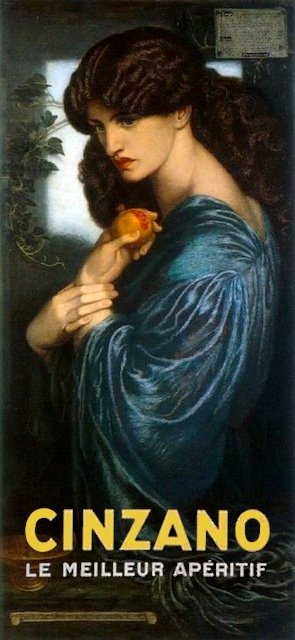
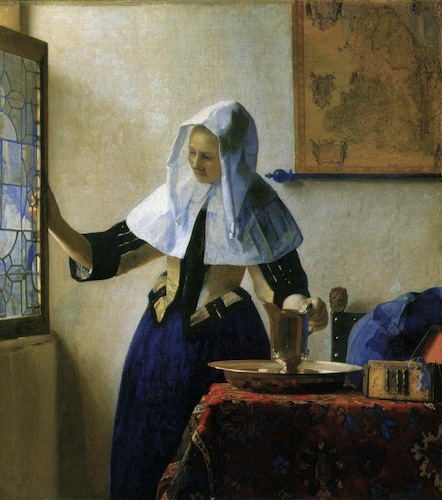
I just don’t understand how you can say you like both the Pre-Raphaelites and Vermeer.

It has stuck with me ever since. It’s just a perfect one-line bit of art criticism. It always seemed like it ought to make a great parlour game†: ‘I just don’t understand how you can say you like both x and y… fill in the blanks.’ But actually I’ve never been able to find a pair which seems as perfect as Vermeer and the Pre-Raphs.

Vermeer basically painted accurate pictures of his own time and place; carefully composed, tidied up and idealised, perhaps, but realistic, small scale, domestic. The Pre-Raphaelites‡ chose to retire to a silly fantasy world of knights and maidens which avoided the difficult complex reality of the nineteenth century — but avoided the difficult complex reality of the medieval world as well.

And Vermeer is sensual but austere; sensual in his representation of surfaces, textures, light and shadow, but stylistically austere in his classically perfect compositions and controlled, precise brushwork. While the Pre-Raphaelites are the opposite: stylistically they are lush and decorative, but the result is bloodless. Their paintings are full of decorative young men and women posturing and looking glamorous, but it’s all surface. There’s no flesh to it, not a whiff of filth.

In one of Aldous Huxley’s early novels, which are satirical portraits of London bohemia, there’s a character called Casimir Lypiatt who sees himself in the Renaissance tradition of painter-poet-thinkers, full of bombastic rhetoric about Art and Beauty and moral significance. Not everyone is as impressed with him as he is:

‘Number seventeen,’ said Mrs Viveash, ‘is called “Woman on a Cosmic Background.”’  A female figure stood leaning against a pillar on a hilltop, and beyond was a blue night with stars.  ‘Underneath is written: “For one at least, she is more than the starry universe.”’  Mrs Viveash remembered that Lypiatt had once said very much that sort of thing to her.  ‘So many of Casimir’s things remind me,’ she said, ‘of those Italian vermouth advertisements.  You know – Cinzano, Bonomelli and all those.  I wish they didn’t.  This woman in white with her head in the Great Bear….’ She shook her head.  ‘Poor Casimir.’

Presumably Huxley, writing in 1923, was not thinking of the pre-Raphaelites. But that description is brutally spot on.

Vermeer took the small and mundane and made it something hypnotic; the Pre-Raphaelites took a grand mixture of ideas, ideals, myth and history, and made a lot of pretty posters.

* OK, maybe ‘hate’ is a bit strong. But, you know, linkbait innit.

† Actually, thinking about it, a truly dreadful parlour game. A mildly interesting intellectual exercise, maybe.

‡ Yes, I know, I’m lumping them all together in a rather lazy way. But although the exact details varied from painter to painter, and some were better than others, I think the broad argument applies to all of them.

Categories
Other

Kate Middleton confirmed into the Church of England

According to sources close to Miss Middleton she chose to be confirmed because of her own personal journey into faith rather than because of the Royal Family’s role in the Church of England.

Yeah, right.

I suppose it’s not actually impossible that she happened to have a religious flowering just in time to marry the future head of the church, but let’s just say the timing invites scepticism. Still, it’s probably harmless enough as religious hypocrisies go.

This, though, seems a little optimistic from the religious correspondent of the Times:

This is good news for the people of Britain. It is thrilling to think of what might come of Miss Middleton’s public commitment to her faith, and of the ways in which, through good works as well as faith, she will go on to use her position to contribute to the common good.

I know there’s a lot of interest in the royal wedding, but I don’t think Kate Middleton is the celebrity endorsement which is going to fill the pews.

Categories
Culture

Watercolour at Tate Britain

I actually went to see this exhibition about a week or so ago, but I’ll just jot down some belated impressions. It is, as the title suggests, a historical survey of watercolour painting, from the medieval to the present.

There are only a handful of medieval pieces, bits of illuminated manuscript, which just serve as a reminder that, although they are not what we usually think of as ‘watercolour’, that is technically what they are.

The exhibition makes the interesting point that originally watercolour was mainly seen as an adjunct to drawing: a work would be drawn in pencil or ink and then effectively coloured in, sometimes just with a few hint of colour to liven the drawing and sometimes in a more thorough way. So many of the early pieces are technical works of one kind or another: costume designs for Elizabethan masques, maps, plans of fortifications, as well as a few specific uses like portrait miniatures.
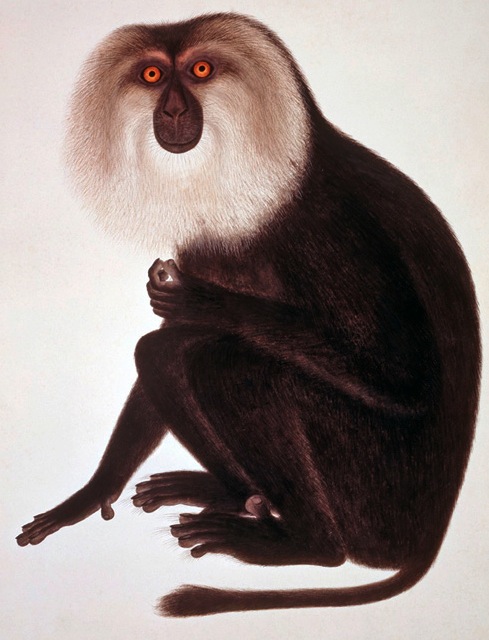
That technical aspect leads on to what is probably my favourite room of the exhibition, a room of scientific illustrations; especially botanical illustrations but also birds and mammals. Many of these were lent by the Natural History Museum or Kew, which is a clear sign that they were not originally created as Art, but they are gorgeous things. It even included some lovely C19th paintings of rock types — each one is a lump of rock on a plain white background, and they look like an elegantly minimalist conceptual art project.

After that we get into watercolour as an artistic medium in its own right. This includes plenty of ‘typical’ watercolours — landscapes, basically — but also a variety of paintings chosen at least partially to challenge that stereotype. So we have a room of war paintings, a room of ‘visionary’ paintings, a room of exhibition watercolours (i.e. large-scale C19th narrative paintings designed to compete with oil paintings for gravitas), and a room of contemporary work using watercolour.

My single biggest problem with the exhibition is that C19th British painting is not something I particularly enjoy. And that was the golden age of watercolour. So the aesthetic of the paintings was more off-putting than anything to do with watercolour as a medium. The exhibition watercolours seemed particularly pointless. I don’t like Victorian narrative painting and find the Pre-Raphaelites exceptionally noxious; seeing them painted in watercolour instead of oils didn’t make them any more likeable. Especially since there was no obvious attempt to make a virtue of the different medium: rather they seemed to be straining to make watercolours look as much like oil as possible.

And some of the paintings had clearly faded, which is the great technical problem of watercolour as a medium. There’s nothing much you can do about that, but it is a pity. There was a painting of some sun-drenched imperial outpost (Egypt? India?) which just didn’t look very hot, and I think it had probably faded a bit. So the shadows weren’t as dark, and the tones weren’t as warm.

As you can tell, I wasn’t blown away. But every room had something of interest and something covetable. And every so often there was a painting which was gorgeous and which could only have been done with watercolour: liquid and light and translucent. So it’s well worth a visit.

» The painting of the Lion-haired macaque, Macaca silenus, is by an unknown Chinese artist working for John Reeves, who employed locals to paint the specimens he was collecting while working in Canton from 1812-1831. That particular work is not in the Tate, though they do have a different monkey from the Reeves collection, lent by the NHM.

Categories
Nature

Birding again

The glorious summery weather is back, and I had a good day of birding today, just out of London. On the spring migrant front: masses of chiffchaffs and blackcaps, the odd willow warbler, a single swallow. Also treecreeper, nuthatch, buzzard and so on, but the bird of the day was bullfinch. To capture my immediate, pseudo-spontaneous reaction, here’s the tweet I posted at the time:

Wow. Bullfinch. What a genuinely incredible bird. I must try to see it more often.

And seriously, a male bullfinch in peak spring plumage is as beautiful as any bird I have seen anywhere, including barbets and toucans and hummingbirds… it is a proper cracker.

That’s not my picture, obviously, apart from anything else, it certainly wasn’t snowy today… but what a gorgeous beasty.

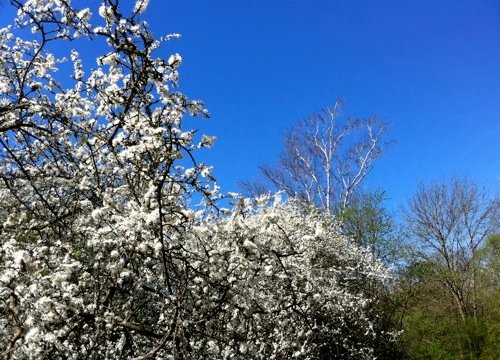
So, it was a lovely day out. The sky was blue, there was masses of blackthorn covered in bright white flowers, I saw about seven or eight species of butterfly*. Tasty.

And I was amused to find this on the pavement near my house:

Apparently the local drug dealers are sufficiently well organised these days that they sell their product in cute little cannabis-themed bags. I had no idea. The bag still smells of weed; oh the nostalgia. It almost makes me want to roll up, tune in and drop out.

* Definitely Peacock, Red Admiral, Comma, Orange-Tip; and I think Speckled Wood, Holly Blue, Small White, Small Tortoiseshell.

» The photo Eurasian Bullfinch (Pyrrhula pyrrhula) male is © Steve Garvie and used under a CC by-sa licence.