Categories
Culture

Read The World challenge: status report

I noticed that I am approaching two years of the Read The World challenge. So it seems worth pausing to take stock.
So, how’s it going?

Alright, I think. Having started with 36 countries already ticked off, I’m now on 89. So that’s 53 books in two years, at a rate of about one a fortnight… which is respectable enough. At this rate it’ll take me another four years to finish, which is slightly intimidating, but there’s no particular hurry.

I started pretty much on a whim, so it’s a success of a sort that I’m still going after two years without having got bored or sidetracked enough to quietly let the project die. There have been some occasions when it got close — I was going pretty slowly at the start of this year — but I think the trick is to always have several new books lined up at any time, so I have some choice.

What’s the point?

Since, as I said, I really got into this without any planning or forethought — Julie posted a link to it and I thought, oh, that sounds kind of fun — it’s worth asking why I’m still doing it, what I think the point is.

The main value, for me, is simply that it has made me read a lot of books I wouldn’t otherwise have found. Some of them I might have read — mainstream successes like The Kite Runner or established classics like The Maias. Others I would never have read without the challenge, like an anthology of Eritrean poetry, or a book about the architecture of the St Vincent and the Grenadines. Most fall somewhere in between; fairly conventional literary works in translation from specialist publishers: university presses, small presses, publishers aiming at the academic or educational market.

One positive effect is that I’ve been reading a lot more fiction: I was in a bit of a non-fiction rut. And I’ve been enjoying it, although I find I’m increasingly impatient with mediocre fiction. I can usually cope with non-fiction, even if it’s a bit dry; I take a pseudo-scholarly attitude and just plough through it, finding interest where I can. But badly written literary prose annoys the hell out of me.

So, am I learning all about the WORLD?

Well, yes, the books touch on lots of topics and places and cultures I don’t know much about, and hopefully some of that interesting new information stays with me.

And clearly that’s part of the point, that this is an exercise in literary tourism. But I don’t want to burden these books with the responsibility of single-handedly representing a whole country, and I don’t want to pigeonhole the authors too much.

It’s a bit like real tourism: you don’t want to be the guy who goes on a one week safari and comes back thinking he has a new and profound understanding of Africa.

One virtue of using ‘author born in the country’ as my main criterion is that it’s quite strict but it’s also essentially arbitrary. It doesn’t necessarily imply typical or representative. All else being equal, I tend to go for books which have a clear connection to the country; but enjoyable and interesting are much more important qualities than typical.

So my book from Croatia is by a woman who actively rejects the Croat identity; the one from Kyrgyzstan is set in Kazakhstan; the one from Togo is mainly about Greenland; the one from Azerbaijan is about chess. It doesn’t matter.

If anything, because this exercise involves reading a lot of post-colonial literature, I’ve read a few too many politically-driven novels which attempt to tell the story of a whole country; usually in microcosm via the life of one representative village. Sometimes that can be brilliantly successful, but often it’s the narrower, quirkier books that are more engaging.
Categories
Culture

The Country Under My Skin by Gioconda Belli

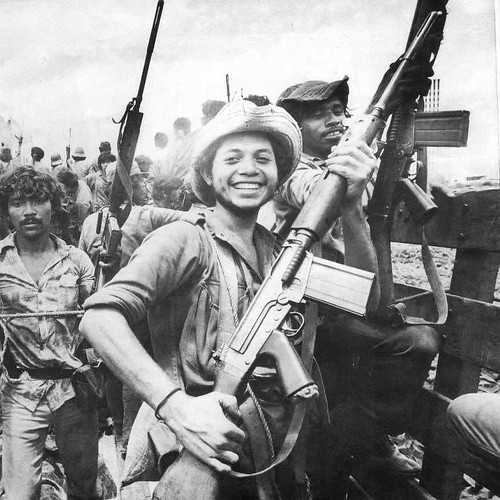
The Country Under My Skin is a memoir of the Nicaraguan revolution. Belli grew up in a wealthy family but joined the Sandinistas, working secretly for the resistance until she had to flee the country and live in exile until the Sandinistas took power and she could return to Nicaragua. It’s not just a political memoir, though; it is also the story of her marriages and love affairs.

She is clearly a remarkable woman — an award-winning poet, incidentally, as well as everything else — and it is fascinating to read an insiders view of a revolution. She became a prominent figure for the Sandinistas in a PR role, and so she met with people like Fidel Castro, and her portrayals of these powerful men are interesting as well. And it is well-written, which makes all the difference.

I think it’s particularly good when it’s actually in Nicaragua: her life as a disaffected young woman who got married too young to the wrong person, the story of her political awakening, the process by which you join a clandestine organisation, and all the secret meetings and codewords and being followed by the police. Then the period is exile is rather less interesting, before it picks up again with the actual revolution and the immediate aftermath.

I do have some slight reservations, though. These are mainly about her particular perspective. When I got to the end of the book, I realised that it was a book about a revolution and a war which didn’t actually feature any fighting: she was in exile during the revolution itself and she was a bureaucrat in the capital during the war against the Contras. Obviously an autobiography can only tell one person’s story, and this is hers; but it does create the image of a revolution which was all discussing ideas, giving press conferences, writing pamphlets, and delegations to foreign conferences. There is plenty of death in the book, as one after another of her friends, colleagues and lovers get killed, but it all happens offstage.

Similarly, she may be passionately committed to relieving poverty in Nicaragua, but she is never poor herself and she doesn’t spend much time in contact with the poor. I don’t blame her for being from a privileged background, but it is a rather atypical perspective. At one stage when she is working with the resistance, the police clearly suspect or know that she is working for the Sandinistas, but they don’t arrest her and take her away to be tortured as they do so many other people, because, she thinks, of her wealthy family and her society connections.

That’s the nature of books, though: they tend to be written by the kind of people who write books. It’s certainly worth reading, though.

The Country Under My Skin is my book from Nicaragua for the Read The World challenge.

» Un pueblo unido jamás será vencido! is © Burkhard Schröder and used under a CC by-nc-nd licence.

Categories
Nature

My new favourite animal

Well, until tomorrow anyway.

I went on a bat walk in the local park — i.e. a guided walk led by people with those ultrasonic bat detectors — and we found three species of bat. There was Britain’s commonest and smallest bat species, the Pipistrelle; the Daubenton’s bat, which hunts low over the water; a and a species which is very like the Pipistrelle but whose calls are at a slightly higher frequency.

And that species is called the (drumroll please)… Soprano Pipistrelle.

Which I think is a deeply cute name.

Categories
Culture

The Big Death: Solomon Islanders Remember World War II

Or, in Solomons Pijin, Bikfala Faet : olketa Solomon Aelanda rimembarem Wol Wo Tu. The first interesting thing about this book is the language. The entire text — i.e. the introduction and so on, not just the narratives themselves — is in Solomons Pijin first and then English translation. Which gives you a chance to compare the two languages. Pijin is of course a language derived from the use of English as a lingua franca in the region, so it is almost entirely based on English in vocabulary; but the grammar is quite different.

Here’s a bit of the Pijin; at first glance it looks completely impenetrable, but if you sound it out, you start to get a sense of how the pronunciation relates to English. It’s interesting to try to make sense of it, but I’ll put the translation in a footnote* so you can compare it.

Long 1939 wo hemi kam. Japan hemi bomem Pearl Harbour. Ating hemi 1941. An long time ia evri waetman stat fo toktok abaot wo. Toktok hemi stat fo go raon nao. So mi lusim Makira long taem ia an mi go long SDA mison long Bituna. Mi go primari skul tisa moa ia. Dea nao mi stap gogo wo hemi kam long Solomon Islands. Hemi kam long Rabaul an New Britain. So evriwan stat fo ranawe nao. Mi go baek long Munda an joenem Donald Kennedy, wea hemi Distrik Ofisa. Mi save long hem taem mi stap long Tulagi.

My knowledge of the Pacific theatre during WWII is very limited — the British tend to have a Europe-centred view of the war — so I didn’t actually realise when I ordered this book that the Solomon Islands were the site of some very serious fighting. In fact, although I didn’t know any details, even I had heard of Guadalcanal.

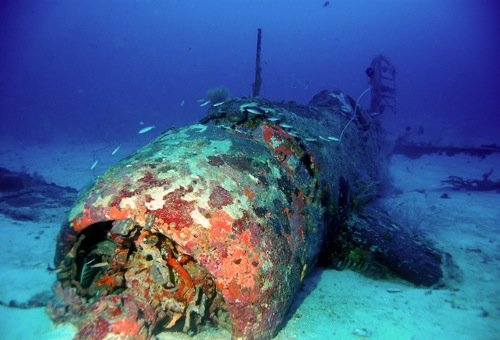
It’s really an extraordinary coming-together of cultures; the Solomon Islands was a genuine global backwater — they had apparently still been using stone tools when the British arrived at the end of the C19th, and some of their wartime heroics recounted in this book involve dug-out canoes — and then the full weight of the industrialised military power of Japan and America come and fight their way across the islands in a campaign involving tens of thousands of deaths, dozens of ships sunk and hundreds of aircraft destroyed.

Inevitably we tend to learn about these battles from the perspective of the major powers — and especially our own side. So it’s interesting to read accounts from people who just happened to be living in the path of the war. The people whose stories are in this book took a variety of roles: coastwatching; scouting with a slice of guerilla combat; fighting with the regular army; working in the Labour Corps. It’s interesting stuff with some real hairy action to it: paddling for miles around the islands under cover of darkness to return wounded US pilots to their base, going behind Japanese lines to mine a radar station. And the last story talks about the influence of the war on the political history of the Solomon Islands, and particularly the dissatisfaction created by the contrast between how well they were treated by the Americans and how badly they had been treated by the British under colonial rule.

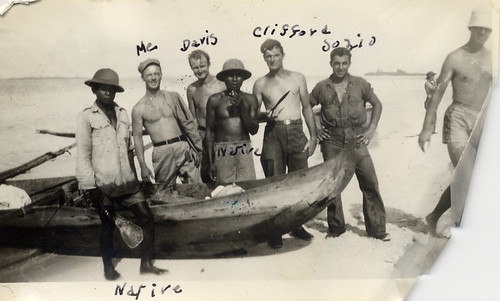
Sigh. Not that I feel much personal responsibility for the way that my compatriots behaved in the Solomon Islands decades before I was born, but it is a bit shameful. They took their land, paid them a pathetically small amount of money for their labour, and beat them. Then during the war the Islanders were very impressed to see that the black American soldiers wore the same uniforms and the ate the same food as white soldiers, and that the Americans soldiers would share food with the natives, and invite them into their tents and let them sit on the bed and talk to them in a friendly way; pathetically small things, really, but it goes to show what they had been led to expect by the British. And then when the Americans gave them various supplies, the British confiscated them, piled them up and burnt them, because… well, because they were dicks, seems to be the main reason.

Still, if you’re from a former colonial power and you read post-colonial literature, you have to expect to be the bad guys most of the time.

The Big Death is my book from the Solomon Islands for the Read The World challenge.

* In 1939 the war came. Japan bombed Pearl Harbour. I think it was in 1941. At that time all the whitemen started to talk about war. Rumours started to go around. So I left Makira at that time and went to the SDA Mission at Batuna. I went and became a primary school teacher there. It was there that I stayed until the war came to the Solomon Islands by way of Rabaul and New Britain. So everyone started to flee. I went back to Munda and joined Donald Kennedy, a District Officer I had known in Tulagi.

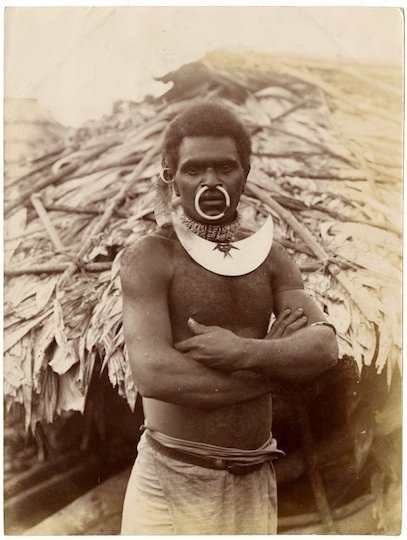
» The photograph of a Solomon Islander from the British Museum was taken by John Watt Beattie in 1906.  Munda Deep Corsair – Solomon Islands is © whl.travel and used under a CC by-nc-sa licence. Seabees, 1945, was posted to Flickr by and is © TPB, Esq.

Categories
Me

Bionic Cat!

One of those OMG I’M LIVING THE FUTURE!!! moments.

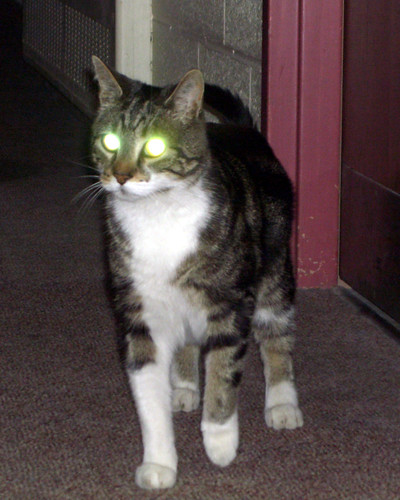
We have our cats microchipped, so that if they get lost, they can be traced back to us. But that isn’t the futuristic bit; no, the futuristic bit is that we have a new cat-flap which has a chip reader and an electric catch… so it’s a cat flap which electronically scans the cat and only opens for cats it recognises. Very Star Trek.

If I’d designed it, it would have flashing lights and a robotic voice that said cyberfeline identity VALIDATED when the cat came through. Which is just one of the reasons why I’m not an industrial designer.

» that’s not my cat, btw.  Cat with glowing eyes is © Random Tony and used under a CC by-nc-sa licence.

Categories
Culture

Kartography by Kamila Shamsie

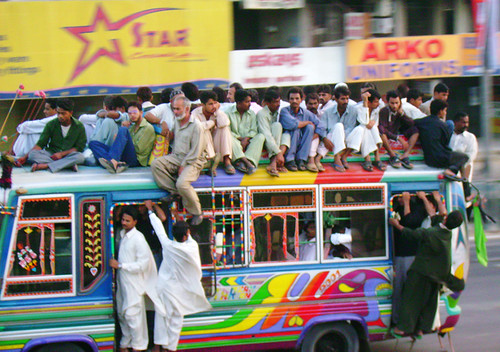
Kartography is my book from Pakistan for the Read The World challenge. It’s a novel set in Karachi in the 90s with flashbacks to the 70s and particularly the 1971 civil war when East Pakistan became Bangladesh. Raheen and Karim have a tangled relationship which parallels, and is haunted by, the tangled relationships of their parents twenty years earlier. It’s a love story, a family saga, a book about ethnic and class tensions in Pakistan.

Given that the Read The World challenge has lead me to some pretty obscure and unusual books, it was a nice change of speed to be reading some mainstream literary fiction that was actually written in English. But I wasn’t blown away by this one. I was quite pleased with it when I first picked it up: Shamsie can certainly write, and it’s well observed and lively… but after a while it started to annoy me slightly. The dramatic contrivances are just a bit too contrived and a bit too relentless: every page has to ratchet up the emotional tension, so there’s a constant stream of twists and misunderstanding and surprises. There’s never a lull or a pause; it’s a bit soap-operaish in its piling up of plot devices.

So I didn’t hate it, but I probably could have found a better book for a country like Pakistan. Quite possibly I would have enjoyed one of Shamsie’s other books more, for that matter. But there you go; win some lose some.

» How fast you want to go? is © Edge of Space and used under a CC by-nc licence.