Categories
Me

Holiday update

I’m still in France; no hot news on the bird front or indeed any other front, but it’s all very pleasant.

Some kind of lizard orchid. Not the prettiest orchid I’ve found, but maybe the coolest.

There’s a gecko behind the sofa on the other side of the room.

Categories
Me

Holiday

I am in France, in a villa (or at least C17th farmhouse) in the hills behind the Côte d’Azur. Cork oak, cypresses, asphodel, thyme, broom, lavender, poppies etc etc. Scarce swallowtail butterflies, Sardinian warbler.

I’ll post some pics tomorrow. If I feel like it.

Categories
Culture

The Last Will and Testament of Senhor da Silva Araújo by Germano Almeida

I’ll keep this fairly brief, because I’m going away to France for a week in Saturday and not only have I not packed, I haven’t done the more important bit of writing a list, and thus don’t know if I have to do some urgent shopping. Or laundry.

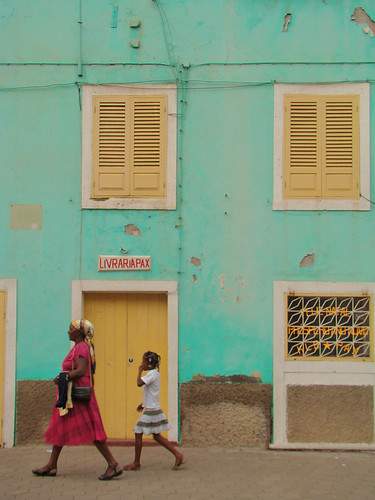
So: The Last Will and Testament of Senhor da Silva Araújo (translated from the Portuguese by Sheila Faria Glaser) is my book from Cape Verde for the Read The World challenge. For those who don’t know, Cape Verde is an island nation, an archipelago off the coast of Africa at about the point where the continent projects furthest into the Atlantic. It was uninhabited until the Portuguese started using it as a trading port, I learn from Wikipedia, and the population is largely of mixed European and African origin.

That history may explain why it feels more like a book from Latin America than from Africa. I would be hard-pressed to explain exactly what I mean by that: a sense that the European cultural influence is more deeply embedded is part of it, although I can’t immediately articulate what makes me say that. It may be no more than the fact that the book is full of names like Senhor da Silva Araújo, of course.

The book tells the story of a self-made local businessman; it starts with the reading of his will, which reveals unexpected news, and moves back and forward through his life, building up into complex portrait. It’s short — 151 pages — but nicely written, wryly humorous and open to the absurdities as well as the tragedies of the human condition.

» The picture, Ribeira Grande, Santo Antão, is © Cabo Verde 2008 and used under a CC by-nc-sa licence.

Categories
Culture

Van Dyck at Tate Britain

I went to see the van Dyck exhibition at Tate Britain the other day. I can’t say I was very excited by the prospect, but I’m a member and it seems silly to miss exhibitions I can get into for free. Perhaps especially if you’re English, Anthony van Dyck seems like the most establishment figure possible; court painter to Charles I, and primarily associated with grand portraits of aristocrats, above all the famous propaganda images of Charles himself. Which was what I expected and what I got: the least introspective portraits imaginable. People in shiny clothes standing around looking solid and respectable. I bet if Bernie Madoff ever produced any publicity material with his picture in, he found a photographer to make him look like that: with a sheen of prosperity, but carefully not allowed to look too exciting. Designed to conceal as much as it showed.

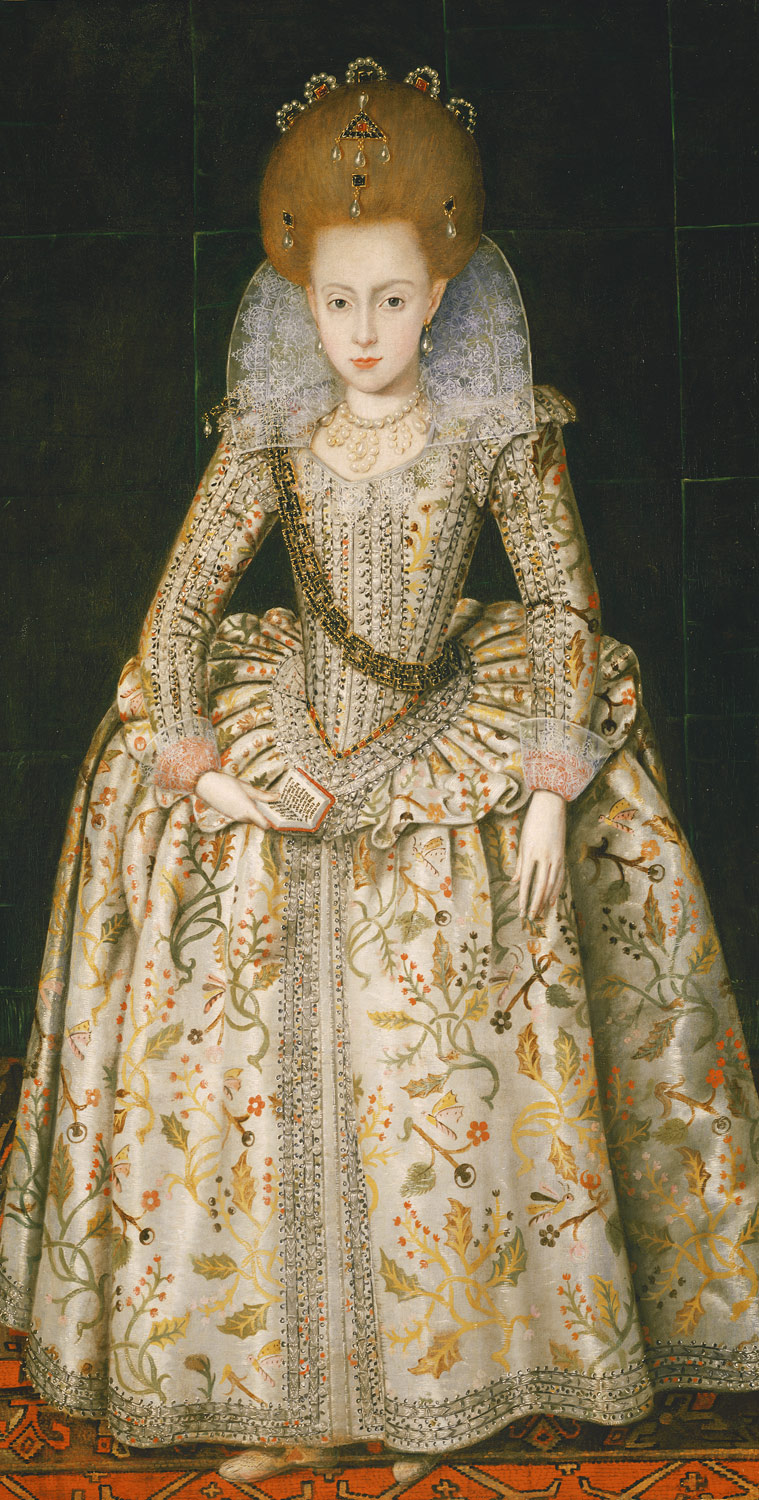
My favourite picture was actually one by Robert Peake the Elder, included to show what English court portraiture was like before Van Dyck, which normally lives in the Met in New York.

Gorgeous, innit. I’m not suggesting, btw, that this painting offers any more psychological insight than van Dyck does, just that I prefer it stylistically. I also preferred some of the later picture influenced by van Dyck, including some by Joshua Reynolds and Peter Lely. Most of van Dyck’s own work left me cold, although his self-portrait and his portrait of his wife have a bit more spark to them.

Categories
Other

Financial pandemic

During the most dramatic paroxysms of the banking sector last autumn, they kept saying, in the media, that this was the worst financial crisis since the Great Depression. But I think a lot of people (like me, initially) heard that as: the worst economic crisis since the Great Depression.

And the thing is, they were using the terminology correctly. It was a very serious crisis of the financial system — that is, a banking crisis. And it was the worst one since the Depression. But it was not then and is still not (yet) the worst economic crisis since the Depression. So, assuming I was not the only one who misunderstood, there was a disconnect between what they were saying and what their audience were hearing.

swine-flu

I think the same thing is going on with the swine flu. The WHO have just raised the alert level to five on their scaring-the-shit-out-of-everyone scale, meaning that they fear a pandemic is ‘imminent’. The trouble is that when I hear the word ‘pandemic’ I think ‘Spanish Flu!’ or indeed ‘Black Death!!’. Death and devastation on a vast scale. Tens of millions dead.

Whereas what the WHO means by pandemic is something like ‘international outbreak of serious infectious disease’. A major public health event, but not necessarily with quite the overtones of The End Of Days. For example, I was surprised to learn that there have been two serious flu pandemics since 1918 — the Asian flu in 1957-8 and the Hong Kong flu in 1968-9. They both killed about a million people, so I don’t want to downplay them too much, but it’s not exactly the Black Death. Apparently something like 34,000 die from flu in the US in a normal year, and the Hong Kong flu killed about 34,000, so it was effectively an extra flu season.

Categories
Daily Links

Links