Categories
Culture Other

Modernism and politics

A discussion of modernism and politics starting at Alfred Corn’s, then Baroque in Hackney then George Szirtes here and here.

Salvador Dalí, Mi esposa desnuda, 1945

I suppose we tend to associate modernism with left-wing politics because we feel that people who embrace radical and new aesthetics would probably have radical instincts in politics as well: whatever else modernism was, it wasn’t a conservative movement. To reduce so much in art and politics down to one binary personality trait is very simplistic; even so, there’s probably some truth to it.

But left-wing politics doesn’t have a monopoly on wanting to change the world. Fascism was a radical movement; perhaps it’s not surprising it should attract its share of radical artists.

» The painting is Mi esposa desnuda by Salvador Dalí; an artist who started on the left and later supported Franco.

Categories
Culture Other

Herba Parietis or the Wall Flower

Newgate

The text reads:

Herba Parietis or the Wall Flower
As it Grew out of the Stone Chamber
Belonging to the
Metropolitan
Priſon
of London Called
NEW GATE.

Being A History
Wch is Partly True
Partly Romantick
Morrally Devine
Wherby A Marriag
Betweene Reallity &
fancie is Solemnised
By Devinity

Written By: I: B: whilst he was A Prisoner therr.

Every time I start browsing the British Library collections online, I find lots of stuff I want to post. This is from George III’s collection of geographical material, so I guess it must be C18th. I’ve slightly reduced the size; you can see it full-sized here.

Categories
Culture Other

Deletionists, Inclusionists, and the joy of the trivial.

There is, I gather, an ongoing philosophical debate running behind the scenes of Wikipedia; one which will probably run forever. On the one side are the deletionists; on the other are the inclusionists. The question is how to deal with articles about less important subjects: one side generally favours deleting them, the other would prefer to include. The deletionists see Wikipedia as an attempt to create an online version of a traditional encyclopedia; only important subjects are worthy of an article. In the jargon, they have to be ‘notable’. The inclusionists would tend to allow articles on any subject, however obscure. They make a virtue of the fact that ‘wiki is not paper’: that there is no material constraint that prevents it growing indefinitely.

I’m on the inclusionist side. I just can’t see what harm it does if, for example, every primary school in Norfolk has its own article on Wikipedia. Or indeed every bakery or hairdresser’s in Norfolk. And I think that trivial information has its own value.

the West Sussex Dairy Company

I’m not trying to make a radically relativist case, that your local florist is just as important as Paradise Lost; of course Wikipedia should strive to have good coverage of the core encyclopedic subject matter. And I can completely see why some of the people who edit Wikipedia find it faintly embarrassing that the coverage of Doctor Who is so much more comprehensive than the coverage of Elizabethan drama (I haven’t actually checked whether that’s true; bet it is, though).

But I’d like to make the comparison with the Evanion Collection of Ephemera. Evanion was the professional name of the Victorian conjurer and ventriloquist Harry Evans. He collected trade cards, catalogues, advertisements, posters: all kinds of rubbish. It is, almost by definition, a collection of the sort of thing that deletionists at a Victorian Wikipedia would have rejected as non-notable. Now, proudly displayed on the British Library website, it is endlessly fascinating.

Steiner's Insect Powder

Or take a more recent example. If all has gone according to plan, just below this post should be a post with links to YouTube clips recorded from a Detroit TV station in the late 80s and early 90s. Some are from a dance show, with locals dressed up for a night out and dancing to Detroit techno; the others are recorded from ad breaks for the same show. They are only twenty years old, but already they have the same fascination as the Evanion material: a record of a very particular time and place through fashion, music, the adverts made by small local businesses; the ephemeral and trivial.

Wikipedia has only been running for seven years and is already an extraordinary success. There’s no reason why it shouldn’t still be going in a hundred years. There are two points I’d take from that. Firstly, taking the longer view, there is still loads of time to build up the serious encyclopedia stuff: Elizabethan drama, C16th Chinese porcelain, whatever. But also: who knows what people will find interesting, now or in twenty or a hundred years time. Just record it, let people sort it out for themselves.

» For more discussions about deletionism vs. inclusionism, check out this rather lovely article from the NYRB that I linked to before; or this blog post which I found via a post at Language Log. The ad for the West Suffolk Dairy Co. and E. Steiner’s Prime Dalmation Insect Powder are both from the Evanion collection at the British Library.

Categories
Culture Other

Tippety-tap

In celebration of this very amusing put-down of President Bush, here’s a bit of the master himself:

Categories
Culture Other

1984 by George Orwell

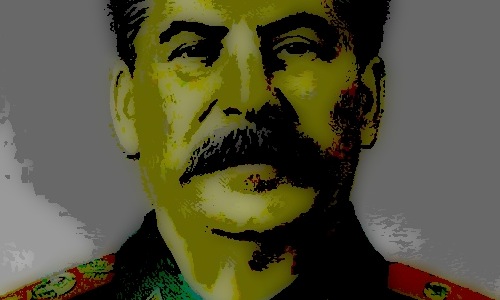
I picked this up to read again because I’ve just read a biography of Stalin. I think I first read 1984 when I was really quite young — certainly no older than my teens; in fact I may have made a point of reading it in 1984, when I was nine or ten — and though I was precocious and superficially well-informed for my age, I didn’t really have much sense of the reality of what life under totalitarian regimes could be like. In fact even when the Berlin Wall came down, when I was fifteen, although I knew intellectually that it was an incredibly important event, it didn’t have the emotional resonance you might expect. Knowing the basic facts isn’t enough; it’s the cumulative effect of finding out about a subject bit by bit over a period of time, of encountering lots of details and seeing it from different perspectives, that makes it seem real.

stalin_cryst.jpg

So back then I read it almost as straight fiction: dystopian and science-fictiony, and with limited relationship to the real world. I wondered if the older, better-informed me would find it more evocative and more powerful as a book about totalitarianism; I’m not sure it does quite work that way. The society Orwell creates is too highly fictionalised. One thing in particular, I think, is that the Party is just too good at what they do: the Thought Police come across as infallible and all-knowing, the Ministry of Truth manages to maintain total control of all information. To have the ring of truth, I think it needs to be a bit more capricious and random; the organisation itself, the Party, needs to have more of an edge of craziness and paranoia to it. I appreciate that it isn’t supposed to simply be a portrayal of Stalinist Russia, or any other particular regime; it’s an extrapolation of that kind of regime into something different. But even so.

One thing it did make me think of, not surprisingly in retrospect, was Guantanamo/Abu Ghraib, just because that’s what torture reminds me of at the moment. It’s a depressing thought that the Ministry of Love should remind me of US policy.

Big Brother

The least successful part of the book seems to be the romance. I didn’t find Julia to be believable: she’s just too good to be true. She seems to be completely untouched, psychologically and ideologically, by having grown up under IngSoc. In fact at times her dialogue makes her sound like she’s just wandered into the novel by mistake, having taken a wrong turn when leaving a gymkhana in 1940s Surrey. And she’s too good for Winston. Nothing we learn about him suggests he might be an attractive character, physically or in personality; so the moment when this young, sexy woman spontaneously declares her love for him at the risk of her life seems completely implausible.

As long as we’re dealing with Winston’s interactions with the Party, the bureaucracy, his neighbours, even the proles, there’s a certain kind of cohesion to the world he’s moving in. It occasionally hits a false note — the dialogue, particularly the working-class dialogue, is often a bit strained, and I’m not sure his portrayal of the proles, or the whole class system of the book, is convincing — but it’s all part of the same overall vision. The relationship with Julia seems to be happening somewhere else altogether.

comic

But then the strength of book is not really as narrative at all: it’s a combination of atmosphere and ideas. The atmosphere is in all the details: the griminess, the smell of cabbage, the physical jerks in the mornings in front of the telescreen, the red sash of the Junior Anti-Sex League, the Two Minutes Hate, the relentless drinking of Victory Gin. What really lasts about the book, though, is the ideas, and I was surprised how often they seemed topical and relevant: the citizenry under total, constant surveillance, a state of continual war maintained to keep the people fearful and patriotic, the finessing of political rhetoric, the politically motivated drive to change the very vocabulary people use. None of these are part of modern society in quite the forms they take in the book, but there are continual resonances and parallels and points of friction. Not bad for a political novel which is sixty years old next year.

Categories
Culture Other

A London particular

And a peculiarly London sun – against which nothing could be said except that it looked bloodshot – glorified all this by its stare. It hung at a moderate elevation above Hyde Park Corner with an air of punctual and benign vigilance. The very pavement under Mr Verloc’s feet had an old-gold tinge in that diffused light, in which neither wall, nor tree, nor beast, nor man cast a shadow. Mr Verloc was going westward through a town without shadows in an atmosphere of powdered old gold. There were red, coppery gleams on the roofs of houses, on the corners of walls, on the panels of carriages, on the very coats of the horses, and on the broad back of Mr Verloc’s overcoat, where they produced a dull effect of rustiness.

from The Secret Agent by Joseph Conrad

Of all the things that have changed in London, that cut us off from our ancestors’ experience of the city, perhaps the most profound, more even than the sounds and the smells, is the fog. Not just the thick pea-soupers which brought visibility down to a few feet, but the continual smokey haze from millions of coal-burning fireplaces.

Just as people go on painting holidays to Cornwall or Tuscany, Monet and Whistler used to come to London for the special quality of the light. For Whistler

when the evening mist clothes the riverside with poetry, as with a veil, and the poor buildings lose themselves in the dim sky, and the tall chimneys become campanili, and the warehouses are palaces in the night, and the whole city hangs in the heavens, and fairy-land is before us—then the wayfarer hastens home; the workingman and the cultured one, the wise man and the one of pleasure, cease to understand as they have ceased to see, and Nature, who for once has sung in tune, sings her exquisite song to the artist alone.

Chimneys become campanili, warehouses become palaces, and familiar buildings become strange to us.

Houses of parliament in the fog by Monet

The whole way the city was built was affected by the fog.

Building News, in 1881, discussed the fact that ‘the smoky atmosphere has done its best to clothe our most costly buildings in thin drapery of soot … they soon become dark and sombre masses … all play of light and shade is lost.’ That is precisely why architects decided to clothe their buildings in bright red brick and shining terracotta so that they would remain visible; the features of nineteenth-century building, which may seem vulgar or gaudy, were attempts to stabilise the identity and legibility of the city.

from London: The Biography by Peter Ackroyd

But it didn’t just apply to buildings; the city’s archetypal tree, the London Plane, which lines the streets and squares of the city and provides roosting space for the starlings, was planted because with its thick leathery leaves and flaking bark, it could survive the smoke. The classic park planting scheme — geometrical beds of brightly coloured hardy annuals — surely resulted not from a lack of imagination among park-keepers, but a need to show up in the gloom, resist the air pollution for as long as possible, and be easily replaceable if the plants died.

The sun was shining and at the end of the street between the houses the sky was blue. Gauzily the distances faded to a soft, rich indistinctness; there were veils of golden muslin thickening down the length of every vista. On the trees in Hanover Square gardens the young leaves were still so green that they seemed to be alight, green fire, and the sooty trunks looked blacker and dirtier than ever. It would have been a pleasant and apposite thing if a cuckoo had started calling. But though the cuckoo was silent it was a happy day. A day, Gumbril reflected, as he strolled idly along, to be in love.

from Antic Hay by Aldous Huxley

It’s easy to forget just how physically dirty the city used to be. There was a general griminess over the whole city; you get a sense of it looking at old photos, but you didn’t quite appreciate how dirty the buildings were until you saw them being cleaned. The process of cleaning away the smoke stains from central London has been pretty much finished now, but there was a time when you often found a newly cleaned building next to a filthy one, and the contrast was almost black and white. The Houses of Parliament used to be a gloomy, almost sinister-looking building; now it’s delicate and honey-coloured. It has shifted from vampire gothic towards fairy-princess gothic.

view of the Thames from the Savoy by Whistler

Searching for references to fog in the British Library collections, I found this, an account in the Penny Illustrated from 12th October 1861 of a display given by the great tightrope walker Blondin at Crystal Palace:

Blondin on the terrace rope, illuminating himself and the palace, was justly expected to outshine all former spectacles. Unhappily, the mist that had hung about all day and woven itself with the twilight into a veil that wrapped every every statue, tree, and tower in early darkness, thickened into fog soon after sunset. At half-past six, when Blondin started in his basket for the mast, he could be seen only a few yards off, until he lighted the pan of blue fire he carried in each hand. On reaching the mast he kindled the lights fixed there; but they did not suffice to show even the outline of his form. For the next half-hour or so he was completely invisible–at any rate, to our eye. Yet he must have traversed the rope right and left for a considerable distance; for he exploded the fireworks in his barrow, as announced, and made as brilliant an exhibition as the fog would permit. Here and there arose from the grounds an applauding recognition as he made his way back to the mast, and he was warmly greeted on his return to the palace.

The Chinese government will not doubt be praying that nothing similar happens in Beijing this summer.

» The photo is of Hyde Park corner, taken by Alvin Langdon Coburn and found on the British Library website. Other foggy pictures from his 1909 book London: Houses of Parliament, Trafalgar Square, Kingsway, Paddington Canal, Kensington Gardens. The Monet painting of the Houses of Parliament in the fog is one of several on Wikipedia. The lithograph of the Thames seen from the Savoy is by Whistler and is from the Tate’s Turner Whistler Monet exhibition from a few years ago. And as a reward for reading the small-print: Animal from the Muppets Animal sings Gershwin.