A flukey goal; a flukey hole in one; and a freakish cricket shot.
Categories
A flukey goal; a flukey hole in one; and a freakish cricket shot.
Also available super-big on Flickr
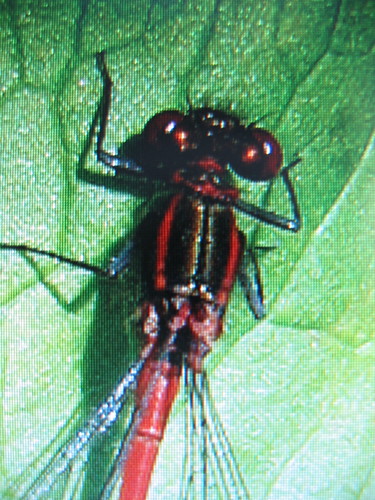


You will have noticed my incredible self control in not yet mentioning the World Cup.
But I was just watching a program called ‘World Cup Goals Galore’ featuring, well, lots and lots and lots of goals (top 10 free kicks; top ten goals scored by defenders; top ten goals scored by players with moustaches etc etc). Even just watching a couple of hundred goals one after another, without the context of the game and with a rather laboured jokey commentary, was joyous.
The great moments in football, more than any other sport I watch, are just wonderful. I think perhaps it’s just the extraordinary implausibility of the fact that they’re doing it with their feet. The human foot is not designed for manipulating objects, and even after years spent watching the game, I don’t think I’ve ever quite lost the sense that it just shouldn’t be possible to intentionally kick a ball into the corner of the goal from 25 yards. Even without defenders and a goalie to worry about.
And yet when it all comes off, it looks so easy and natural that you find yourself thinking “if you can dribble past three people, swivel and whip the ball into the corner of the net, why don’t you do it more often?”
If you like invertebrates (and who doesn’t?) check out the Circus of the Spineless at Burning Silo.
I take a casual interest in insects and other invertebrates, but one thing you quickly realise is that they’re really hard. I first really appreciated this when, quite pleased with myself for recognising something as a ‘scorpionfly’, I tried to look it up in a book and discovered there are something like 28 species just of scorpionflies in the UK. And that’s relatively modest compared to the beetles and things. So I mainly stick to birds.
Since I’m on natural history, check out the dioramas at Pruned; it’s worth clicking through the links in that post as well.
I just read Big Chief Elizabeth – How England’s Adventurers Gambled and Won the New World, by Giles Milton. As the title suggests, it’s an account of the earliest attempts to set up an English settlement in America. As the title also suggests, the general tone of the thing is ‘rollicking yarn’ rather than ‘nuanced and careful investigation into the ethics of colonisation and colonialism’.
That’s fine by me. I refuse to feel any ancestral guilt over anything countrymen of mine did over four centuries ago. Or indeed feel any ancestral outrage over things done to them, since there seems to have been plenty of brutality on all sides.
I was slightly startled to realise how little I knew about the subject. In a curious way it’s become part of American history rather than British. Not that gaps in my historical knowledge are so unusual they need a special explanation.
Odd how hard it is to shift the idea of the Elizabethan period as glamorous. I mean, the clothes were pretty fab, and there was Shakespeare of course, and pirates and gold and stuff, but Elizabeth was just another capricious despot in a string of despots.
Sir Walter Ralegh features heavily, of course. Which seems as good a reason as any to post a favourite poem.
01.jpg)
As you came from the holy land
Of Walsinghame,
Met you not with my true love
By the way as you came ?
How shall I know your true love,
That have met many one,
As I went to the holy land,
That have come, that have gone ?
She is neither white nor brown,
But as the heavens fair ;
There is none hath a form so divine
In the earth or the air.
Such a one did I meet, good sir,
Such an angel-like face,
Who like a queen, like a nymph, did appear,
By her gait, by her grace.
She hath left me here all alone,
All alone, as unknown,
Who sometimes did me lead with herself,
And me loved as her own.
What’s the cause that she leaves you alone,
And a new way doth take,
Who loved you once as her own,
And her joy did you make ?
I have loved her all my youth,
But now old, as you see,
Love likes not the falling fruit
From the withered tree.
Know that Love is a careless child,
And forgets promise past ;
He is blind, he is deaf when he list,
And in faith never fast.
His desire is a dureless content,
And a trustless joy ;
He is won with a world of despair,
And is lost with a toy.
Of womankind such indeed is the love,
Or the word love abusèd,
Under which many childish desires
And conceits are excusèd.
But true love is a durable fire,
In the mind ever burning,
Never sick, never old, never dead,
From itself never turning.
The British Museum has an exhibition of Michelangelo drawings at the moment. According to them:
Drawing on the outstanding collections of the British Museum, the Ashmolean and the Teyler Museum in Haarlem, Michelangelo Drawings is a once-in-a-lifetime opportunity to follow the evolution of some of the world’s most celebrated artworks
Which is probably fair. Being Michelangelo, it basically consists of lots and lots of drawings of contorted male nudes. There are occasional other things – a drapery study, a few architectural sketches, even a picture of a woman – but basically it’s figure studies. If he ever filled in a spare minute by sketching the cat, or a bunch of flowers, those pictures didn’t make it into the exhibition.
Apparently he was very reluctant to show people unfinished works and burnt most of his sketches before his death, so conceivably the ones he burnt included lots of pictures of bunnies and trees, but somehow I doubt it.

Despite being a tad repetitive (ooh look, another muscular torso), it’s an enjoyable exhibition. There’s a certain simple thrill in seeing the preliminary drawings for the Sistine Chapel ceiling or the dome of St Peters, and it’s interesting to get a sense of his working methods, but to be honest I have a limited tolerance for the really sketchy drawings. Fortunately there were enough more highly finished things to keep me engaged.
Mind you, drawings are never quite the real thing. The second-hand magic of photos of the Sistine Chapel and the Pietà was almost more powerful than having even the best drawings right in front of you.
One note: it’s very crowded. Despite having to wait nearly two hours to use my timed ticket, I still spent a lot of the time waiting to look at things to looking over people’s shoulders. But the wait did give me an opportunity to go to Bi Won, a Korean restaurant in Coptic Street that I’d recommend for lunch if you go to the BM. The lunch-time sets for about £6.50 are superb value.