Categories
Other

iPhone 4 quickie

Apple’s publicity seems to be focussing on the video chat, and that’s all very Jetsons and everything, but I don’t suppose I would often find myself in a situation where I wanted to video chat with another person who also had an iPhone 4 and we were both in WiFi hotspots.

But I’m really really keen to have a look at this new 326ppi display. If displays are genuinely crossing the threshold where they no longer look pixelated, where they look like real print, well, that is very exciting. And ingrate that I am, I immediately want to know: when am I going to be able to buy a great big 326ppi monitor for my computer?

Categories
Other

Football advertising

As all the sportswear manufacturers unveil their big ad campaigns in the run-up to the World Cup, the one which has been the biggest hit is Nike’s epic Write the Future.

And don’t get me wrong, it’s certainly impressive, if only for the sheer amount of money thrown at the screen. And while it’s conceptually and narratively a bit chaotic, it has some amusing moments and striking images. But it’s all about fame and glory and money and glamour and even more fame. It is the self-importance of football writ large. I miss the days when ads used to make football look, you know, entertaining. Even fun.

So I prefer this one, for Puma:

Categories
Other

Nkosi Sikelel’ iAfrika

So, the World Cup is almost upon us, and inevitably our attention has been narrowed in on the nervy minutiae of squad selections and injury worries and tactical arguments. So before the action starts, can I just take a moment to say how fucking marvellous it is to see the World Cup being hosted in Africa.

I do understand that there are commercial and practical reasons why the USA and Japan both got to host the tournament before an African nation, but it’s not particularly edifying to watch a desparate FIFA trying to break America like some bloated, bombastic Robbie Williams.

How much nicer it is to see the World Cup finally go to the third great heartland of football, somewhere where the locals will be hugely excited to have it. And having seen the ICC manage to host a cricket tournament in the West Indies without any Caribbean atmosphere, let’s hope that the clammy corporate hand of FIFA doesn’t manage to drain all the Africanness out of the experience.

Categories
Culture

Gomorrah by Roberto Saviano

Gomorrah: Italy’s Other Mafia is a journalistic account of organised crime in Naples; the title is a pun on Camorra, the name of the Neapolitan mafia. It’s an eye-opening, depressing book. The prose is occasionally a little purple for my taste, which I suspect is partly the translation. And I feel a bit petty criticising the prose style since Saviano risked his life to write it; he now lives under 24 hour police protection. I can only hope his bravery does some good, although the book makes the problem seem intractable.
I realised it would feature unpleasant people doing unpleasant things — I’m not a complete idiot, I saw Goodfellas — but I thought that the movies might tend to exaggerate it, since violence is so cinematic. But actually the brutality is genuinely shocking: there are page after page of murders and beatings.

As a young doctor in the 1980s my father had worked on an ambulance crew. Four hundred deaths a year. In areas with up to five murders a day. They’d pull up in the ambulance, the wounded on the ground, but if the police hadn’t arrived, they couldn’t load him onto the stretcher. Because if word got around, the killers would come back and track down the ambulance, stop it, climb in, and finish off the job. It had happened lots of times, so the doctors and nurses knew to stand by, to wait till the killers came back to complete the operation.

Also shocking is the sheer scale of their involvement not just in clearly illegal activities like drugs, people trafficking and gun running, but in superficially legitimate businesses: fashion, construction, waste disposal. I guess it makes sense; a willingness to ignore the law can be a great competitive advantage. It’s easier to make money from imported consumer goods if you don’t pay any import duties or taxes; from clothing if it’s made in an illegal sweatshop; from waste disposal if you don’t even try to dispose of toxic waste safely.

The Casalesi have distributed their good throughout the region. Just the real estate assets seized by the Naples DDA in the last few years amount to 750 million euros. The lists are frightening. In the Spartacus trial alone, 199 buildings, 52 pieces of property, 14 companies, 12 automobiles, and 3 boats were confiscated. Over the years, according to a 1996 trial, Schiavone and his trusted men have seen the seizure of assets worth 230 million euros: companies, villas, lands, buildings, and powerful automobiles, including the Jaguar in which Sandokan was found at the time of his first arrest. Confiscations that would have destroyed any company, losses that would have ruined any businessman, economic blows that would have capsized any firm. Anyone but the Casalesi cartel. Every time I read about the seizure of property, every time I see the lists of assets the DDA has confiscated from the bosses, I feel depressed and exhausted; everywhere I turn, everything sems to be theirs. Everything. Land, buffalos, farms, quarries, garages, dairies, hotels, and restaurants. A sort of Camorra omnipotence. I can’t see anything that doesn’t belong to them.

The details of life at street level, and the mechanics of things like the waste disposal trade, are the most interesting parts of it; some of the stuff where he is detailing the feuds between different groups is less gripping, just because it’s difficult trying to keep track of all the different names and the list of murders gets depressingly repetitive. But overall it is fascinating stuff and I certainly recommend it.
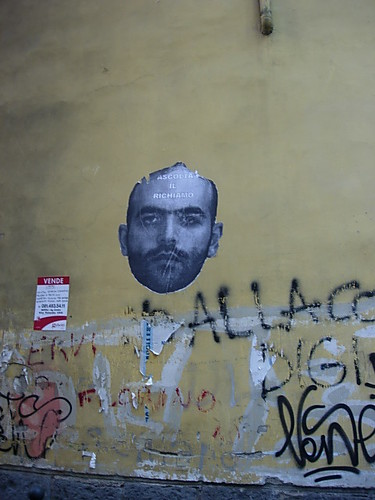
» Naples – Roberto Saviano, GOMORRA is © Chiara Marra.

The image is of Saviano’s face on a wall in Naples. According to Google Translate, ‘Ascolta il Richiamo’ means something like ‘heed the call’.

Categories
Other

Horsetrading and backroom deals?

We’ve heard a lot in the last fortnight about horsetrading and haggling among our politicians, and some commentators profess to be deeply offended by it all. But surely negotiation and compromise is how policy is always arrived at: it’s just not usually so obvious.

Even within a normal single-party majority government, there must be disagreements about policy; and even when they broadly agree, different ministers must have their own priorities and pet projects. And since most policies cost money, the Treasury has to be involved; and civil servants and advisors will have their own input. In public, all ministers and civil servants are required to stick to the government line, which may give the impression of a Borg-like unity of purpose; but presumably the government line is arrived at in the first place by a process of negotiation, of horsetrading, of deals that take place in back rooms.

If anything, the negotiations between Clegg and Cameron provided a rather greater degree of transparency than normal. We can compare the coalition agreement to the two party manifestos and it becomes apparent exactly what compromises have been made, what deals have been struck. And we can judge for ourselves whether they were good compromises or bad ones. That seems to me like a Good Thing.

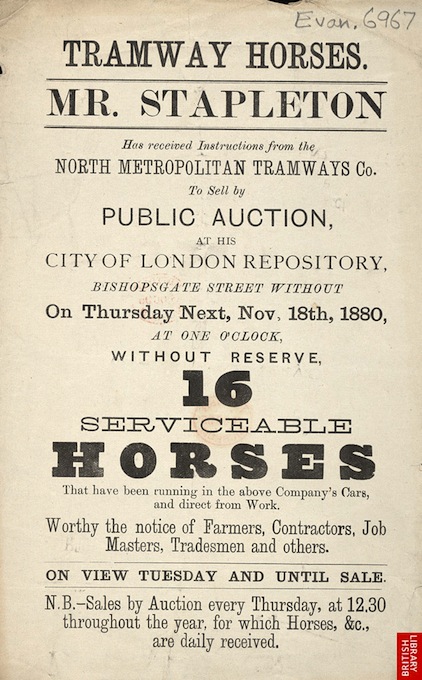
» The advert is from the Evanion collection of ephemera in the British Library.

Categories
Other

Election debrief

Going in to this election, it became clear that whoever was in government would have to raise taxes and cut spending, but no politician was willing to spell out the details. So the best we voters could hope for was a government which shared our priorities when making those decisions.

On that basis, the result could have been worse. I’m not thrilled to have David Cameron as the new PM, but the Conservative Party in coalition with the Lib Dems is hopefully a slightly different animal than the Conservative Party in the raw.

I do find it encouraging that Cameron seemed genuinely quite keen to form a coalition, rather than fighting on with a minority government. I guess it could be a simple political calculation — he wants the votes — but I still think it says something about his personality. I can’t imagine Margaret Thatcher doing the same.

It also suggests that, when trying to get legislation through the Commons, Cameron would rather be dependent on the Lib Dems than the right wing of his own party and the DUP. Which may go some way to answering the question of whether he really is a centrist and moderniser by instinct, or just the shiny new face of the Nasty Party.

At the very least, anything that reduces the power of sectarian fundamentalist Protestants in parliament has to be a good thing.

And while AV isn’t full blown proportional representation, it does at least eliminate the tactical voting which is my personal bugbear.

So that’s a relatively upbeat assessment of the situation. I’m equally capable of coming up with alternative scenarios where it all gets very messy indeed, but I guess we might as well try to hold on to optimism for as long as possible.