Categories
Culture Other

Rembrandt’s Eyes by Simon Schama

I’ve only read two books by Schama; Citizens, his book about the French Revolution, and this biography of Rembrandt. Both have been excellent. They’re also quite hard work simply because he’s so thorough. Thoroughness is no doubt a virtue in a historian, but it does make for large books. Rembrandt’s Eyes is frankly too large to read in bed, as it weighs a whopping five and a half pounds. The reason it’s so large is that it’s printed on thick glossy paper and full of beautiful reproductions of the paintings. Amazon’s price of £13 is almost worth it just for the pictures.


Self Portrait at an Early Age, from the Rijksmuseum. Click on the image to see a larger version.

I was slightly taken aback when the first chapter of a Rembrandt biography was about Rubens’ father. Schama’s obviously feels that Rembrandt can only be understood in the context of his predecessor (who was born 30 years before him), since he devotes 200 pages, nearly a third of the book, to Rubens. I actually forgot that the book was supposed to be about Rembrandt at one point. This kind of attention to context — not just artistic, but the political and religious background of the region – is perhaps unsurprising given that Schama is primarily a historian, rather than an art critic. He’s brilliant at evoking the everyday reality of life in C17th Holland, as well. There’s one tour-de-force where he introduces Amsterdam by showing the city via the five senses, one at a time. So for example, the section on smell begins:

First, the Zuider Zee itself, sucked through the inlet of the IJ, washing against the slimy double row of palings separating the inner from the outer harbor, carrying with it a load of tangled wrack and weed, worthlessly small fish, and minute crustaceans generating a briny aroma of salt, rotting wood, bilgewater, and the tide-rinsed remains of countless gristly little creatures housed within the shells of barnacles and periwinkles. In the yards behind the first row of houses facing the docks there were better things to smell. Lengths of green timber were stood on end to season, some already bent to form a rib in a ship’s hull. A man might walk down the alleys parallel to the harbor, inhale the sharp tan of fir (for masts) and oak and beech (for hulls), and for a moment think himself in a fresh-cut wood in Norway.

And on through the smells of taverns, the night-soil boats, the tanners, the plague-pits, the nosegay sellers, the bakers; and then each of the other senses in turn.

Having said that Schama is primarily a historian, I still think he does a great job writing about the paintings. That’s just as well, since it becomes apparent during the book that there is very little surviving material written by Rembrandt. There are no journals or essays, and Schama only quotes from letters once or twice. Really, the only times we get direct written contact with Rembrandt’s life is when he’s dealing with the law – buying a house, writing a will, being declared bankrupt, or indeed having his ex-mistress declared as of unsound mind.

Those things are interesting, but by themselves they give a skewed and incomplete view of someone. So Schama has to fill out the gaps though the paintings, and does it admirably. There can hardly be a more appropriate painter to do that with, since Rembrandt was an almost compulsive self-portaitist. Not only did he produce nearly 100 self portraits in different costumes and different personae, but he painted his own face into most of his history paintings as well. There was a part of me that wanted to hear Rembrandt’s voice more directly, to be able to read his words; but perhaps it’s fitting to tell an artist’s story though his art.


Self Portrait at the Age of 63, from the National Gallery.

I can’t think of anything bad to say about this book. I enjoyed reading it, and learnt a lot about Rembrandt, Rubens and the Low Countries in the C17th . Most of all, I was introduced to a lot of beautiful paintings I didn’t know before.

Categories
Other

England out

Well, it’s been a dreadful World Cup for England. Normally, despite the disappointment of going out, there’s some glorious memory – beating Argentina in 2002, Owen’s wondergoal in 98, Gazza and Platt and Lineker in 90 – but this has been grim. No classic matches, no great new players, no win against a good team. Joe Cole scored a fabulous goal, but even that was in the context of a draw against Sweden in a game we didn’t need to win anyway. This World Cup, for England, is going to be remembered for a couple of injuries and a sending-off. Oh goody.

:(

Categories
Other

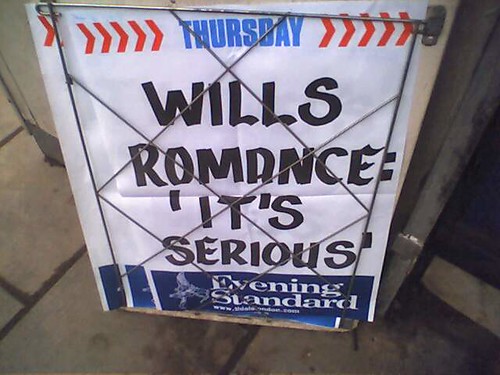
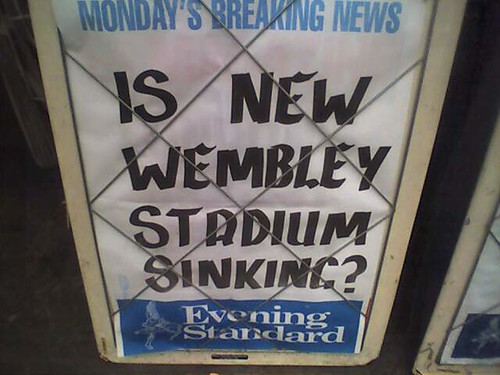
FSotW: All Evening Standard Headlines

From the set All Evening Standard Headlines

all photos © DarrenS

Categories
Culture Nature

Wasp nest super close-up

We finally had enough sun to make photography a bit easier. Here’s another wasp nest close-up. It’s striking how different the colours look on a sunnier day.

Categories
Culture

Bashō big in school supplies

Matsuo Bashō is selling pencils. Sort of.

Categories
Culture

Kandinsky at the Tate

‘Wassily Kandinsky’; what a great name. Tate Modern currently has an exhibition Kandinsky: The Path To Abstraction, which traces Kandinsky’s development from a painter of Fauvist/post-Impressionist type landscapes to a ‘pure’ abstract painter. It’s confined to the early part of his career, but then I wasn’t very familiar with his work beforehand, so I didn’t have much to compare it to.

The early works use sizzling colours and distorted perspective but are still obviously representational. This is Murnau – Kohlgruberstrasse:

That reproduction possibly makes the colours look even more sizzling than they actually are, but it gives you the idea. Then you get increasingly abstracted landscapes like Landscape With Factory Chimney:

Then you get paintings full of symbolism, which are abstracted but still have recognisable objects in them. In this painting, for example, it wasn’t all immediately obvious, but you can pick out, going anti-clockwise from the dog, a cannon, a row of men firing guns, a cloud with a lightning-bolt, two men waving blue sabres behind the smoke from another cannon, and a boat with a yellow sail carrying four figures, one of which is rowing. The painting is just called Improvisation 11; the titles stop being very useful at this point.

The process of increasing abstraction continues, but the paintings still have content. Certain motifs recur – men on horseback, boats, mountains, waves, cannons – even if they wouldn’t necessarily be recognisable to a viewer who was unfamiliar with Kandinsky’s work. Apparently he was keen on the idea that a new better, more spiritual age was approaching, so there’s a lot of Deluge and Apocalypse going on. For example, this is Composition VI, and in the context of Kandinsky’s work, it’s fairly clearly a deluge painting. The real thing is 10 foot across, so this really doesn’t do it justice:

By the end of the exhibition, Kandinsky had started to produce some of the completely abstract, more geometrical work which apparently was typical of the rest of his career. By this stage he is, as far as I can tell, no longer even using representation or meaning as a starting point for the work. This is Circles On Black:

The exhibition was enjoyable for exactly the reason suggested by the name – seeing the process by which he gave up representational painting. If you’ve been brought up with abstract art, it doesn’t seem like an inherently difficult idea, but obviously at the time, artists had to arrive at it through a process. It’s not just Kandinsky, of course; you can see different versions of the same process in Miro and Mondrian and so on. As so often in artistic and literary development, it feels like there’s a process of building up in complexity as the artist develops and explores new ideas and techniques, and then a stripping back down as they pick out what seems most important and create works which are simpler, sparer and more focussed.

I was unsure, looking at Kandinsky’s paintings, whether he always had in mind that the goal was a complete divorce from representation, but that he had to feel his way towards it, or if that was just the direction his work took him. I daresay an art historian might be able to tell me. Either way, it’s worth going to just to see all the colourful paintings. Kandinsky liked his blues cobalt, his pinks fuchsia and his yellows daffodil; no fannying around with indecisive colours like ochre and olive.