Categories
Culture Other

Occupational Hazards by Rory Stewart

Occupational Hazards is Stewart’s account of trying to administer Maysan province in southern Iraq. He’s obviously an interesting character; to quote his author bio: ‘After a brief period in the British army, he studied at Balliol College, Oxford, and then joined the Foreign Office, serving in Indonesia and Montenegro, Yugoslavia. From 2000 to 2002 he walked six thousand miles across Iraq, Afghanistan, Pakistan, India and Nepal. In 2003, he was posted to Iraq as CPA Deputy Governate Coordinator of the provinces of Maysan and later Dhi Qar.’

He explains that, after being away from the Foreign Office for some time, he approached them and asked to be sent to Iraq. He never quite says why; he clearly finds the work fascinating and loves the Middle East and central Asia (he has now returned to working on regeneration in Afghanistan, at the Turquoise Mountain Foundation); even so, there can’t have been many people whose immediate reaction to the invasion of Iraq was to send off a CV and ask for a job. His reward was to be given the job as supreme civilian authority in Maysan.

US Army soldiers and Iraqi hosts

The book is an account of his time trying to do that job; trying to set up some kind of administration, get reconstruction projects started, and prepare the province for handover to Iraqis. And the overwhelming impression is of chaos. The kind of broad brush stuff we’re all now familiar with — Sunni vs. Shia, moderates vs. extremists — is just the tip of the iceberg. Apparently 54 new political parties appeared in Maysan in the immediate aftermath of the invasion. There were conflicts between different tribes; there seem to have been endless different clerics, all with their own supporters; the educated urban Iraqis looked down on the rural population. Stewart had to try to achieve some kind of balance of their competing claims while also favouring the kind of moderate, secular government that the CPA aspired to producing. He also had to deal with the central administration in Baghdad, which was disorganised, ideological and unhelpful; and with the local British Army commanders, who he theoretically outranked, but who had their own priorities and were not under his direct command.

He writes well, and the book is in turns depressing, funny and, mostly, interesting. I don’t think I’m giving away the ending when I say that, despite some successes, he didn’t manage to establish a model secular democracy in his chunk of Iraq. On the other hand, if you read the book hoping to understand why the occupation hasn’t been more successful, it doesn’t provide any simple answers. He recognises the reasonableness of many of the criticisms aimed at the administration: the failure to prevent the looting immediately after the invasion, the disbanding of the Iraqi army, the lack of planning generally. But his own feeling is that actually, even if all those thing had been done right, it still would not have been enough to create a peaceful, stable, democratic Iraq; that we overestimate our own powers if we think we can shape a country that way. And that we could never have planned for all the complexities anyway.

» The picture, US Army soldiers and Iraqi hosts, is taken inside the traditional Marsh Arab reed-built mudhif. I don’t know if it was taken in Maysan, but it’s certainly the right kind of building. It was taken by James Gordon and is used under a CC attribution licence.

Categories
Culture Nature

The Origin of Species by Charles Darwin

The final chapter of The Origin of Species — Darwin’s ‘Recapitulation and Conclusion’ — states the case for evolution as well as any short account I have ever read. It’s tightly written, it argues a case, it summarises all the different kinds of evidence and shows clearly why they are important. It’s pithy, confident: great stuff. 

Which left me feeling look, Darwin, if you can write like that, why have the previous 400 pages been such hard work? Because he did produce some turgid paragraphs. He’s better when he’s talking about specifics — particular animals and experiments — but when he gets into generalities and abstract ideas, his prose often turns to mush. Here’s a sample sentence: 

The forms which possess in some considerable degree the character of species, but which are so closely similar to other forms, or are so closely linked to them by intermediate gradations, that naturalists do not like to rank them as distinct species, are in several respects the most important for us.

OK, that’s not particularly difficult to understand, but it doesn’t have a lot of oomph, either. Not much forward momentum to keep the reader going.

Large-flowered Bee Ophrys

That sentence is taken from the chapter ‘Variation under nature’, and part of the problem in that chapter and elsewhere is that Darwin is struggling against the limitations of his knowledge. Variation and heredity are absolutely central to the idea of natural selection, so of course he has to talk about them a lot; but without knowing about genetics, let alone DNA. And at times he seems to be floundering a bit. I’m very aware, reading it, of how much he doesn’t know; I’m curious how much he felt that lack of knowledge himself. He certainly had enough evidence of other kinds to argue convincingly that all living things evolved from a common ancestor, and that natural selection was a plausible explanation for how it happened; but without genetics there is certainly a jigsaw piece missing.

That’s not the only gap which is obvious with hindsight: for example, he talks about the distribution of species as evidence for common descent, but without continental drift, there are certain details he can’t quite explain. So if someone wanted to understand evolution, they should start with a more modern text. I suppose the question is: why read The Origin at all? Well, the immediate reason I re-read it is that we’re currently building up to Darwin Year. 2008 is the 150th anniversary of the first publication of the Darwin/Wallace theory of natural selection at a meeting of the Linnean Society, and 2009 is both 150 years since the publication of The Origin of Species and also Darwin’s 200th birthday.

earthworm

Also, it may be hard going by the standards of modern popular science writers, but for one of the key documents in the history of science, it’s incredibly (perhaps uniquely) accessible. I haven’t actually tried reading James Clerk Maxwell’s original papers on electromagnetism, or Einstein’s on relativity, but I don’t think it’s defeatist to say I wouldn’t understand them. Darwin is entirely manageable for a non-technical reader. He uses some technical terminology without defining it, so you might be checking the glossary a bit if you don’t know, for example, that ‘cirripedes’ are barnacles; but the book is mostly dealing with familiar concepts and entities: species and varieties, pigeons, bees, flowers. The only comparison that springs to mind is another book written at the early stages of a science, when scientists were still grappling with everyday concepts and the visible world: Galileo’s Dialogue Relating to Two New Sciences (which, by the way, is well worth reading).

And when Darwin hits his stride, when he gets stuck into the details, the book is still full of interesting material. For example, discussing the means by which plants are distributed between places:

I do not believe that botanists are aware how charged the mud of ponds is with seeds. I have tried several little experiments, but will here give only the most striking case. I took, in February, three table-spoonfuls of mud from three different points, beneath water, on the edge of a little pond. This mud, when dry, weighed only 6¾ ounces. I kept it covered up in my study for six months, pulling up and counting each plant as it grew. The plants were of many kinds, and were altogether 537 in number; and yet the viscid mud was all contained in a breakfast cup! Considering these facts, I think it would be an inexplicable circumstance if water-birds did not transport the seeds of fresh-water plants to vast distances, and if consequently the range of these plants was not very great. The same agency may have come into play with the eggs of some of the smaller fresh-water animals.

That passage is a great demonstration of Darwin’s practical turn of mind. For someone who is known for having produced a famous theory, he was a great experimentalist. Faced with the argument that, for example, seeds couldn’t be distributed on ocean currents because salt water would kill them, he tried the experiment, leaving seeds in salt water for different periods of time to see if they would still germinate. He wanted to know more about the process of selective breeding in domestic animals, so he started breeding fancy pigeons. He wanted to know how inherited instinct could enable bees to make such elaborate and perfect honeycombs, so he provided a hive of bees with specially prepared blocks of wax to see what they would do with them.
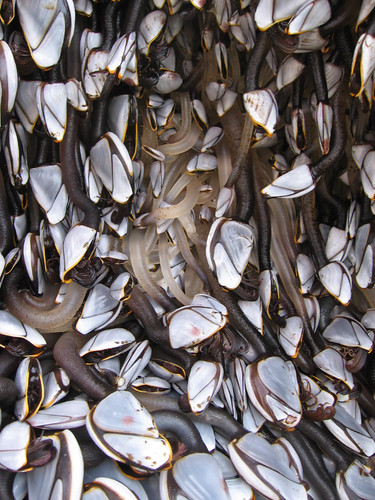
goose barnacles

If anything the book is more convincing as an argument for the historical fact of evolution — common descent with gradual changes over time — than the theory of natural selection. He does make a good case for natural selection, mainly by analogy with selective breeding in domestic animals, but because he didn’t know about genetics or DNA, there’s an inherent fuzziness about the details right at the centre.

But his argument for evolution is I think particularly strong because he was consciously writing for an audience of educated people who believed in the immutability of species. So he points out that varieties (what we now usually call subspecies) blur indistinguishably into species, so that experts frequently disagree whether to classify them as full species or not. That different continents have basically different flora and fauna; so the animals in the Amazon are related to those of the Andes rather than those of the Congo, even though the Congo is a much more similar habitat. And oceanic islands normally have very limited fauna; that what they do have tends to be those animals that can fly (insects, birds and bats, but not other mammals) or can survive salt water (reptiles but not amphibians). And again, that the inhabitants of those islands are related to the inhabitants of the nearest continent, even when the island habitat is quite different. All these facts are easily explained by evolution; there is no reason why any of them would need to be true if species were created in place.

» To illustrate this post I thought I’d break away from the most obvious stuff (Galapagos finches etc) to pick some of the other things Darwin studied: orchids, earthworms and barnacles. The orchid photo is one I took in Crete; the earthworm is by Jonathan Spangler and is used under a CC by-sa licence; the goose barnacles are by pshab and used under a by-nc licence.

Categories
Culture

A thought on the Olympics

While I wait anxiously to see whether London’s contribution to the closing ceremony is horribly naff, here’s a thought: since the Games are so huge and expensive to host, perhaps the future would be to split them up between lots of different places. Embrace the technology of global communication. That way, countries that could never afford to host the whole thing could bid to host just one sport.

For two weeks, there would always be some Olympic sport going on somewhere in the world; you’d be watching the boxing from Cairo, and then the broadcaster might cut to the sailing in Biarritz, or the swimming in Miami, or the cycling in Kuala Lumpur, or the gymnastics in Prague.

You’d lose something — that sense of the attention of the World all being focussed in on one spot — but it would turn it into a truly global event. And that might be quite special as well.

Categories
Culture

Nature’s Engraver by Jenny Uglow

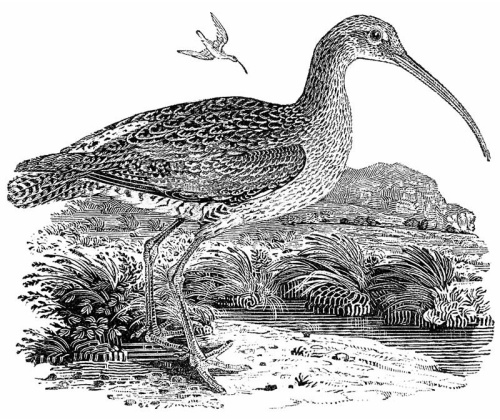
 Jenny Uglow wrote the excellent The Lunar Men, about the Lunar Society that included Josiah Wedgwood, Erasmus Darwin, Joseph Priestley and Matthew Boulton. Nature’s Engraver is a biography of the wood engraver Thomas Bewick who, born in 1753, was just about contemporary with those men. He worked in Newcastle at a time when it was just starting to turn from a small provincial town into a major industrial city, but his subject matter is overwhelmingly rural. His masterpiece was his History of British Birds, which, quite apart from its artistic merits, was a landmark in the development of British ornithology.

The sensitivity with which he manages to reproduce feathering in an awkward medium like woodcut is remarkable. But the incredibly fine detail is even more apparent in the little decorative vignettes he produced which were used to fill gaps in the text of books. Engraved into the cross section of pieces of box wood, they are rarely more than 3″ across, but they are staggeringly finely worked. In the book, which is decorated with these vignettes throughout, they are printed at life-size; but since computer screens are simply not high-enough resolution to show them that way, here’s a 2″ section enlarged to show the workmanship: 

The book is almost worth reading for the pictures, but Uglow also does a great job of evoking the period: the life of a provincial craftsman; the growth of interest in natural history that coincides, not perhaps by chance, with the coming of industry; radical politics and the response to the American and French Revolutions.

» Both pictures are taken from the website of the Bewick Society.

Categories
Culture

Opening ceremony debrief

As I’ve said before, although I’m a  supporter of London hosting the Olympics, my big worry is that we will come up with a feeble, amateurish opening ceremony. So I watched the Chinese version with interest.

We knew they were keen to impress: well, consider me impressed. There is no way London is going to match that in terms of sheer scale and organised manpower. The Chinese put on a world class display of making-patterns-out-of-groups-of-people. So I hope we don’t even try to compete with that.

On the other hand I didn’t actually enjoy it that much. The two best bits were the spectacular opening with the massed ranks of glowing drums, and the lighting of the flame, which was a great touch of theatre. Most of the rest of it, impressive as it was, seemed a bit forgettable.

And these ceremonies always seem a bit ponderous. I appreciate that it’s physically difficult to make these huge-scale things happen quickly, and that given the amount of time and money that has gone into them they want to do them justice, but it would be great to see someone do an opening ceremony that really rattled along. Instead of an hour-long show with a great effect every four minutes, I want to see a half-hour show with a wow moment every thirty seconds. Like a finely-honed theatrical performance: if you went to the theatre to see a non-verbal performance, a dance/clowning/physical comedy type show, you would expect something to be happening all the time. I would love to see an opening ceremony that had that kind of pace to it. How do you do that for a whole stadium full of people? I don’t know.

In fact the whole ceremony could usefully be done more quickly. It’s hard to see how you could speed up the parade of the athletes, short of having them come in both ends of the stadium at once, but all the ceremony at the end — the speeches, the taking of the oaths of the athletes and judges, the carrying of the Olympic flag into the stadium, the Olympic hymn — if you could find ways to make that happen faster, without breaking with tradition too much, it would be a vast improvement. Perhaps they could carry in the Olympic flag while the speeches are going on, for example. The one part of that whole rigmarole which is a great moment is the entry of the Olympic flame; most of the rest of it is dull.

I would love the London opening ceremony to aim for exciting and fun, rather than impressive and grand. And not just because any attempt to do grand is going to look second rate compared to Beijing. London is a city of theatres: let’s put on a show. Something creative, surprising, and above all dynamic.

» Photo credit: Mike Hewitt/Getty Images. Taken from the official website.

Categories
Culture

Read the world: a map

I’ve made an interactive map to show which countries I’ve read books from.

Short version: I’ve read books from the countries marked blue or green, but not the ones marked yellow or red.

Blue are books I had already read before starting the challenge.
Green are books read since starting the challenge. Red is for countries I haven’t read yet; a black dot means a country I have an idea for.
Yellow is for countries where I have a copy of the book waiting to be read.