Categories
Me

Um, what?

Just got this text from O2, the company which provides both my mobile phone service and internet connection:

We’re happy to tell you that your tariff New Allowance will offer browsing as well as text at £15 starts on 09/04/2011.

I rely on this company for much of my ability to communicate with the world. The fact they can’t make their website run properly or compose intelligible automated messages to their customers: this does not inspire confidence.

Categories
Culture

Warrior King by Sahle Sellassie

Warrior King is one of several books in English by Sahle Sellassie, all now apparently out of print. It wasn’t easy to find much information about them so I just went for the one which was available cheapest second-hand.

It is a historical novel, telling the story of the rise of Kassa Hailu, who starts as an outlaw but eventually conquers the whole of Ethiopia and establishes himself as Emperor Tewodros II of Ethiopia.

The obvious comparison for me is with the brilliant Chaka by Thomas Mofolo, also a historical novel about the rise of an African emperor. Mofolo captured something of the brutality and darkness inherent in a man’s rise to power through conquest, and the novel has a real literary heft to it.

Warrior King is a much less interesting book. It’s not a complete whitewashing of history — Kassa Hailu is presented as a ruthless figure, even if he is rebelling against an even more brutal regime. If anything, though, it just doesn’t see that interested in engaging with the morality of it, or the psychology. It reminds me of the kind of history books parodied by 1066 And All That: history as a sequence of memorable anecdotes strung together into a basic narrative. It’s certainly not very interesting as literature, but it’s not really very interesting as history either; their just isn’t enough context or detail to make it come to life. There’s surely enough material in the rise of Tewodros II to make either a really interesting history book or a rattling good yarn. This is neither.

Warrior King is my book from Ethiopia for the Read The World challenge.

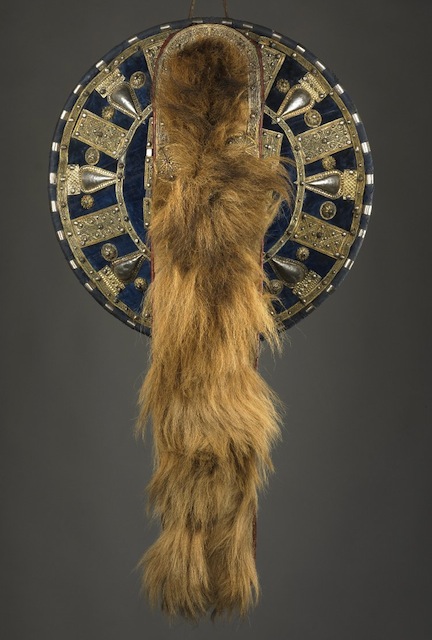
» The shield decorated with filigree and a lion’s mane is the royal shield of Tewodros II which, like quite a lot of his stuff, ended up in the British Museum.

Categories
Other

Treasure Islands by Nicholas Shaxson

Of course no non-fiction book these days is published without a subtitle; this one is Treasure Islands: Tax Havens and the Men Who Stole the World.

It is a book with a particular argument to make, that tax havens are a Bad Thing. And it does a good job of making it engaging and readable, considering that it is, in the end, a book about international tax law and accountancy practices. It traces the historical development of the current system and illustrates it with plenty of colourful anecdotes about individuals along the way to keep it interesting.

Among the notable points it makes:

Tax avoidance is just one part of the problem. Offshore jurisdictions also allow businesses to avoid regulations and other legal obligations. And perhaps most significant, they provide layers of secrecy.

And of course it’s not just multinational businesses and wealthy individuals that benefit: it is also central to the workings of organised crime and government corruption. The secrecy in particular allows huge amounts of money to flow out of the developing world via the bank accounts of corrupt officials — amounts of money which apparently completely dwarf the aid moving in the other direction.

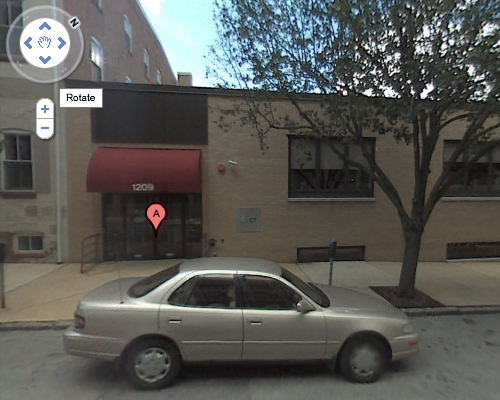
Not all of these jurisdictions are literally ‘offshore’. There is a single building in Delaware which is officially the corporate headquarters of 217,000 businesses, including Ford, GM, Coca-Cola, Google and so on. In the case of Delaware, the appeal is the very corporate-friendly legal environment. The City of London and Manhattan have also worked hard to turn themselves into tax havens in their own right.

The City of London is central to all this — it’s not a coincidence that so many of the key tax havens are parts of the old British empire: Jersey, Guernsey, the Caymans, the Turks and Caicos, Hong Kong, Singapore and so on. And the Bank of England, which I always thought of as a rather staid, conservative body whose main concern was economic simplicity, turns out to have been the most significant lobbying arm of the the City to the British government.

Interesting stuff, generally. The only reservation is that this is a very one-sided account about a subject I know nothing about, so I can’t easily assess how fair or accurate it is. And there are times it suffers from when-your-only-tool-is-a-hammer-everything-looks-like-a-nail syndrome; suggesting that financial secrecy doesn’t just contribute to but more or less causes ALL the world’s problems.  You get the feeling that if you asked him why your soufflés kept collapsing, he would say it was because of the laxness of trust law in the Cayman Islands.

Nonetheless, he does make a pretty convincing case that lack of financial transparency is an important contributor to many of the world’s problems; it may not cause them, but it certainly enables them.

» As seen on Google street view, that is 1209 North Orange St, Wilmington, Delaware. The legal home of 217,000 companies, including Google itself.

Categories
Culture

Cave of Forgotten Dreams 3D

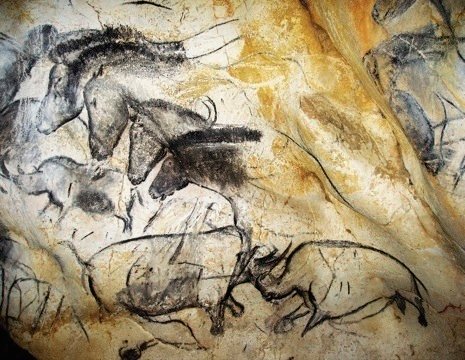
This is the Werner Herzog documentary about the Chauvet cave paintings in France. It was definitely worth seeing, but mainly, I think, for the incredible paintings themselves, rather than anything Werner Herzog brought to the project.

It is probably the best use of 3D I’ve seen, because although I’ve seen photos of the paintings at Chauvet and Lascaux, the photos tend to flatten out the image; you get very little sense of the highly irregular shape of the cave walls and the way that the paintings are shaped around the contours of the rock. The 3D film really did make all the difference and was very effective.
Which is an unusual view for me, because I basically think that 3D is a rubbish technology. In most circumstances it’s little more than a gimmick, and it seems to be technically rather bad anyway: I find that it looks unnatural and exaggerated, it’s often slightly shimmery or glitchy, it doesn’t work properly if you tilt your head to one side, and it tends to give me a headache. I don’t know if the problem is that I’m wearing prescription glasses under the 3D ones, but that seems to be a lot of downside for very little upside.

Even in this film, I think it would have been better to save the 3D for the places where it really mattered — i.e. looking at the cave paintings. An interview with a paleontologist sitting in an office does NOT need to be in 3D, thank you very much.

And even in the scenes inside the cave, it became clear that some of the film had not been filmed in 3D, but faked up as 3D in post-production. This was particularly egregious in a scene where two scientists were standing in front of a cave painting and talking about it, and something looked very weird; I suddenly realised that when they had faked the 3D, they had cut out the two figures rather carelessly and cut out a big chuck of the surrounding wall as well; so there was a big blob of cave wall which was in completely the wrong visual plane, floating in front of the wall around it.

Such technical gripes aside, the paintings were beautiful and fascinating. And there were all sorts of snippets of fascinating information, like the great scratches on the walls which had been left by cave bears sharpening their claws. Or the two stags painted on top of each other which carbon dating revealed were painted 5000 years apart. I mean, really, 5000 years! What does it mean that there was such staggering cultural continuity?

I was also interested that there was no sign of human habitation in the cave; presumably they used it as a ritual site, or something. It’s all guesswork, of course. There also no humans among the paintings, apart from one image apparently of a woman’s pubic triangle and legs, similar to the famous ‘Venus’ figurines. And no pictures of birds, incidentally; it’s all big game: cave bears, cave lions, horses, antelope, woolly rhino, mammoth, hyena, aurochs.

Of course we have so little of their lives to draw on, so what does survive gains enormous, inflated importance. The paintings are the most vivid connection we have to those people 35,000 years ago, and so we can’t help having them as central to our idea of their lives; but we don’t know whether they were similarly important to the people who painted them. The film did show a few objects found at other sites of the same period that provide a few hints at a broader life; Venus figurines, animal carvings, and most extraordinarily a flute which had been meticulously reconstructed from over 30 tiny fragments of ivory. But mainly we are left with a lot of stone tools and the cave paintings. Anything made of wood, or gut, or hide is long gone, let alone the stories they told, the music they played, the food they cooked.
Categories
Me

Hot trends in spam

It is fascinating to see the evolving ways in which spambots try to fool us into thinking they are real people. It’s like a very narrow version of the Turing Test.

In response to a birdy post which mentioned, among other things, ring-necked duck, someone submitted this almost-relevant piece of commentary:

Like the scaups she has a white crescent at the base of her bill although it is less distinctive than that of either the Greater or Lesser Scaup. The Female Ring-necked Duck can be distinguished from the scaups by the thin white eye-ring that trails back to her ear and the peaked shape of her head as well as by differing habitat. A generalized diet may allow the Ring-necked Duck to colonize new areas and habitats that other species might not be able to use and this may be why it seems to be faring well.

It doesn’t actually make sense as a real human response to the post, but at a glance I thought it might do. Although the fact it was posted by a website offering offshore banking services would probably have been enough to tip me off.

Categories
Me

Culturally agnostic

It is census time in the UK, which includes a question about your religion. So I ticked the box for ‘no religion’; but my father ticked the one for ‘Christian’, despite the fact that he is certainly not a member of any church, doesn’t go to church except for weddings, funerals and the occasional carol service, and is not, as far as I can tell, a believer.

But, you know, he went to a Christian school, and he was even confirmed into the Church of England (by the archbishop of Canterbury, as it happens). Which suggests there was a period in his life when he regarded himself as Christian. So I guess it makes sense if he regards himself as culturally Christian — whatever that means.

And I do see the value of religions as cultural identities — I can see why Jewish atheists might still want to affirm their Jewishness and maintain the rituals. Or as I’m told people used to ask in Northern Ireland, ‘but are you a Protestant atheist or a Catholic atheist?’

But as for me… I’m culturally more Christian than I am, say, Hindu — what religious education I had was mainly Christian in its focus, and I certainly know more about the culture and theology of Christianity than other religions. And at Christmas we have a tree, and presents, and a roast turkey. But those are just part of the ambient culture of Britain. Doctor Who plays a bigger part in my Christmas than Jesus. I’ve never thought of myself as Christian, so I don’t think of myself as a lapsed Christian, or a Christian atheist — if anything I’m a lapsed agnostic, since agnosticism seemed to be the fallback position amongst my peer group as a child.

The census can’t deal with such nuances, of course. Which is a pity, because that’s the kind of thing that seems interesting. We know that, because of people like my father, the census always significantly overstates the religiosity of the population:

When asked the census question ‘What is your religion?’, 61% of people in England and Wales ticked a religious box (53.48% Christian and 7.22% other) while 39% ticked ‘No religion’.

But when asked ‘Are you religious?’ only 29% of the same people said ‘Yes’ while 65% said ‘No’, meaning over half of those whom the census would count as having a religion said they were not religious.

Even more revealingly, less than half (48%) of those who ticked ‘Christian’ said they believed that Jesus Christ was a real person who died and came back to life and was the son of God.

The devoutly religious and the firmly atheist are straightforward enough; I’m curious about the shades of grey, the people who say their religion is Christian but that they are not religious. Are they mainly people who were brought up religious but don’t go to church any more? Are they defining themselves as Christian as a way of emphasising that they’re not Jewish or Muslim or whatever? Is it a generational thing? Do their children identify themselves as Christian? Perhaps ‘non-religious Christian’ can be a self-sustaining identity in its own right, comparable to secular Jewishness.

And the other side of that question is the people who tick ‘no religion’: are they mainly people who believe there is no god, or think there is no god, or can’t decide? Or are they just as likely to be people who have some kind of belief system of their own — something which they don’t think of as a religion but is not really non-belief either?

Anyway. I seem to have wandered off whatever point it was I was originally planning to make. Never mind.

» Ruins of Rievaulx Abbey, Yorkshire, by John Sell Cotman.